

Eiheiji Temple
Shihi, Eiheiji Town
Eiheiji Temple

Outline

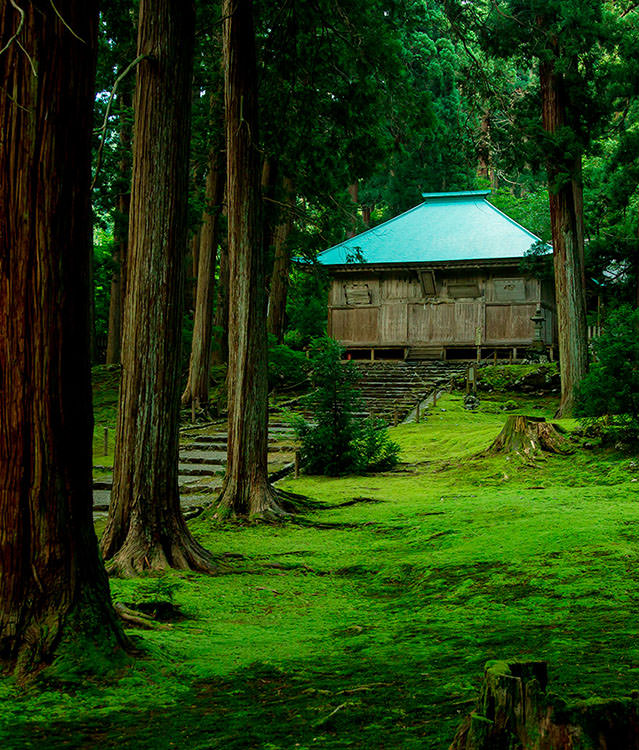
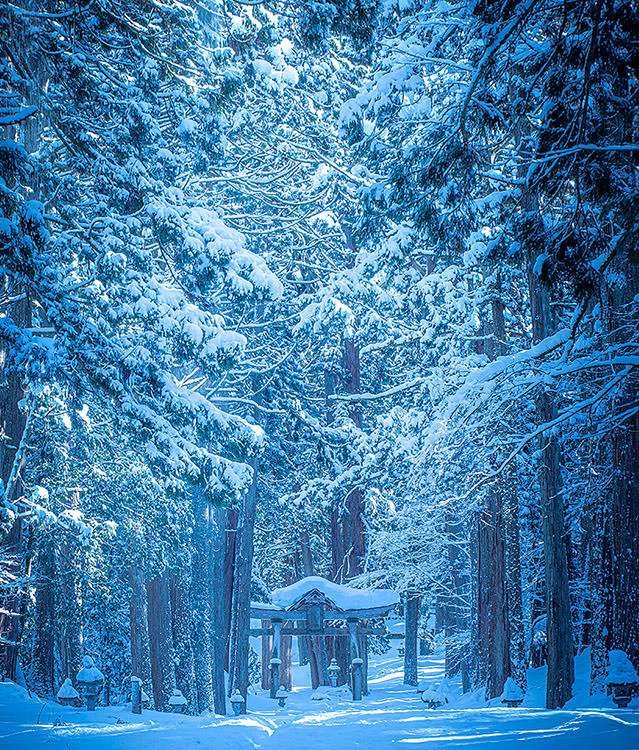
This education and training center for Zen monks was founded by Zen Master Dogen Zenji about 750 years ago in the Kangen Period, in 1244. Located approximately 16 kilometers southeast of Fukui city, more than 70 large and small structures are still standing, with seven main buildings at the center of the temple. The temple precincts are approximately 100 thousand tsubo (330,000 sq.m.), surrounded by old trees, some of which are said to be about 680 years old. The stillness and quietness of the temple makes it an ideal and perfect place for trainee monks.
Open Contact the temple
Directions 15 minute drive from Fukui North IC of Hokuriku Expressway.
Contact Info Eiheiji Temple Information Center 0776-63-3102

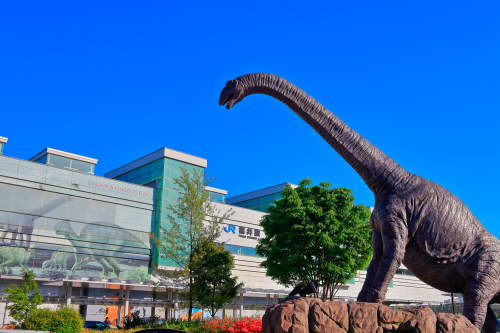
Fukui Dinosaur Museum
Terao, Muraoka Town, Katsuyama City
 Fukui Dinosaur Museum
Outline  This museum has a fossil information center that is the basis for international dinosaur study, transmitting and receiving study data from throughout the world. There is also a Field Museum, which offers on-site training for everyone to enjoy. This place is full of the mystery and discovery of dinosaurs.
Open 9:00 - 17:00 (No entry after 16:30)
Closed From December 29 to January 2
Directions 10 minutes by car from Echizen line Katsuyama station. / 35 minutes by car from Fukui Kita or Maruoka IC of Hokuriku Expressway.
Fees Fee Required
Notes Parking Available
Contact Info Fukui Dinosaur Museum  0779-88-0001

Ono City Tour
The Ono castle town was established when a retainer of Nobunaga Oda (1534–82), Japanese military commander, built Ono Castle in the Kameyama area. The castle is enclosed with old samurai residences. Also, Ono city has some quaint streets,, such as Shichiken Street where the morning market, Shichiken Asaichi, is held, and Teramachi Street, where many temples are located along the stone paved streets.
Echizen Ono Shichiken Asaichi Market
Ono Shichiken Dori Street
Echizen Ono Shichiken Asaichi Market Outline  These markets with a 300-year-old history are found in Shichiken Dori Street of Ono, where the city streets are laid out in a grid system. These open-air markets offer many fresh vegetables and produce, which are grown and brought to market by wives of the local farmers and displayed on straw mats. The market is just like a kitchen for local people and attracts many local housewives buying ingredients for dinner. It is also a fun community meeting place.
Season March 21(Friday) - December 31(Tuesday)
Open 7:00-11:00
Closed Closed when it snows.
Directions 5 minute walk from JR Echizen Ono station. / 40 minutes by car from Fukui IC of Hokuriku Expressway.
Contact Info Ono Industrial Commerce and Tourism Division 0779-66-1111
Echizen Ono Shichiken Market Promotion Council 0779-69-9520
Teramachi Dori Street
Nishiki Town, Ono City
Teramachi Dori Street Outline Ono City was built by Nagachika Kanamori, a follower of Nobunaga Oda at the beginning of the Tensho Period (1573-1592), as the castle town of Kameyama. Often called ‘Hokuriku’s small Kyoto’, this city with a grid street system has tidy rows of buildings. The streets running both east to west and north to south are named using a number system. A street at the edge of the east side of town called Teramachi Dori street is known for being very secluded with many pretty temples around.
Directions 10 minute walk from JR Echizen Ono station. / 40 minutes by car from Fukui IC of Hokuriku Expressway.
Contact Info Ono Industrial Commerce and Tourism Division 0779-66-1111
Echizen Ono Castle
Shiromachi, Ono City
Echizen Ono Castle Outline  This castle was built in four years by Nagachika Kanamori who was given two thirds of the land in the Ono area by Nobunaga Oda in 1575. There are the two "donjons" or towers. The larger tower has two levels in a three story building and the smaller tower has two levels in a two story building. These towers are also surrounded by two protective walls and by inside and outside moats to protect the castle effectively. The stone walls, built by a special method piling the stone sideways with the big stones pushed behind, are classed as one of the most precious historic places. The present Ono castle was rebuilt in 1968 and exhibits articles left from the successive lords inside.
Season Year-round facility
Open 9:00-17:00(9:00-16:00 in October and November)
Closed Closed from December to March
Directions 25 minute walk from JR Echizen Ono station. / 40 minutes by car from Fukui IC of Hokuriku Expressway.
Fees Fee Required
Contact Info Ono Education Committee 0779-66-1111
Echizen Ono Castle 0779-66-0234

Kumagawa Juku Area Ruins

Kumagawa, Wakasa Town

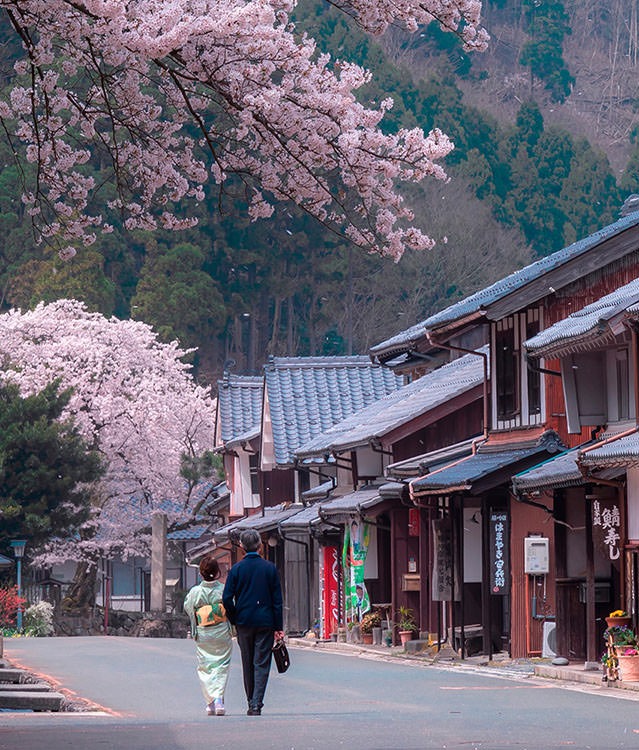
Kumagawa-juku Outline  Having flourished as a town providing lodging for travelers between Kyoto and Obama, Kumagawa-juku has largely developed since the Tensho period (1573-1592). A magistrate's office, a guard station, and a storehouse are a reminder of its prosperity at that time, along with the old-style irrigation canal running along the atmospheric street. Ancient documents and a business diary from the Toyotomi period to the final days of domain duties are also preserved. Kumagawa-juku has been designated as a preservation area for important traditional constructions and as a select area with historical national roads, and it is among Japan's 100 best water areas.
Directions Take a JR bus from JR Kaminaka Station to Omi-imazu. 3 minute walk from Wakasakumagawa bus stop. / 50 minute drive from Tsuruga IC of Hokuriku Expressway. / 30 minute drive from Oama-nishi IC of Maizuru-Wakasa Expressway.
Notes Parking Available
Contact Info Wakasa Town Education Board 0770-62-2711

Ichijodani Asakura Clan Ruins

Kidonouchi-cho, Fukui City

Ichijodani Asakura Clan Ruins   Outline  The Ichijodani Asakura Clan Ruins are the ruins of the castle town of five warring lords of the Asakura Family who ruled Echizen for 103 years. The grand castle town was founded 530 years ago in 1471 and developed a graceful culture, with the peak population exceeding 10,000. However, when the Asakura Family was defeated by Oda Nobunaga in 1573, the town was burned and its long history came to an end. In 1967, excavation and research started in earnest, uncovering the shape of the whole town, including a house belonging to the lord, samurai residences, temples, houses of merchants, houses of craft workers and streets. In 1991, four gardens in the ruin were designated as "National Special Places of Scenic Beauty".
Open 9:00-17:00
Directions Take a Keifuku bus to Joukyoji from JR Fukui Station. Get off at Bukeyashiku bus stop. The ruin is nearby. / 15 minute walk from Echijodani Station on the JR Etsumi-North Line. / 10 minute drive from Fukui IC of Hokuriku Expressway.
Fees Partially Required
Notes

Parking Available

Contact Info Ichijodani Asakura Clan Ruins Asakura Clan Ruins Management Office 0776-41-2173
Ichijodani Asakura Clan Ruins Conservation Association 0776-41-2330

Maruoka Castle
Kasumimachi, Maruoka Town, Sakai City
Maruoka Castle Outline  Maruoka Castle boasts Japan's oldest castle tower and is also known as "Kasumiga-jo"(Mist Castle). In 1576, at the command of Oda Nobunaga, Shibata Katsuie had his nephew Katsutoyo build this castle for protection against riots. Four-periods after, it was used as a home castle by Tokugawa feudal lords, Honda and Arima, until the end of Edo Period. Honda Family's founder Narushige, who was a legitimate heir of Honda Saemon, is famous for the letter that begins with "Ippitsukeijo" (I pen thee a line). He built the foundation of Maruoka. Arima, the next family which existed for eight generations until the end of the Edo Period, enhanced the prosperity of the culture (including famous "Hyuga Kagura", sacred Shinto music and dance) and industry.
Open 8:00-17:00
Closed Open throughout the year
Directions Take a Keifuku bus to Honmaruoka and Eiheiji from JR Awaraonsen Station. 10 minute walk from Honmaruoka bus stop. / Take a Keifuku bus to Honmaruoka from JR Fukui station. Get off at Maruoka-jo bus stop. The castle is nearby. / 5 minute drive from Maruoka IC of Hokuriku Expressway.
Fees Fee Required
Contact Info Commerce, Industry and Tourism Section, Sakai City  0776-50-3152

Obama National Treasure Tour
Obama city flourished as a port connecting Japan to other continents and used to have strong ties to Kyoto and Nara. Therefore those ancient capitals’ cultural influences still remain in Obama and some people call it as "Another Nara by the Sea." The city has many buildings and statues of Buddha designated as cultural properties and important cultural assets.
Myotsu-ji Temple
Monzen, Obama City
Myotsu-ji Temple Outline This temple consists of a main building and a stately pagoda and is illuminated by sunlight falling through the surrounding Japanese cedar trees. 7.5 km away from the station, it is nestled deep in the mountains, where deer can be heard calling in the upper reaches of the Matsunaga River. The temple contains four statues of Buddha from the Fujiwara period that are designated as nationally important cultural properties.
Season Year-round facility
Open 9:00-17:00
Directions 10 minutes by car from JR Higashi Obama station. / 60 minutes by car from Tsuruga IC of Hokuriku Expressway. / 40 minutes by car from Obama Nishi IC of Maizuru Wakasa Expressway.
Fees Fee Required
Notes Parking Available
Contact Info Myotsu-ji Temple 0770-57-1355
Haga-ji Temple
Haga, Obama City
Haga-ji Temple Outline  There are many statues of Buddha in this temple. It is said that they were brought here from Kyoto to be protected during the Onin wars. One of them, the wooden statue of the Goddess Kannon Bodhisattva (146.4cm tall, made at the beginning of the Heian period, an important cultural property), is believed to have been modeled on the Gansho empress, who was particularly beautiful. It is believed that this temple was built by a monk called Gyoki in obedience to an imperial command.
Open 9:00-17:00
Directions 15 minutes by car from JR Obama station. / 65 minutes by car from Tsuruga IC of Hokuriku Expressway. / 35 minutes by car from Obama Nishi IC of Maizuru Wakasa Expressway.
Fees Fee Required
Notes Parking Available
Contact Info Haga-ji Temple 0770-52-4502
Mantoku-ji Temple
Kanaya, Obama City
Mantoku-ji Temple Outline  In autumn the cinnabar colour of Japanese maple trees contrasted with the "Karesansui" (dry Japanese garden style) garden is very soothing for many visitors. The beautiful azaleas are the main attraction in the spring. This temple is full of the beauty of nature that people can enjoy during all four seasons. There is also the principal image of Buddha, the wooden statue of Amitabha Tathagata, and the statue of Bodhisattva, which are worth seeing.
Season Year-round facility
Open 9:00-17:00
Directions 10 minutes by car from JR Higashi Obama station. / 60 minutes by car from Tsuruga IC of Hokuriku Expressway. / 30 minutes by car from Obama Nishi IC of Maizuru Wakasa Expressway.
Fees Fee Required
Notes Parking Available
Contact Info Mantoku-ji Temple 0770-56-2308

Genkuro Fujino Memorial Hall
Funatsu, Awara City
Genkuro Fujino Memorial Hall Outline This memorial hall, originally the house of Genkuro Fujino in Mikuni town, was donated by his family in 1983 to commemorate the establishment of a sister town relationship between Awara town and Shaoxing city, Zhejiang province in China. The building was reconstructed in a new location in 1984, the year of the 100th anniversary of the Awara Onsen discovery, and named Genkuro Fujino Memorial Hall. The hall exhibits documents about the connection between Dr Fujimoto, an anatomical professor at Sendai Medical training school (currently a medical department at Tohoku University) and a Chinese student, later known as Luxan.
Open 9:30-16:00
Closed Every Monday, year-end through New Year holidays (December 29th to January 3rd)
Directions  Take a Keifuku bus from JR Awara Onsen Station or Echizen line Awarayu-cho station to Tajinbo and get off at Funatsu stop.
Fees Free
Notes Parking available
Contact Info Awara Social Welfare Centre 0776-77-3331

Previous Page Home 1 2 3 Fukui Prefectural Tourism Federation