Experience the World of Zen at Eiheiji Temple — A Training Monastery That Draws Aspiring Monks from Across Japan
Eiheiji Temple (Eiheiji, meaning "Temple of Eternal Peace") is known as the head temple of Soto Zen — one of the three main schools of Zen Buddhism in Japan. Amid an overwhelming sense of solemnity shaped by over 770 years of history, visitors can catch a glimpse of the daily lives of unsui (unsui — trainee monks, literally "clouds and water," a poetic term for those who wander in pursuit of enlightenment), as they devote themselves to rigorous ascetic practice. This celebrated temple is one of Fukui Prefecture's greatest treasures. In recent years, Zen has gained global recognition, attracting considerable attention from overseas, and each year large numbers of visitors come from both Japan and abroad.
Deep in the mountains, where a crisp and serene air seems to pervade the atmosphere, awaits a refined journey where you can connect with the spirit of Zen. From the highlights of Eiheiji Temple, to training experiences available only here, to the souvenirs of the monzen-machi (monzen-machi — the traditional "temple gate town" that grew up to serve visitors to the temple), this guide covers everything you need to fully enjoy Eiheiji, the "Zen Village." Let nothing pass you by.
The Washington Post named Fukui Prefecture as one of "the world's most spiritual regions" and one of the places to visit in 2024 to "avoid the crowds." Eiheiji Temple was highlighted as one of Fukui's top sightseeing destinations!
Essential Information About Eiheiji Temple
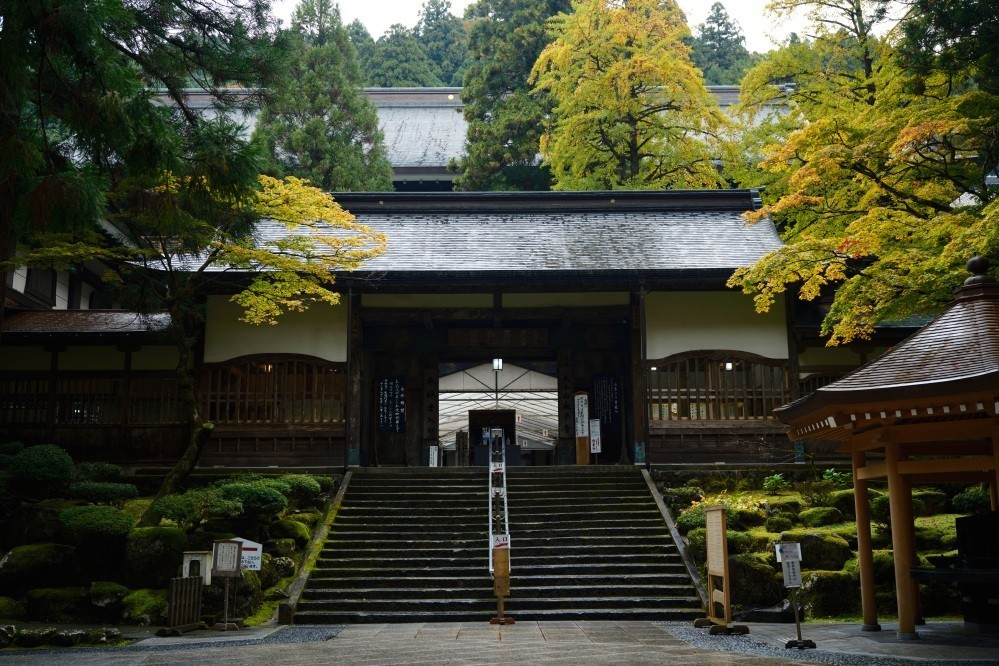
Eiheiji Temple was founded in 1244 by Dogen Zenji, the revered monk who introduced Soto Zen Buddhism to Japan from China. It is the head temple of the Soto Zen sect, and today many unsui from across Japan are engaged in a rigorous daily life of ascetic training here.
Located approximately 10 minutes by car from the Eiheiji Sandou Interchange on the Chubu-Jukan Expressway, the temple is nestled in a mountain valley. From Fukui Station, a convenient direct bus runs daily (approximately 30 minutes to the temple gate area). The temple is open year-round for visits, from 8:30 AM to 4:30 PM. If you make a reservation in advance, you can also participate in the "choka" early-morning Buddhist service, a solemn ceremony conducted before dawn. In the taut, still air of early morning, the sound of sutra chanting (reading aloud of Buddhist scriptures) reverberates throughout the temple grounds — dozens of unsui chanting in unison is a truly awe-inspiring sight. Make an effort to rise early and experience it for yourself.
Column
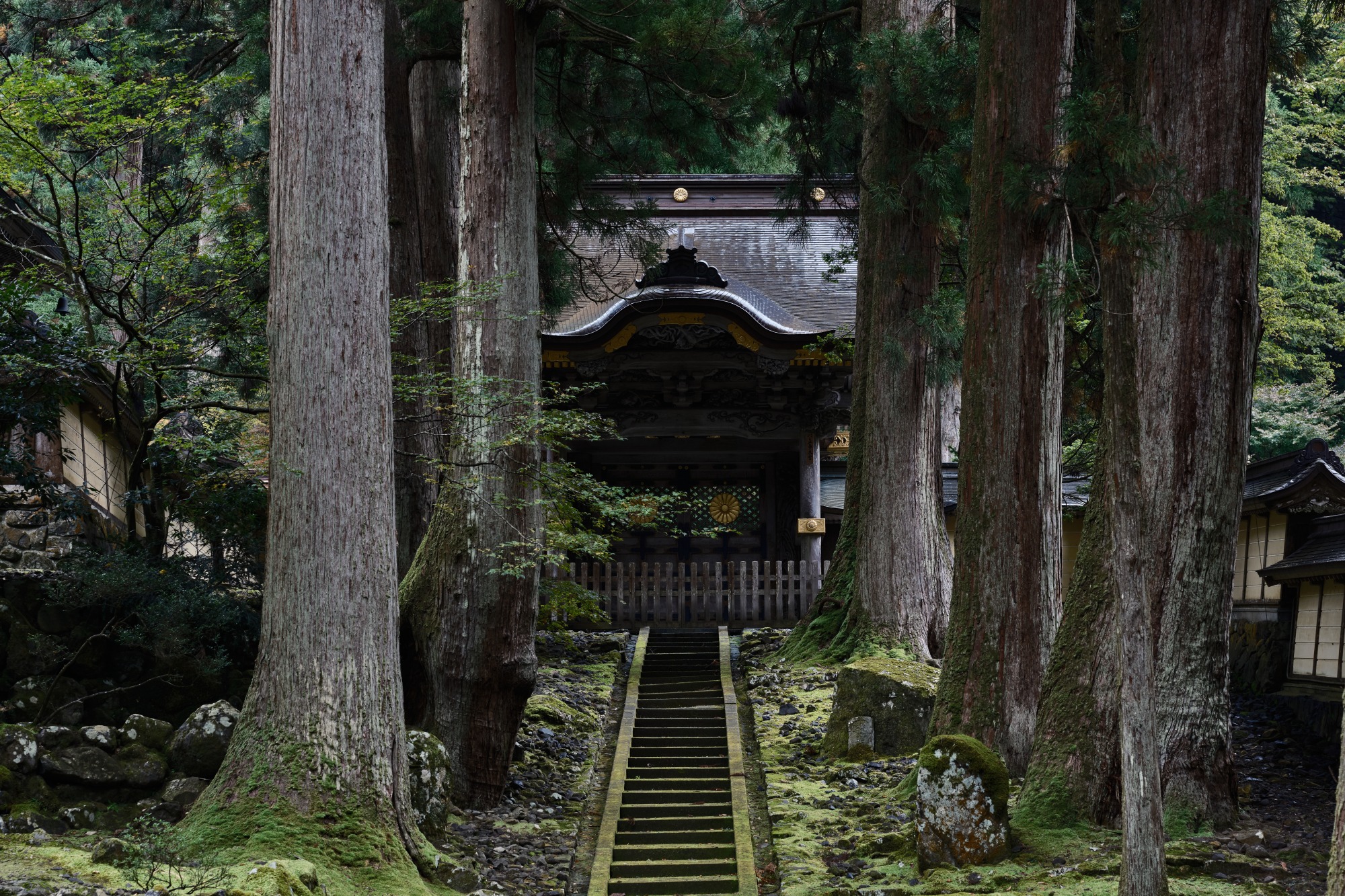
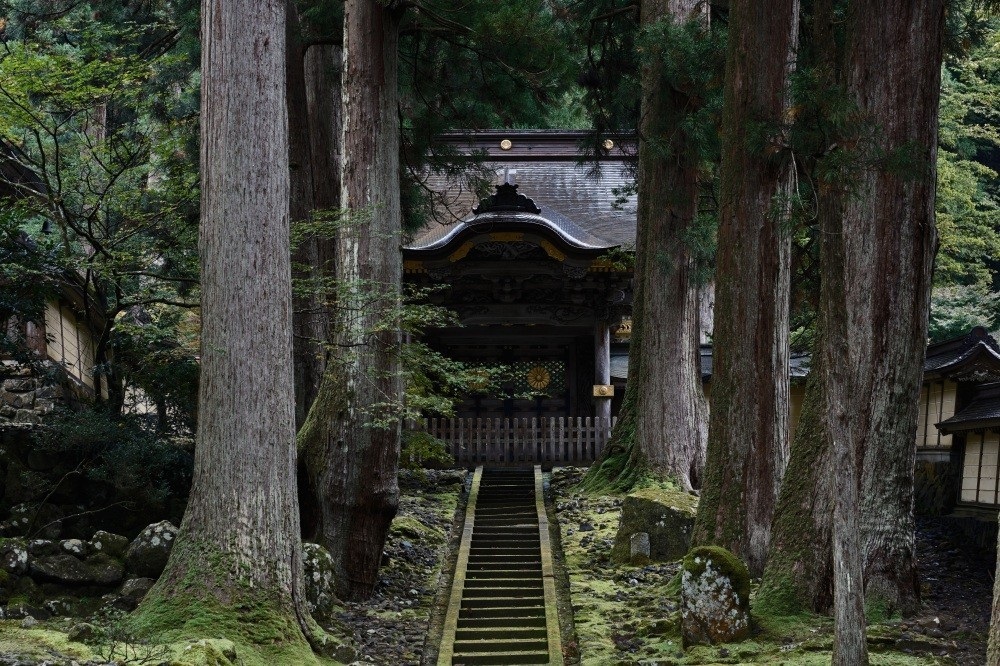
The "Karamon" , Standing Quietly Among Ancient Cedar Trees
The beautiful moss covering the sides of the approach path and the imposing rows of ancient cedar trees are themselves a highlight. Beyond the line of towering cedars stands the Karamon, which opens only when a new head priest is welcomed. It has become an iconic symbol of Eiheiji Temple. As you feel the sense of solemnity that comes with setting foot in this place of rigorous training, be sure to soak in the beauty of the temple grounds.
How to Experience Eiheiji Temple — Touring the Shichido Garan via its Corridors
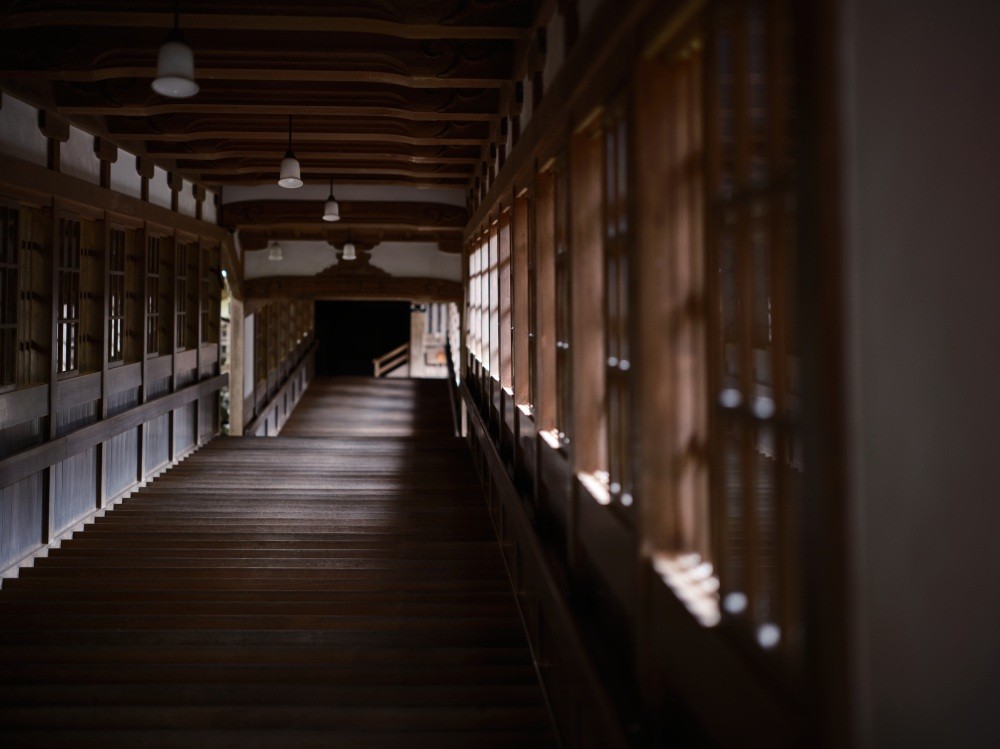
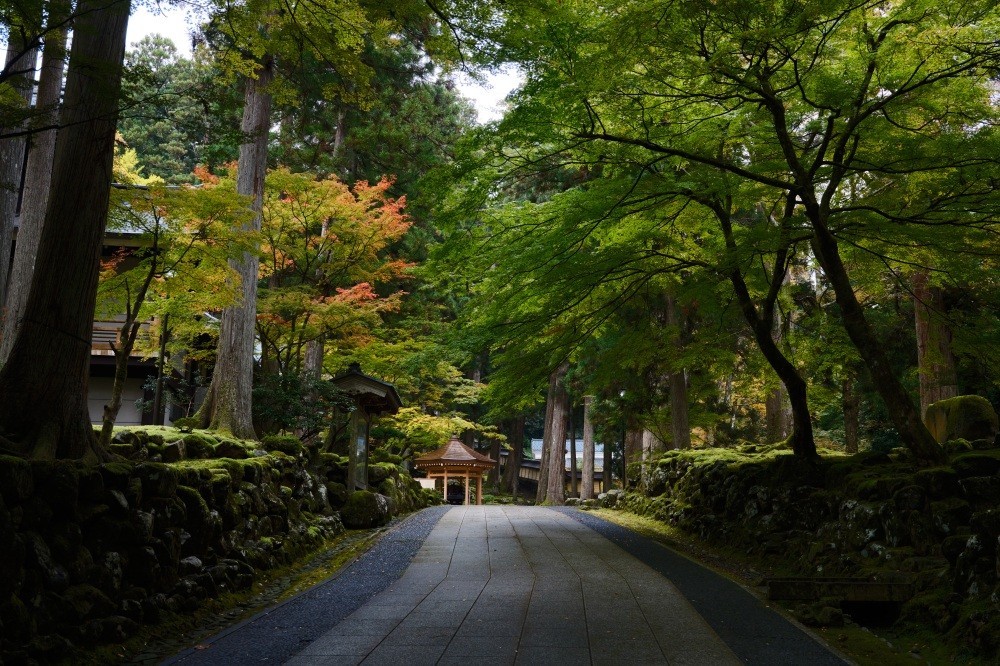
Eiheiji Temple's vast grounds of 330,000 m² contain more than 70 buildings, of which 19 are designated Important Cultural Properties (Juyo Bunkazai — structures recognized by the Japanese government as having outstanding historical, artistic, or cultural value). Among these, the Shichido Garan — the "Seven Essential Halls," the core complex of buildings indispensable to Buddhist monastic practice ー are considered the most important buildings for training. They consist of seven structures: the Sanmon (main gate), Butsuden (Buddha Hall), Hatto (Dharma Hall), Sodo (monks' hall), Daikuin (kitchen), Yokushitsu (bathhouse), and Tosu (lavatory). These seven buildings are connected by covered corridors and staircases. The standard way to pay your respects is to tour the Shichido Garan at a leisurely pace while reflecting on the teachings of Zen.
Column
Understand the Proper Etiquette Before Visiting
After completing check-in, visitors are first guided to the Kisshokkaku (Kichijokaku — "Hall of Good Fortune," the training and retreat facility open to general visitors). A full map of the grounds and guidelines for visitors are displayed there, so be sure to review them before beginning your visit. If an unsui is present, they may provide an explanation of the visit.
You will likely pass by unsui many times during your visit — this sense of immediacy and connection with daily monastic life is one of Eiheiji's great charms. However, this is, above all, a place of ascetic training. Pointing your camera at an unsui is strictly prohibited. There are also areas where entry and photography are not permitted, so please be mindful of the rules and visit with a calm and respectful heart.
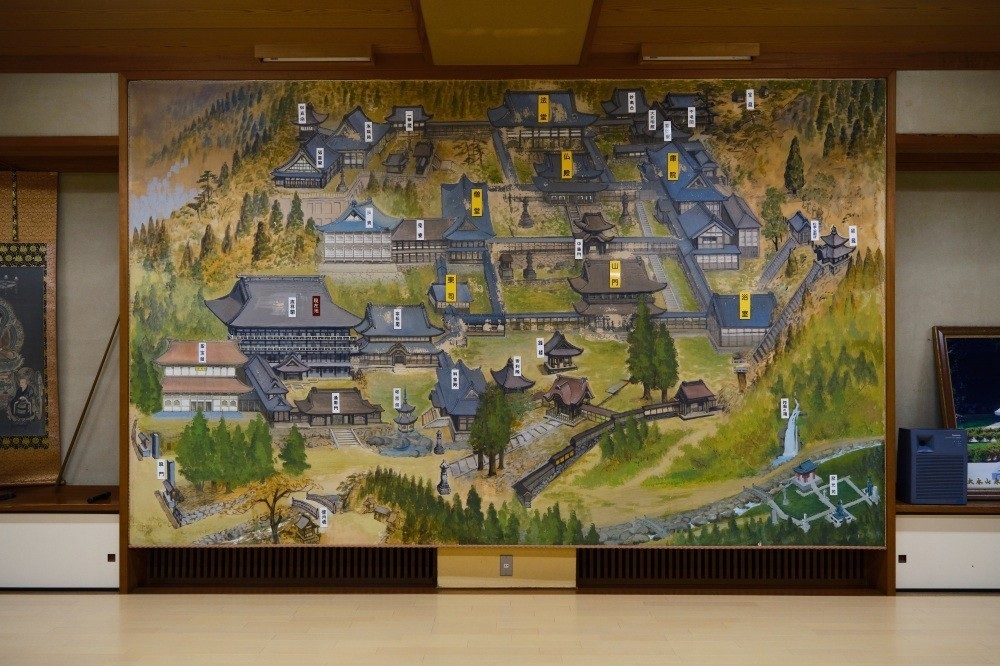
"Sanshokaku" — Lose Yourself in the Magnificent World Painted by Renowned Artists of the Showa Era
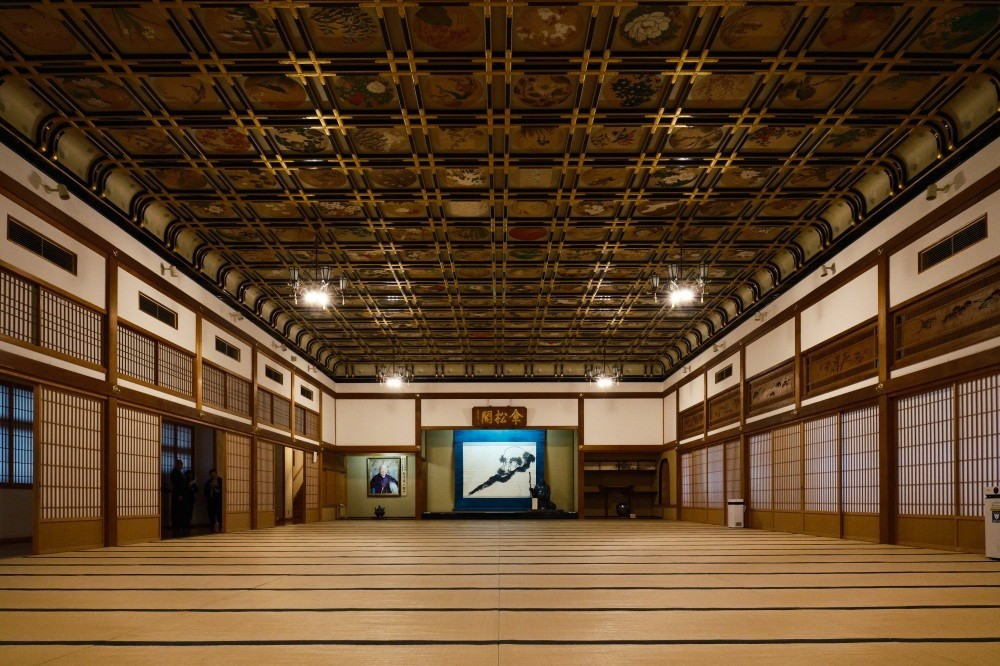
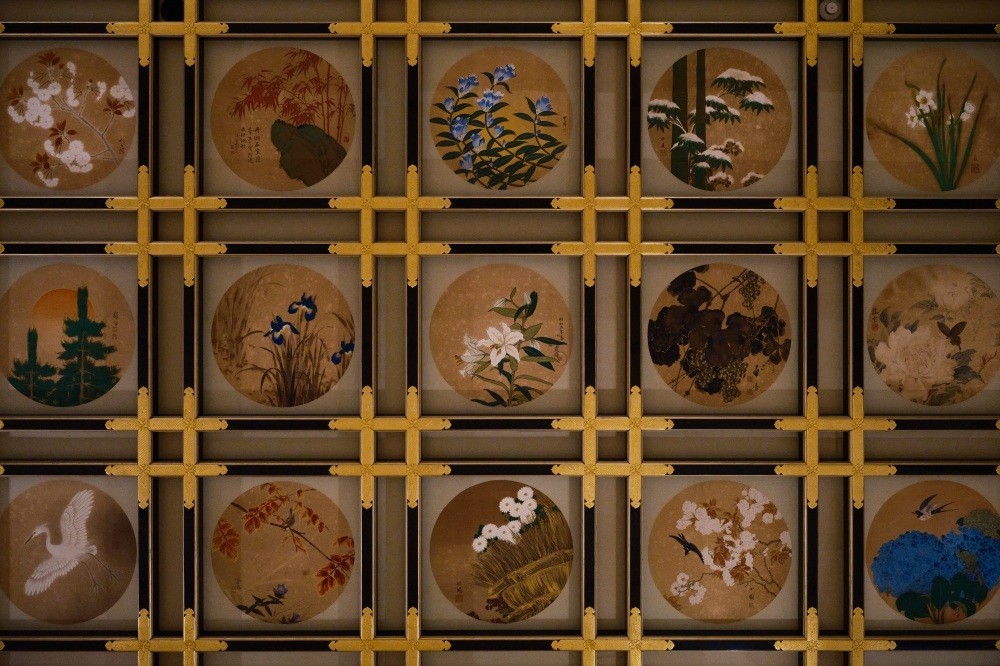
After leaving the Kichijokaku, your first destination is the Sanshokaku "Hall of the Umbrella Pines." The large hall on the second floor is known as the "Painted Ceiling Room" (E-Tenjo no Ma), and features 230 ceiling paintings created by 144 leading Japanese painters of the Showa era, the period from 1926 to 1989 during which Japan underwent sweeping modernization and artistic flourishing. The sight of these paintings filling the ceiling of the vast 160-tatami hall is truly spectacular. Most of the paintings depict flowers and birds, but it is said that just five of them feature living creatures such as carp, kara-jishi (mythical lions), and others. Take your time admiring the beauty of each panel — and try to find those special five.
"Sanmon" — The Gate Where a Life of Training Begins
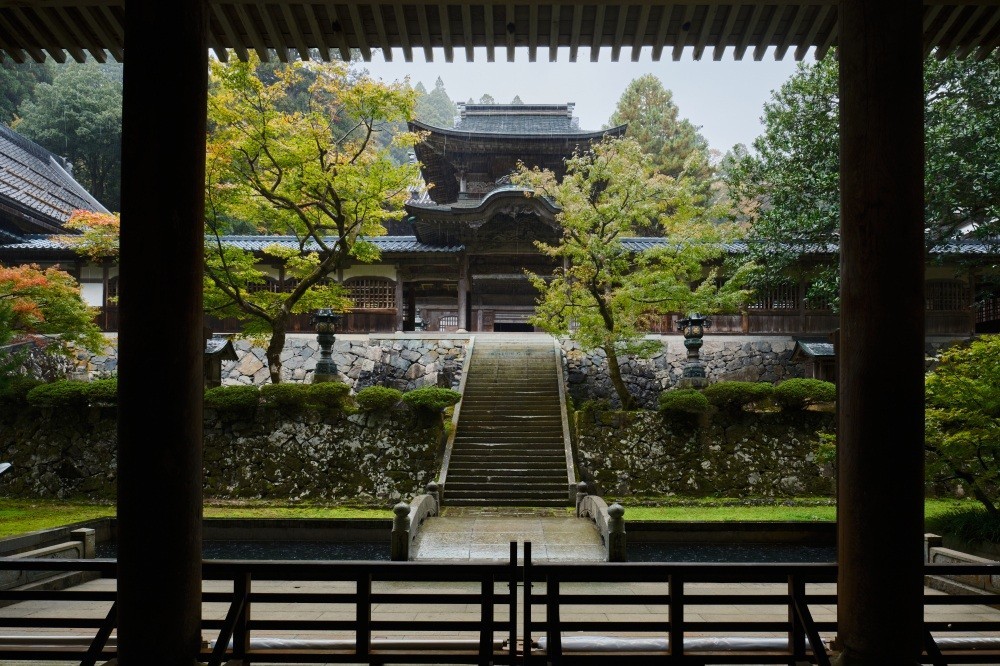
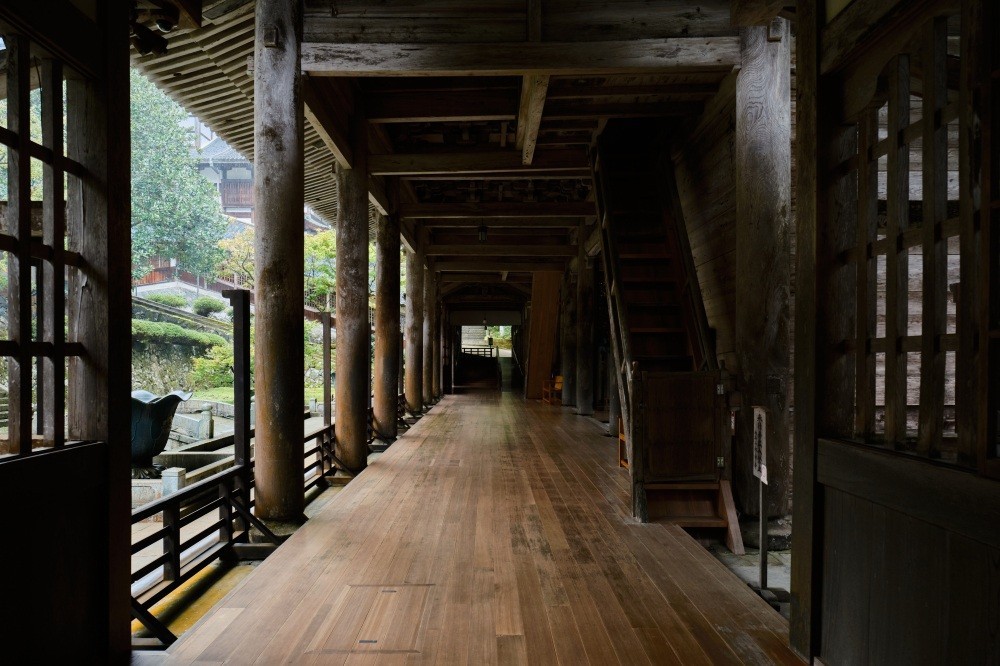
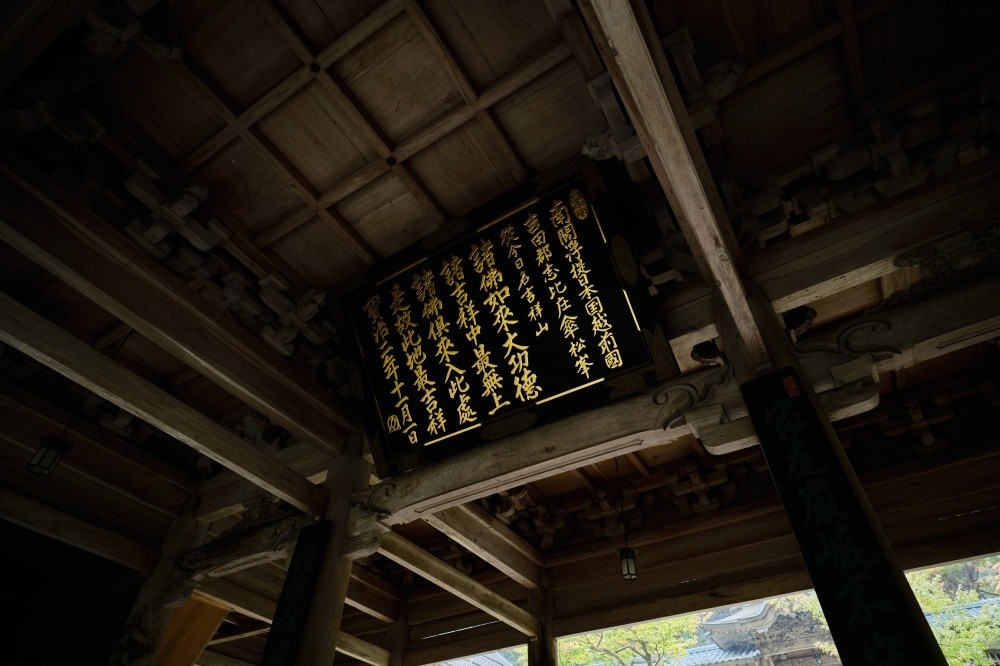
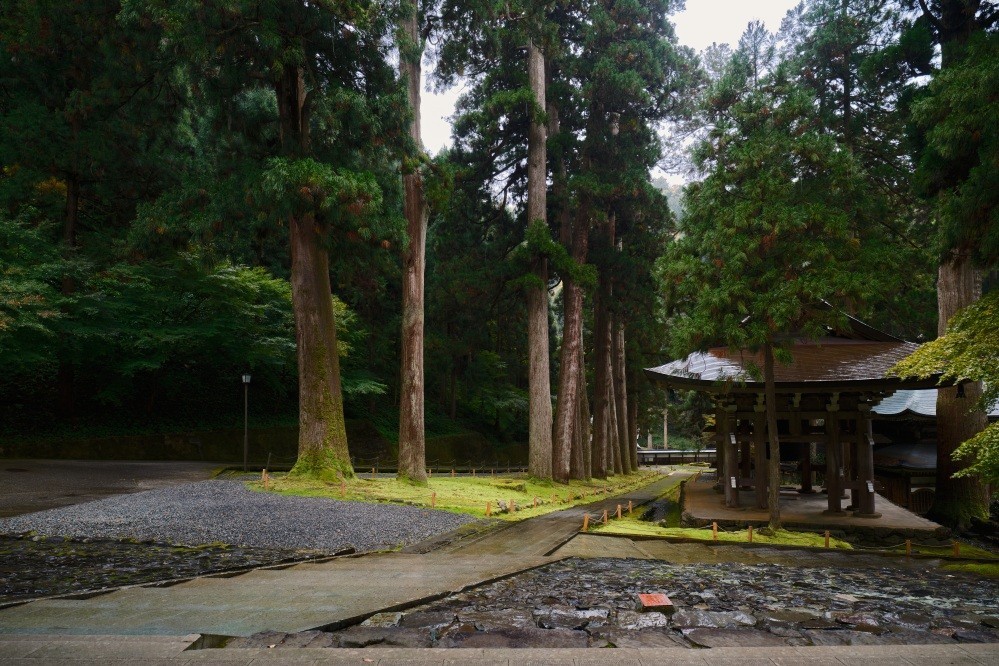
Leaving the Sanshokaku, you next enter the heart of the visit: the Shichido Garan. The tour of the corridors begins at the "Sanmon" — the main gate of a Buddhist temple, symbolizing the "three gates of liberation" in Zen thought.
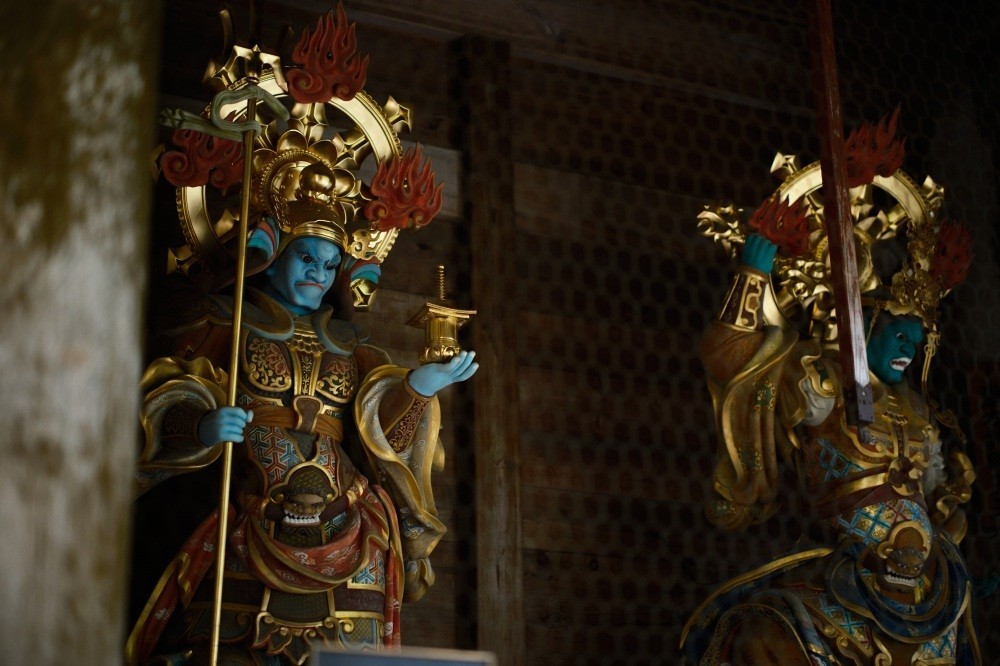
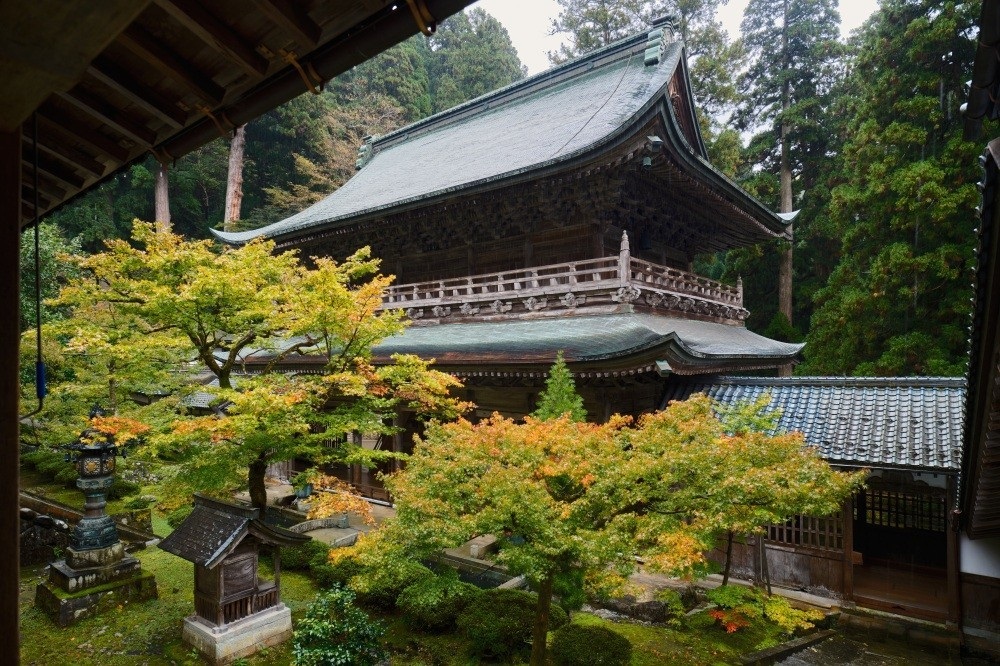
The Sanmon, built approximately 270 years ago, is the oldest structure at Eiheiji Temple. It is a two-story structure: the lower level enshrines the Shitenno Four Heavenly Kings of Buddhist cosmology ー Jikokuten, Tamonten, Komokuten, and Zochoten — while the upper level enshrines the Gohyaku Rakan 500 Arhats, enlightened disciples of the Buddha. The entire structure is built using kumiki, a traditional Japanese wooden joinery technique using no nails or metal fittings, and the exquisite craftsmanship of the artisans is evident throughout.
The Sanmon is a special gate: only trainee monks may pass through it, upon entering the temple to begin their training and upon departing after completing it. Each year between February and March, aspiring monks climb the snow-covered stone steps to stand before this gate. The length of the training period varies from person to person — there is no fixed rule. As you make your way along the corridors, let your thoughts wander to the determination with which these monks enter through the Sanmon to begin their days of practice.
"Sodo" — Where Every Aspect of Life, 365 Days a Year, is Training
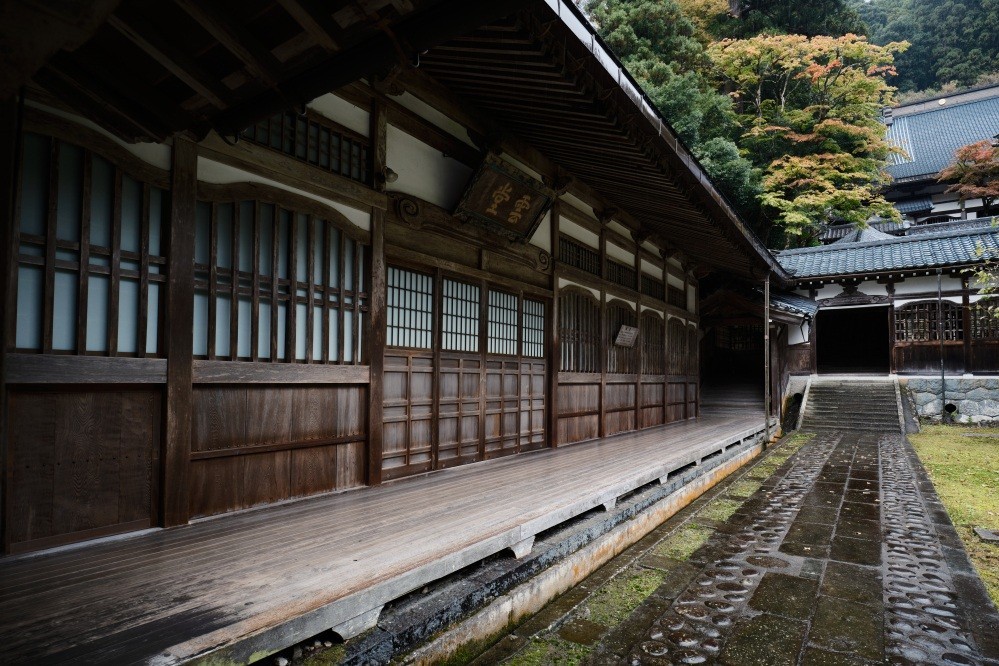
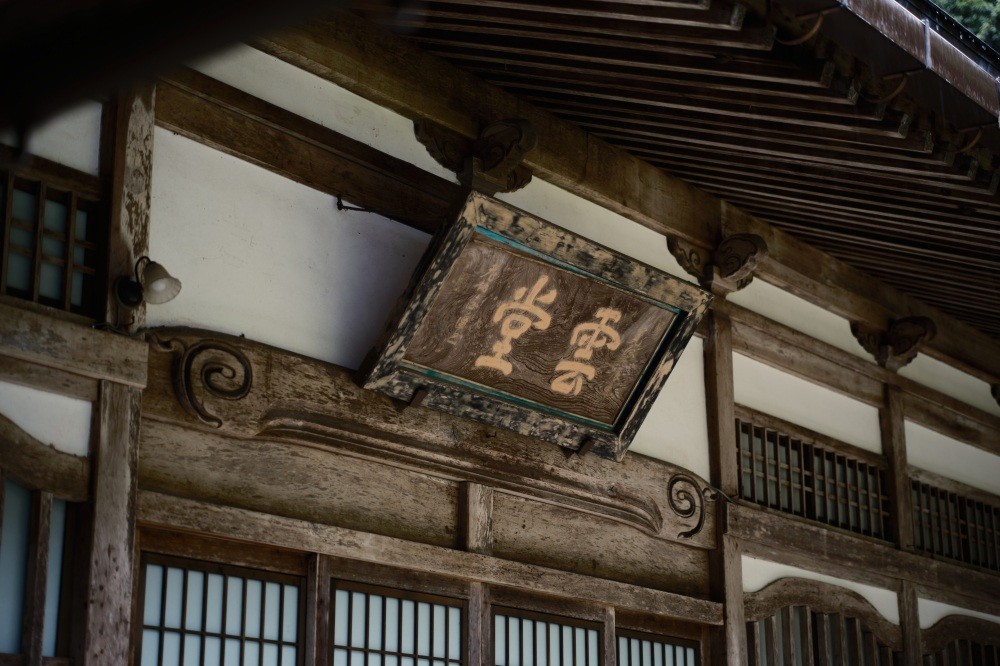
One of the Shichido Garan, the "Sodo," or "monks' hall," is where unsui carry out their daily lives. At Eiheiji Temple, every aspect of daily life is training. Each monk is assigned a single tan (tan — a space of approximately one tatami mat) in which zazen seated Zen meditation, meals, and sleep all take place. At the center of the hall is enshrined a statue of Monju Bosatsu (Manjushri, the Bodhisattva of Wisdom in Buddhism), with the individual tan arranged around it.
The Sodo is also one of the Sanmoku Dojo "Three Halls of Silence," where speaking is strictly forbidden, along with the bathhouse and the lavatory. It is a sacred place of training, and only unsui may enter. Photography is also not permitted, so please take note.
Column
Deepen Your Connection with Zen Through Training Experiences
If you wish to connect more deeply with the spirit of Zen, a training experience is highly recommended. At Eiheiji Temple, in addition to participating in the early-morning choka, you can experience a zazen seated meditation experience (no reservation required, approximately one hour) or "Ippaku Sanzen," an overnight Zen training retreat centered on zazen (reservation required). The training experiences at the head temple of Zen carry a sense of gravitas that could only be felt in the authentic home of the tradition. Step away from everyday life for a while and spend a special time looking inward at yourself.
"Butsuden" and "Hatto" — Enter with a Focused and Respectful Mind
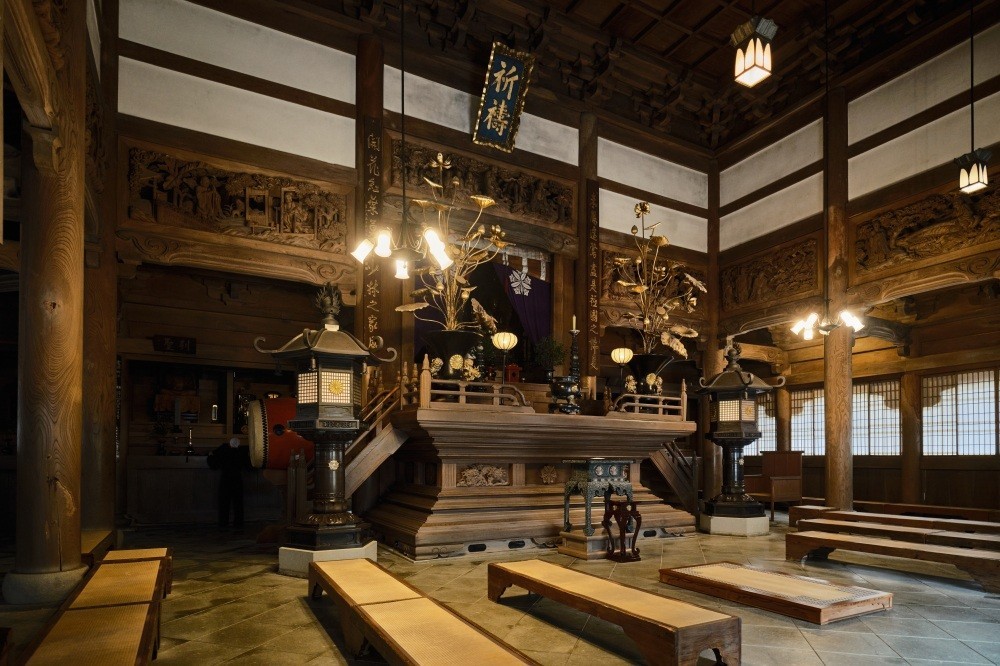
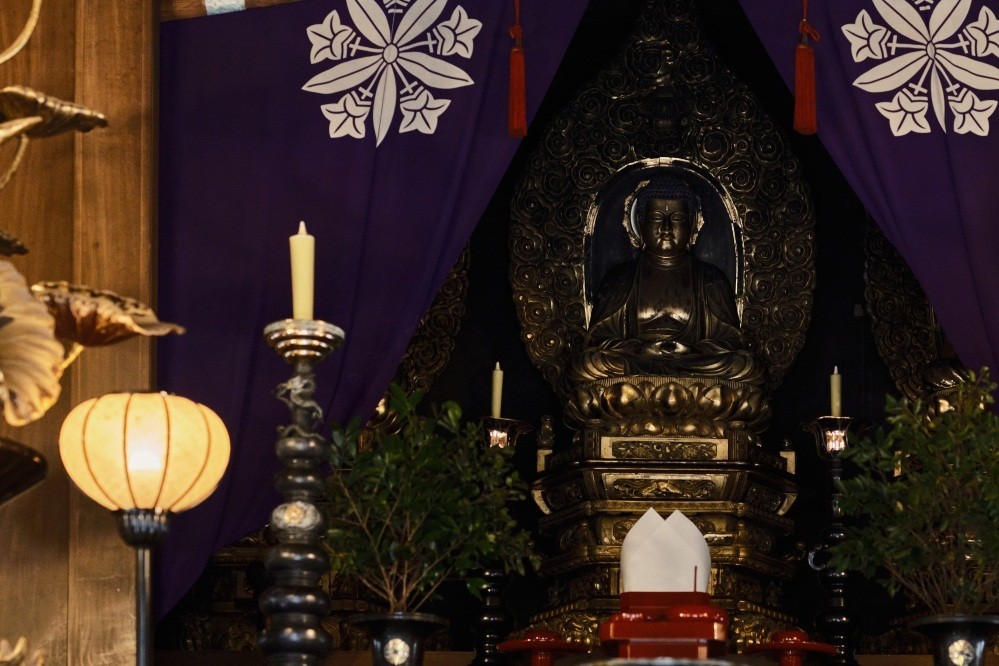
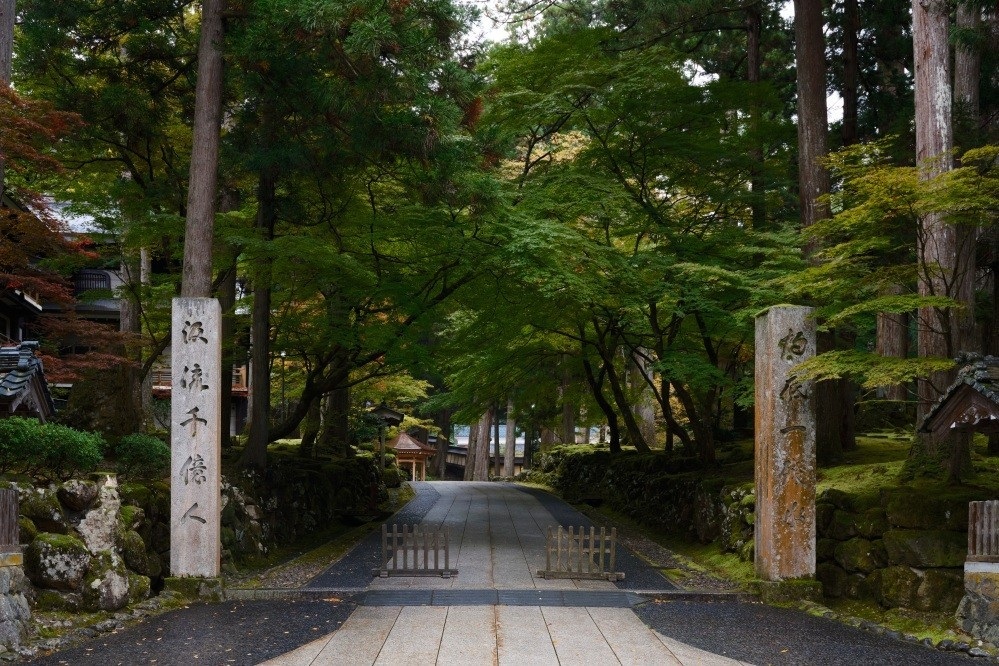
In the center of the Butsuden, or Buddha Hall, the main hall where the principal object of worship is enshrined, is the Shakyamuni Buddha (the historical Buddha, the central figure of Buddhism), flanked on the right by the Maitreya Buddha (the future Buddha in Buddhist belief) and on the left by the Amitabha Buddha (the Buddha of Infinite Light, central to Pure Land Buddhism). The midday and evening services are held here.
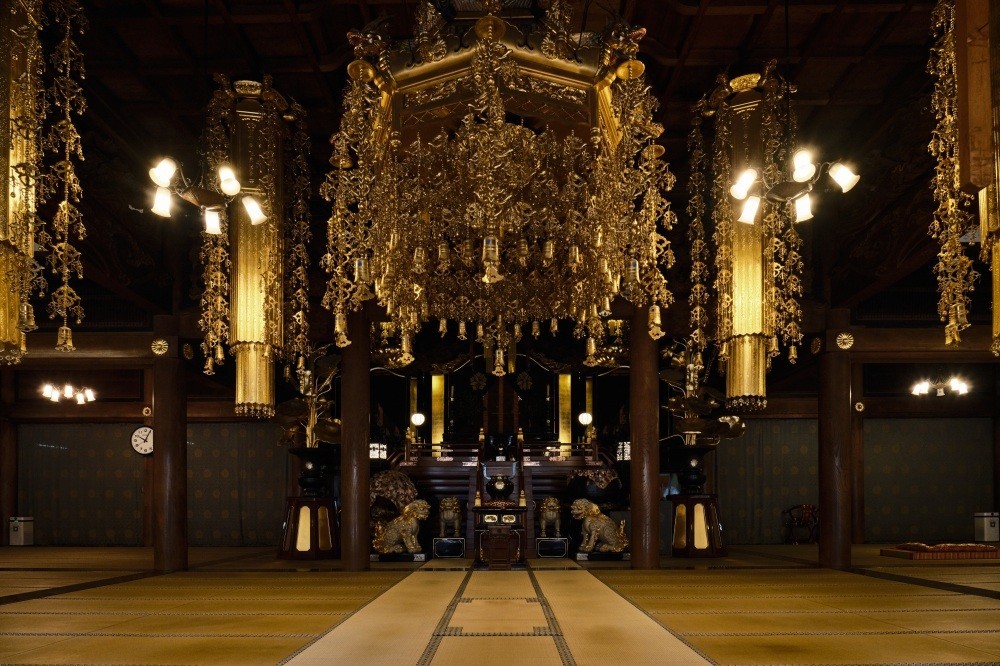
The Hatto, or "Dharma Hall," is used for sermons and large assemblies. Enshrined at the center of the main altar is Kanzeon Bosatsu (the Bodhisattva of Compassion, one of the most widely revered figures in Japanese Buddhism). With a floor area of 420 tatami mats, it is used for the early morning services when all unsui gather together, as well as for various Buddhist ceremonies. Located at the highest point within the temple grounds, the Hatto offers a commanding view of the entire complex — savor the solemn atmosphere alongside the beautiful scenery with a quietly settled heart.
Column
A Reason to Visit in Every Season
The beauty of Eiheiji Temple's scenery changes with the four seasons, and this is not something to be missed at this temple set deep in the mountains and valleys. November, when magnificent autumn colors adorn the imposing halls, is a particularly bustling time of year. Winter at Eiheiji, when snow blankets the entire grounds and the buildings are dressed in their protective yukigakoi protective coverings to guard against heavy snowfall, is beloved by many visitors. The crisp, razor-sharp air draws you into an even more solemn and awe-inspiring world. Beautiful views can be enjoyed from virtually every corner of the grounds, but the view from the Hatto — the highest point in the complex — and from the Shidoden (the ancestral memorial hall near the entrance to the grounds) are particularly recommended.
"Joyoden" — The Sacred Origin of Soto Zen
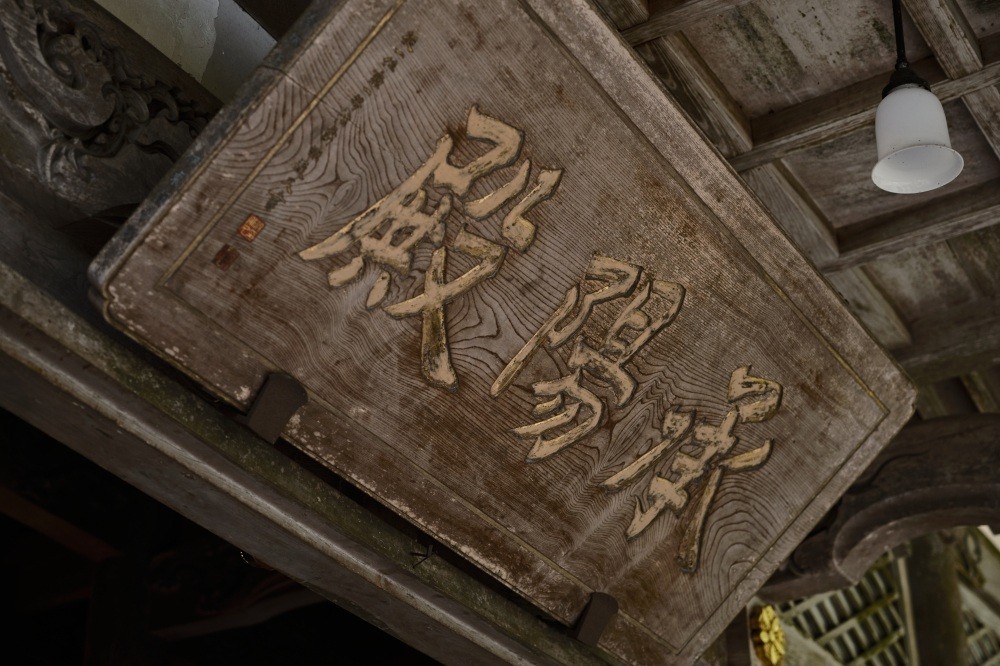
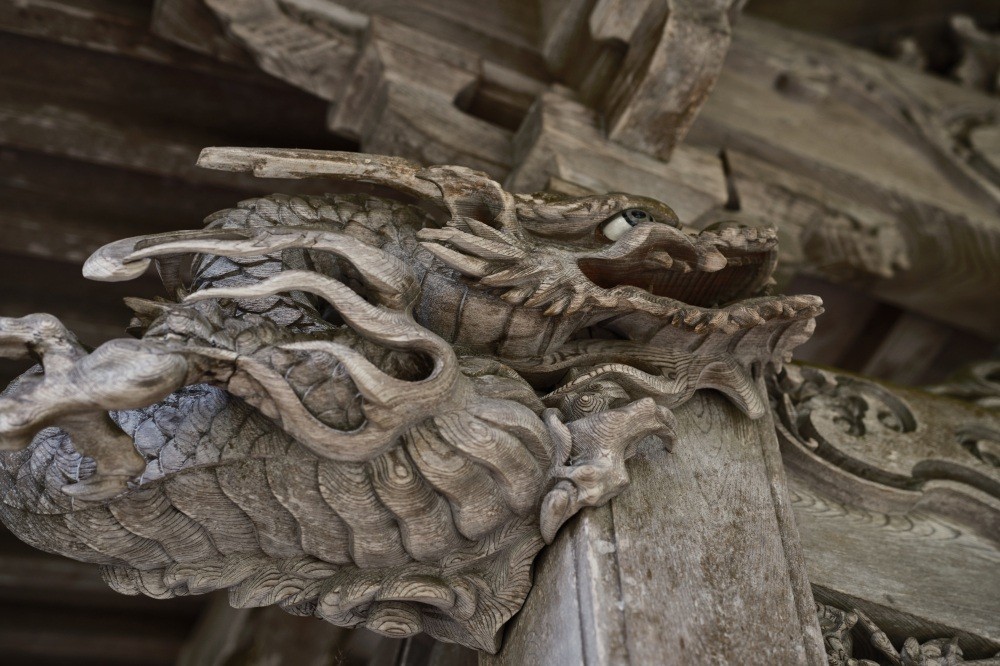
The "Joyoden" is the most hallowed place in Eiheiji Temple, enshrining the image, memorial tablet (ihai — a wooden ancestral tablet inscribed with the posthumous Buddhist name of the deceased, used in memorial rites), and sacred remains of Dogen Zenji, the founder of Eiheiji Temple. It is said that the unsui serve Dogen Zenji as though he were still living among them today. Wooden statues of the successive head priests through the fifth generation after Dogen Zenji are also enshrined here.
The Joyoden was rebuilt in 1881 following a fire in 1879, and its architecture is said to be exceptionally elaborate. Photography of the interior is not permitted, but the taut, sacred air can be felt in person. Be sure also to notice the kibana — the magnificent carvings on the pillars are well worth admiring.
"Daikuin" — The Heart of Eiheiji, Supporting the Daily Life of Training
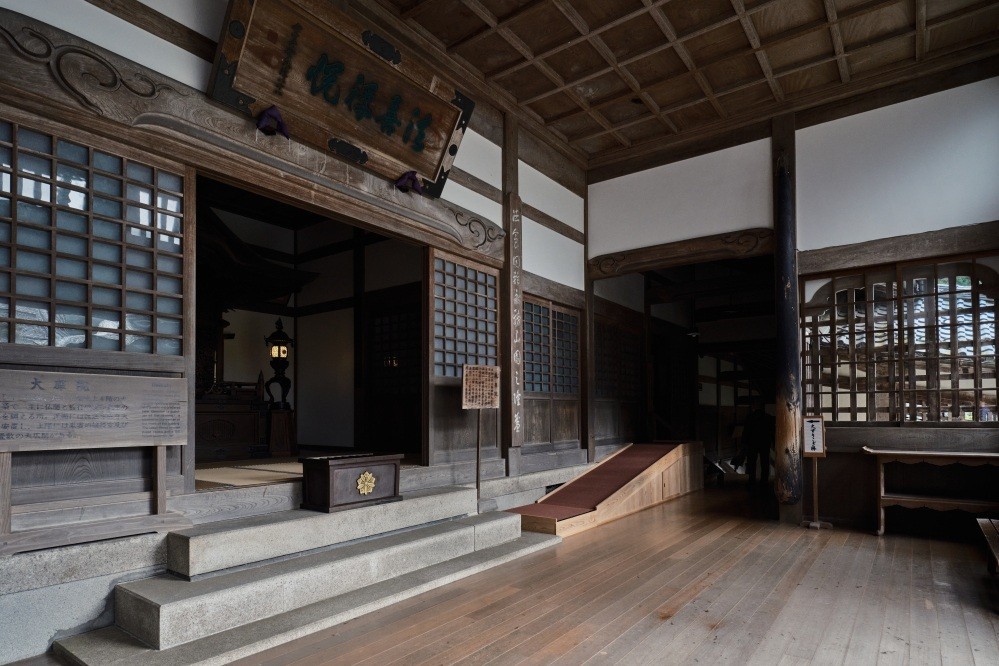
The "Daikuin" is a particularly large building with one basement floor and four above-ground floors. It serves primarily as the kitchen overseeing meals, but also houses storage facilities for supplies, as well as departments responsible for accounting and maintenance, making it a critical and central location for Eiheiji Temple. Enshrined at the front and center is Ida Sonten, a guardian deity in Buddhism, traditionally regarded as the protector of monasteries and provisions.
The unsui assigned to food preparation cook both the meals offered before the Buddha and the meals for the monks themselves. As for the meals: breakfast consists of okayu (rice porridge, a simple and nourishing staple), sesame salt, pickles (tsukemono — traditional Japanese preserved vegetables), and umeboshi (pickled plum, a sour-salty Japanese condiment); lunch is ichiju issai ("one soup, one side dish," a minimalist meal format rooted in Zen austerity); and dinner is ichiju nisai ("one soup, two side dishes"). The cooking style is shojin ryori Buddhist vegetarian cuisine, characterized by the complete absence of meat and fish, and by the creative use of plant-based ingredients. One distinctive technique is "modoki ryori," or "imitation cooking," in which ingredients such as wheat gluten are prepared to resemble meat or fish, a uniquely inventive approach within shojin ryori.
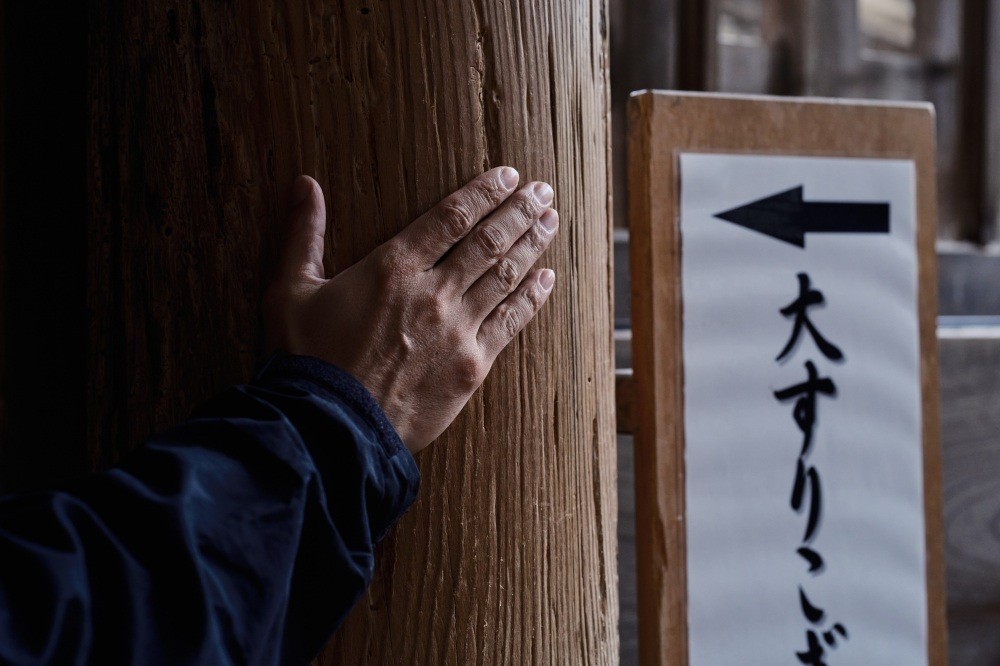
Standing conspicuously in front of the Daikuin is an oversized surikogi, a traditional Japanese wooden pestle used with a mortar. The pole used to tamp the ground when the Butsuden was built has been displayed here in the form of a surikogi.
Column
The Instruments That Mark the Hours
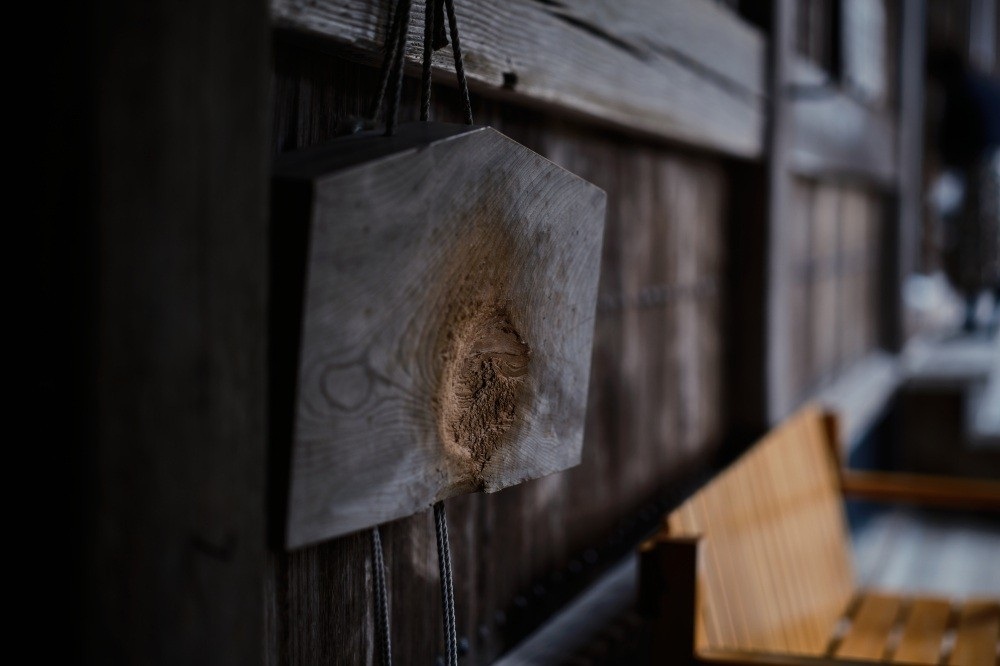
Eiheiji Temple has numerous sound-making instruments used to mark the passage of time. These include the shinrei (a small hanging bell rung to signal wake-up time), the unpan (an iron plate struck to signal meal time, literally "cloud board"), the hogyo (a fish-shaped wooden drum struck to signal that meals are ready in the sodo), and the moppan (a wooden board struck to signal arrivals). Various sounds ring out throughout each day, and they are indispensable to the rhythm of the unsui's lives. The wear and damage accumulated from years of use tell the story of the rigors of daily training.
Exploring the Monzen-Machi (Temple Gate Town)
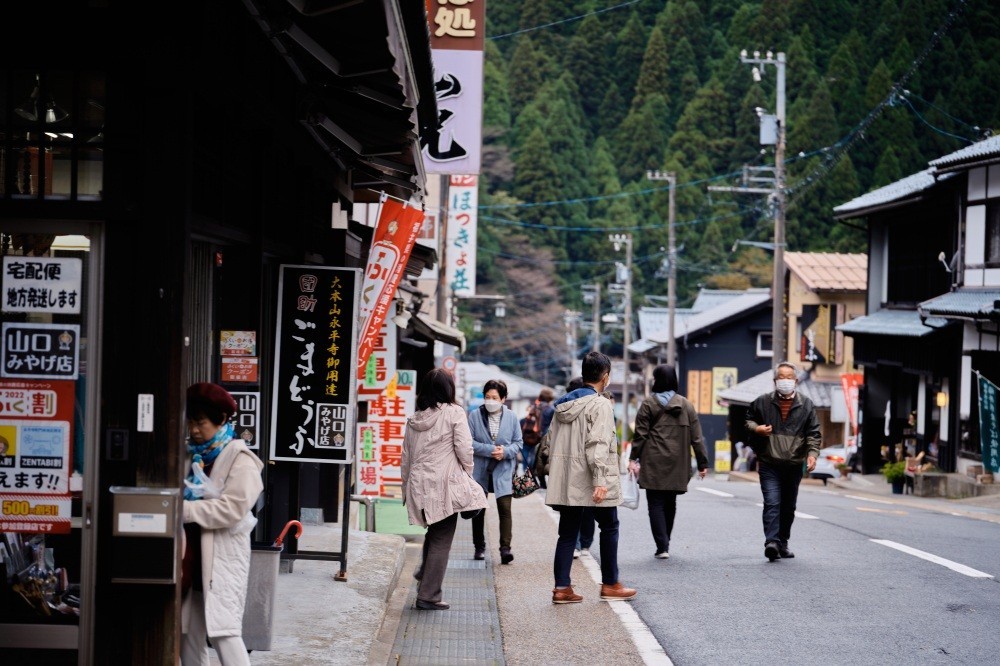
Eiheiji Temple has so much to offer, but the delights of the journey do not end there. After fully savoring your visit to the temple, be sure to explore the monzen-machi, the traditional "temple gate town" that grew up in front of the temple to serve pilgrims and visitors. Lined with restaurants and souvenir shops, it offers a rich array of local foods and treats that you simply must try here: goma-dofu (sesame tofu, a specialty of Buddhist cuisine made from ground sesame and kuzu starch rather than soybeans), Eiheiji soba (buckwheat noodles, a local specialty of the area), goriyaku dango (auspicious rice-flour dumplings believed to bring blessings and good fortune), and more. Even simply strolling past the shops is sure to be a heartwarming experience.
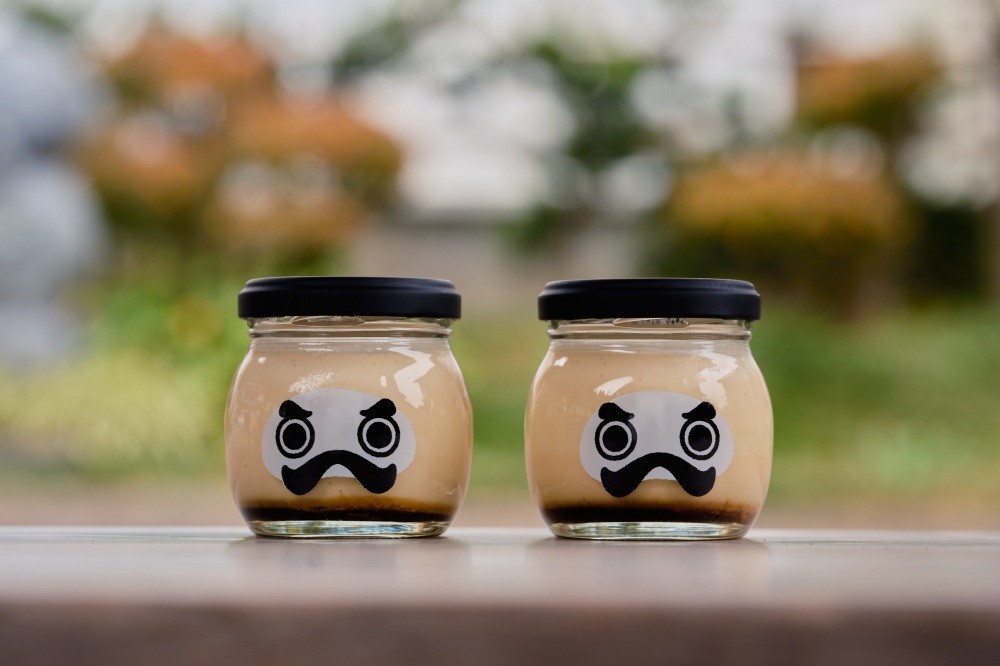
The Eiheiji Daruma Pudding — a smooth, melt-in-your-mouth pudding served in a charming cup decorated with a Daruma, a traditional Japanese good-luck figure based on Bodhidharma, the legendary founder of Zen ー which has become a popular new specialty of Eiheiji, makes a perfect auspicious souvenir. Official site: https://daruma-pudding.com/ [JP]
Enrich your journey further with a stroll through the lively, tourist-filled monzen-machi.
Immerse Yourself Fully in the World of Zen
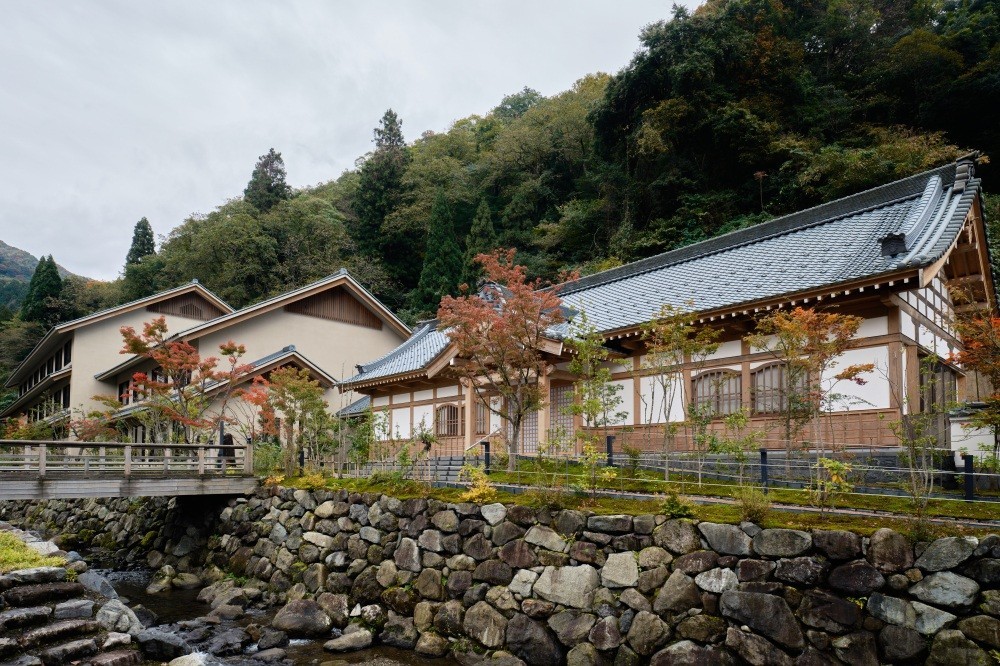
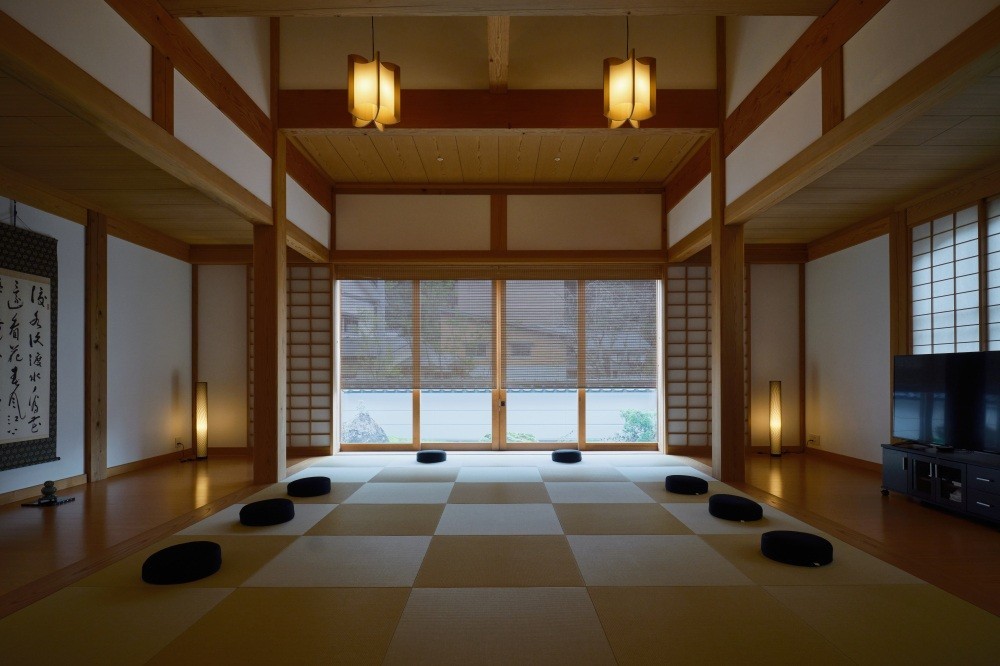
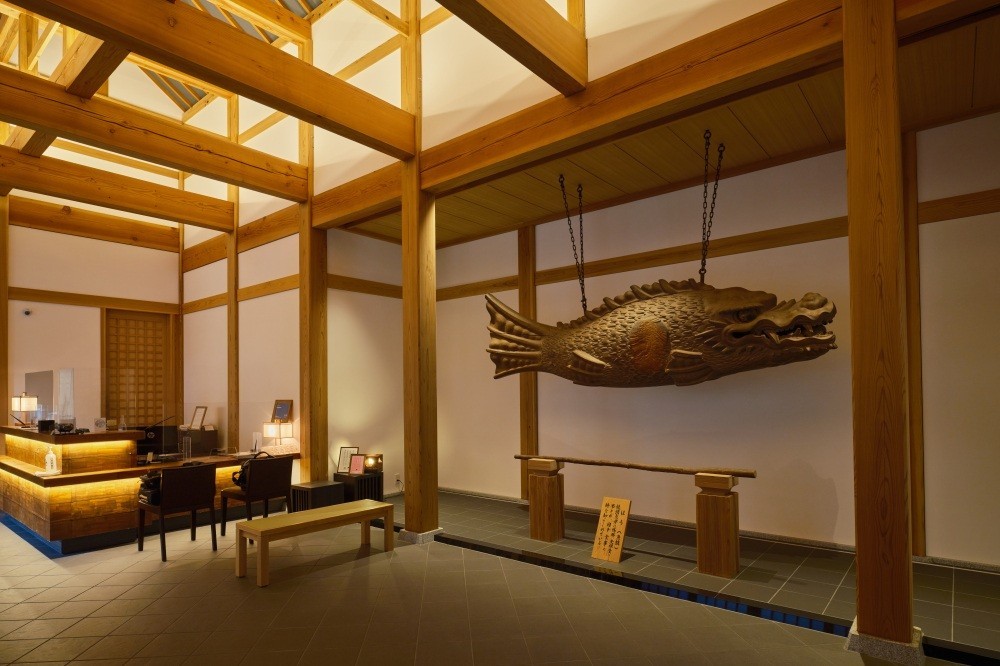
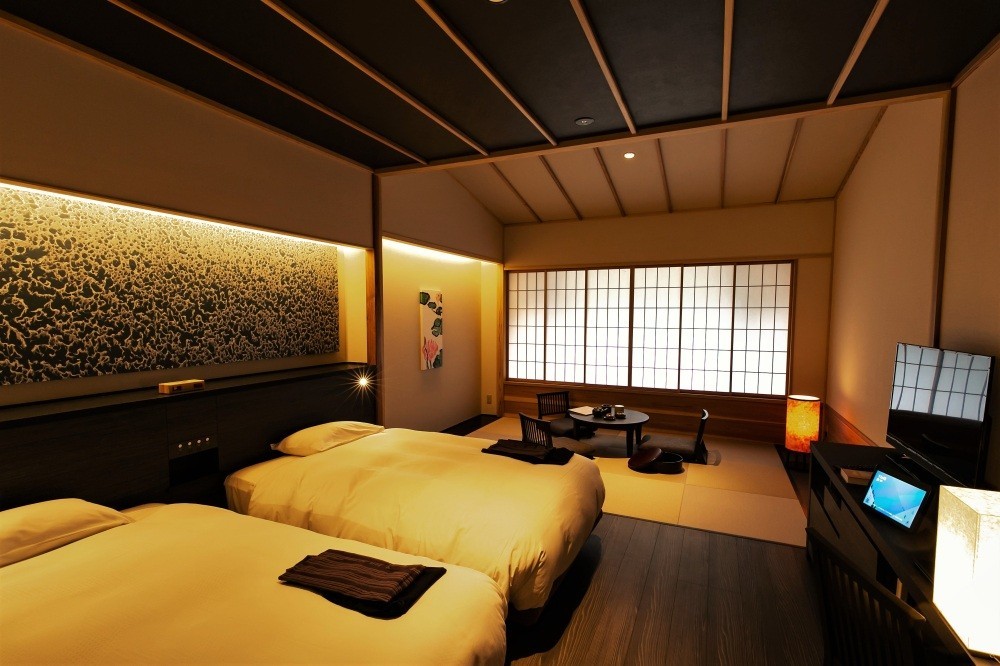
Finally, here is a very special Zen-experience inn to introduce. Located in the revitalized old approach street (restored in 2019), where the gentle sound of the Eiheiji River murmurs pleasantly nearby, "Hakujukan" is a comfortable accommodation that blends the best of a ryokan traditional Japanese inn and a shukubo lodging facility attached to a temple or shrine, where guests can experience monastic life. In the Zen space known as the "Kaiya Room," even when training experiences within Eiheiji Temple itself are unavailable due to the year-round schedule of religious observances, guests can experience zazen and shakyo (sutra copying) with the support of a "Zen Concierge" who has completed training at Eiheiji Temple.
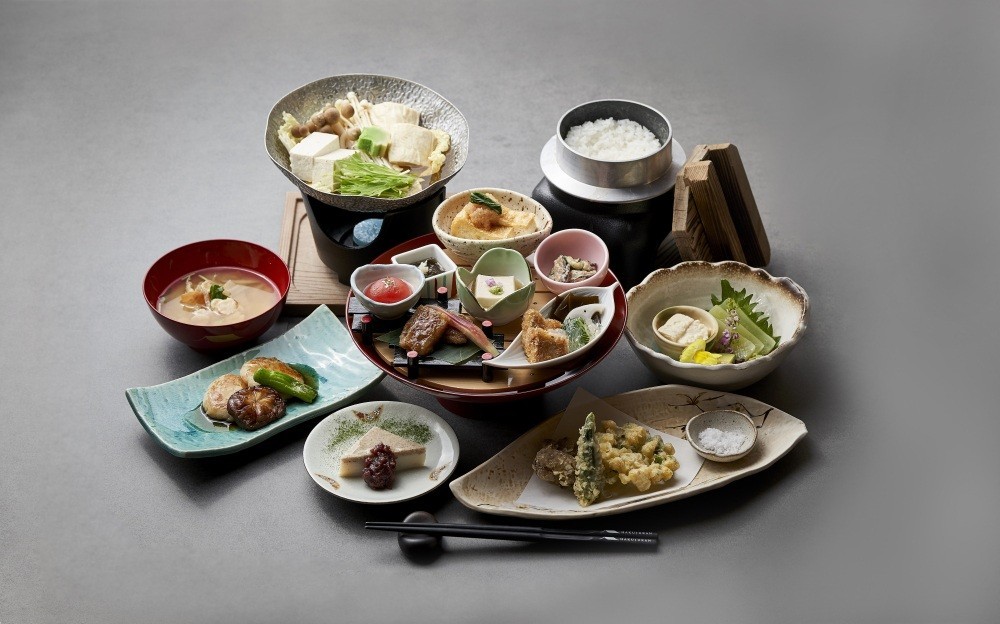
The shojin ryori Buddhist vegetarian cuisine meticulously crafted under the supervision of Eiheiji Temple captures the spirit and techniques of Zen while also being visually beautiful, lifting the mood of your journey considerably. The inn incorporates locally sourced traditional crafts throughout its interiors — including Eiheiji cedar wood, Echizen Washi Paper (traditional handmade paper produced in the Echizen region, with 1,500 years of history, and designated an Important Intangible Cultural Property), and Echizen Lacquerware (traditional lacquered ware from the Echizen region, celebrated for its durability and refined aesthetic). An open-air bath, where you can breathe in the clear mountain air, awaits to soothe the fatigue of your travels. Spend a truly luxurious and deeply restorative time at this inn — the perfect conclusion to your journey through the Zen Village.
Column
A Noteworthy Spot for Food and Sake Worth the Extra Trip
A highly recommended stop after your temple visit is "ESHIKOTO" — located approximately 10 minutes by car from Eiheiji Temple. This sake brewery tourism facility is operated by Kokuryu Shuzo, a venerable sake brewery with over 200 years of history in this area, producing premium nihonshu Japanese sake. With a spectacular location overlooking the Kuzuryu River, the facility offers opportunities to encounter Fukui's food culture and traditional crafts centered on nihonshu. At "acoya," a restaurant in the shopping and dining building of ESHIKOTO, the theme is "Zen, Food, and Sake." Guests can savor meals prepared with a commitment to Fukui Prefecture–sourced ingredients in a refined space. Take your time savoring every spoonful of this soul-nourishing bowl, with the beautiful scenery spreading out before you.
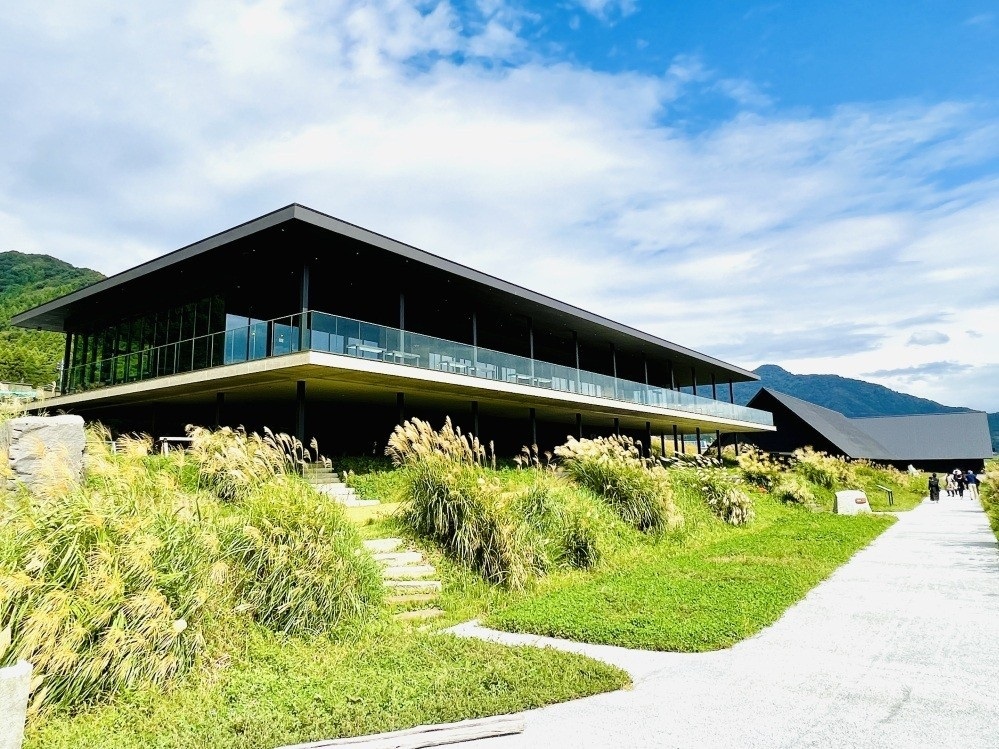
Photo by Tsutomu Ogino (TOMART:PhotoWorks)
After working at a design firm and printing company on the planning, editing, design, and copywriting of print materials and websites, she went independent as a freelancer in 2020. She strives to connect feelings through words and deliver copy that sparks new awareness. "Unwavering" is her keyword in life. She loves a lifestyle that embraces the traditional calendar and the beauty of each season.