Fukui's Seasonal Food Calendar: Spring (March–May)
Fukui Prefecture is abundant with a rich variety of seasonal foods. Here are some foods that are in season during spring (March through May).
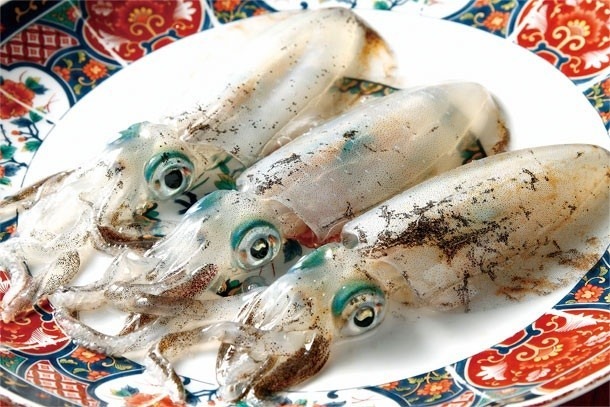
Bigfin Reef Squid
The season for the bigfin reef squid—considered one of the most delicious types of squid—has arrived
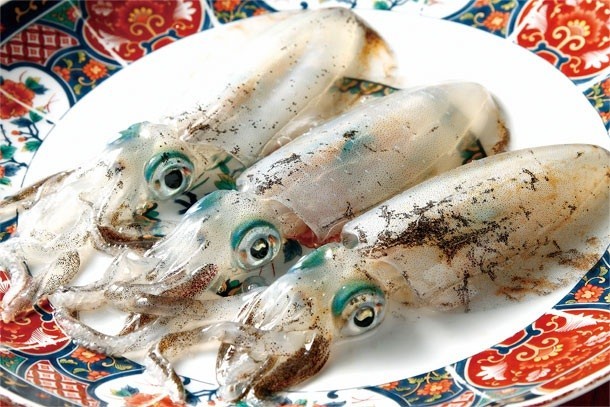
It is said that more than 100 species of squid inhabit the waters off the coast of Japan, and in Fukui Prefecture, species such as Japanese common squid (Japanese flying squid), spear squid (yari-ika), swordtip squid (Japanese shortfin squid), and bigfin reef squid are landed year-round.
The bigfin squid is considered particularly delicious among squid species; large specimens, with a body length exceeding 45 cm, are caught from mid-September through November. They have fan-like fins extending across their entire body, and the area around their large eyes glows a vivid blue.
The waters off Fukui are blessed with an environment ideal for raising high-quality bigfin reef squid, featuring abundant seaweed beds where they live, as well as large schools of small fish—the primary food source for bigfin reef squid born in the spring. In recent years, guesthouses ーminshukuー in Wakasa Town have been focusing on serving bigfin reef squid dishes. Skilled chefs showcase their expertise, with a focus on dishes featuring live-prepared squid.
Ongamijima (Tsunekami, Wakasa Town)
Located in the Sea of Japan, approximately 500 meters offshore to the west of the Tsunekami Peninsula, this is Fukui Prefecture’s largest uninhabited island. The waters surrounding the island are famous as prime fishing grounds where bigfin reef squid are frequently caught. There are many guesthouses on the island, and they provide boat transportation to the island for beachgoers and anglers
are ferried to Ongamijima by boat.
In addition to fishing and fixed nets, you can also catch them by trolling from small boats. Autumn-caught bigfin squid weigh around 400–500 grams, and the squid sashimi is absolutely exquisite.
Spear Squid (yari-ika)
In Fukui, you can enjoy delicious squid all year round. First comes the spear squid in season, followed by the Japanese common squid (Japanese flying squid)—both are a real treat.
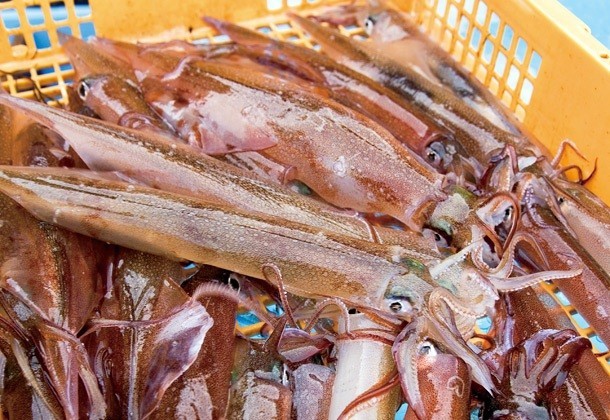
Squid is one of the seafood items favored by many Japanese people, and it’s an indispensable part of the dinner table, appearing in dishes such as sashimi, sushi, salads, simmered dishes, dressed salads, and stir-fries. Fukui Prefecture lands squid year-round, including spear squid (yari-ika), Japanese common squid (Japanese flying squid), and firefly squid (hotaru-ika).
The best way to enjoy spear squid is, without a doubt, as sashimi. Incidentally, the photo shows spear squid that was just landed and is being prepared right on board the boat. Fukui Prefecture is a region where you can enjoy a variety of seafood throughout the seasons, and all of it is renowned for its exceptional flavor. One reason for this is the excellent fishing grounds.
Squid are migratory fish that travel northward along the Japanese archipelago from the south, and the Echizen Coast lies right along that route. As fishermen know, where warm and cold currents collide, the environment is ideal for seafood—it’s a habitat where fresh squid can thrive, growing into delicious specimens with translucent bodies and a firm, crunchy texture. Consequently, various types of squid are landed year-round, and it goes without saying that they’re all delicious.
“Squid landed along the Echizen Coast is more delicious than that from other regions. The sashimi, in particular, has a satisfying bite and a richer flavor. The female spear squid is especially delicious this time of year. They’re just about to spawn and are full of eggs, and the grilled eggs are absolutely exquisite,” says Mr. Nakahashi, a fresh fish wholesaler.
This time, we were given a glimpse into the spear squid fishing season, which runs from January through March.
At 6:30 a.m., the small boat “Kaneichi Maru,” carrying veteran fishermen, set sail from the fishing port in Echizen Town. It takes about 10 minutes to reach the fishing grounds. This spear squid fishing operation uses fixed nets set approximately 100 meters offshore, not far from the coast.
As soon as they arrive, they begin hauling in the net. It takes about 20 minutes to manually reel in the large net—which had been spread out on the seabed at a depth of about 30 meters—little by little. Squid with a slightly reddish hue begin to appear in the net. According to Mr. Nakahashi, the squid’s body surface is transparent when swimming, but turns red when agitated.
The spear squid scooped up from the net are immediately transferred to a tank on board. The crew then pulls in the remaining section of the net and repeats the process of scooping up the squid. Once everything in the net has been hauled in, the net is set again for the next day, and the fishing operation is complete. About an hour later, around 7:30 a.m., the boat returns to the fishing port.
Upon returning to port, the squid are immediately transferred to another tank, and preparations begin for shipment both within and outside the prefecture. Shipments destined for areas outside the prefecture can arrive as early as that same night. They are auctioned off the next morning, delivered to various restaurants, and will be ready to eat by lunchtime.
Following spear squid, the season for delicious squid continues through spring and early summer with Japanese common squid (Japanese flying squid) and firefly squid.
Wild Wakame Seaweed
Wild wakame—a taste of spring harvested by female Ama divers. A hidden gem known only to connoisseurs—check out this handmade powdered wakame.
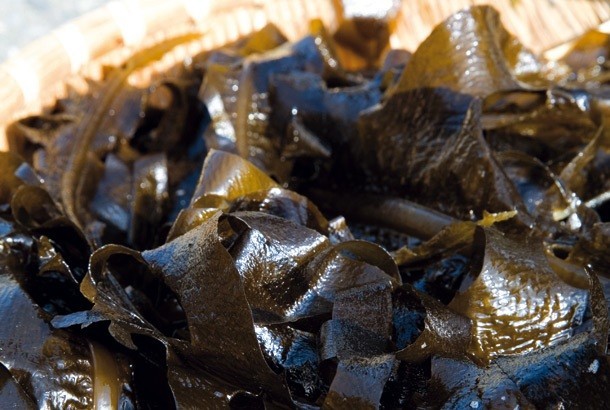
Toward the end of April, when a chill still lingers in the air, the Sea of Japan enjoys calm weather and gentle waves—a stark contrast to the harsh winter conditions. It is during this time that the wakame ーa species of edible brown seaweedー harvest, a hallmark of spring, begins. In the Kome-gawaki district of Mikuni Town, the season opens in late April, and in the waters near the fishing port, you can see numerous female divers at work.
They float wooden buckets on the surface of the water, strap on weights, and dive into the sea. Time and time again, they dive down to harvest the wakame by hand. Here, the primary method involves breaking the wakame off at the base by hand, without using any tools. The fishing period is strictly limited to one hour, beginning at 6:30 a.m. This rule is intended to prevent overfishing and serves as an unwritten code among the divers. Some ama harvest from the rocky shores next to the fishing port, while others set out by boat to their own designated spots to fish. They dive continuously without taking a break during the allotted time.
The fresh wakame harvested during this season is characterized by its tenderness; even the smaller specimens are edible right down to the stem and are highly prized, particularly by high-end ryotei and kappo restaurants. When an order comes in, it is shipped fresh. It’s featured on menus as “Wakame Shabu-shabu.” The freshly harvested wakame is quickly dipped in hot water and enjoyed with ginger soy sauce or wasabi soy sauce. When placed in hot water, it turns a vibrant fresh green, and the aroma of the sea intensifies, making it even more delicious.
Most wild wakame is processed into powdered wakame. This is generally known as “momi-wakame,” and it is also handmade by the female divers.
Once the wakame harvest is over, the stems and mekabu ーthe root of the wakame seaweedー are carefully separated, and the leaves are laid out one by one on a mat called a “su” to dry.
Once dry, they are rubbed by hand to turn them into powdered wakame. Since this process must be completed in a single day, the female divers remain extremely busy even after the harvest ends. Once the wakame harvest season begins, you’ll likely see wakame being dried all over the place.
This powdered wakame is highly regarded not only for the excellent quality of the wakame itself but also because it is entirely handmade. Given the labor involved, it’s no wonder the price is high. And behind its delicious flavor lies the dedication and hard work of many people.
A common local dish is “wakatake-ni,” a stew made by simmering fresh wakame together with bamboo shoots and herring. You can enjoy the smooth, slippery texture of the wakame and the crisp, crunchy texture of the bamboo shoots at the same time. This seasonal dish, combining spring ingredients, is a staple found on dining tables everywhere. Another local specialty is mekabu, and drying it until it’s completely crisp and then deep-frying it is a unique local way to enjoy it.
Firefly squid (hotaru-ika)
The magical “hotaru,” which captivates fishermen, may be small, but it’s truly delicious.
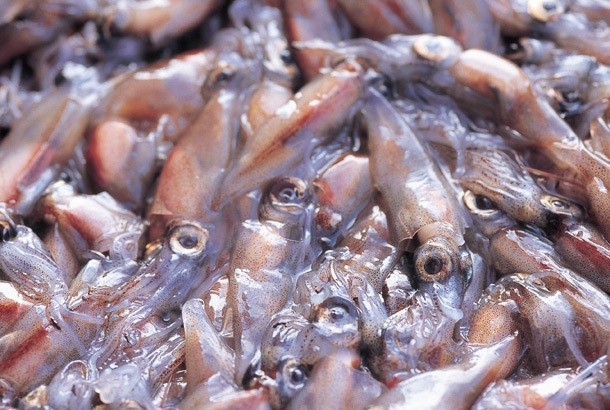
Do you associate firefly squids with Toyama Prefecture? Actually, Fukui Prefecture is also one of Japan’s leading producers, boasting the third-highest catch volume in the country.
The fishing methods also differ from those in Toyama. This is because fishermen must identify the migration routes of firefly squid—which are migratory—to set their nets effectively. In Toyama Bay, with its bowl-shaped topography where firefly squid venture close to the coast, fixed nets are the primary method. In contrast, in Fukui, firefly squid that have drifted offshore into the Sea of Japan on ocean currents are caught using bottom trawl nets.
▲The firefly squid fishing season begins around March and peaks in April and May. In Echizen Town, as many as 40 boats set sail at the height of the season. After landing, the majority is shipped to Toyama while still fresh.
Firefly squid are also landed in the San’in region (Tottori, Shimane, northern Yamaguchi and sometimes northern Hyogo and Kyoto prefectures), but are there differences in size or taste between them?
“Those from San’in tend to be on the smaller side, while those from Toyama are larger. Fukui’s are right in the middle—a size that’s easy to eat. Some people choose the size based on how they plan to use them, like for tsukudani or shiokara. But there’s no difference in taste,” says Mr. Yonezawa, a fisherman from Echizen Town.
While the most common way to eat them is to toss boiled firefly squid in a mustard-vinegar-miso dressing, there’s also a method where only the tentacles are collected to make “squid somen,” from the fine white noodles of the same name. During the peak season from April to May, they appear on the menus of local izakaya, delighting diners’ palates as a taste that evokes the essence of spring.
- Recipe #1
- Since they grow to only about 6 cm even as adults, one of the real pleasures of firefly squid is being able to eat them whole. When prepared as tsukudani, preserved food boiled in sweetened soy sauce, the flavor of the sea spreads with every bite.
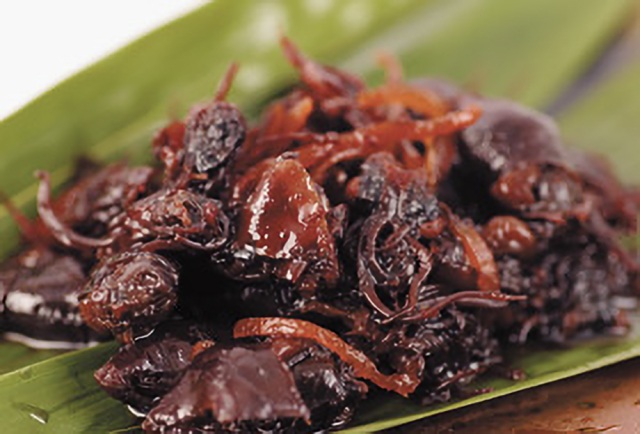
- Recipe #2
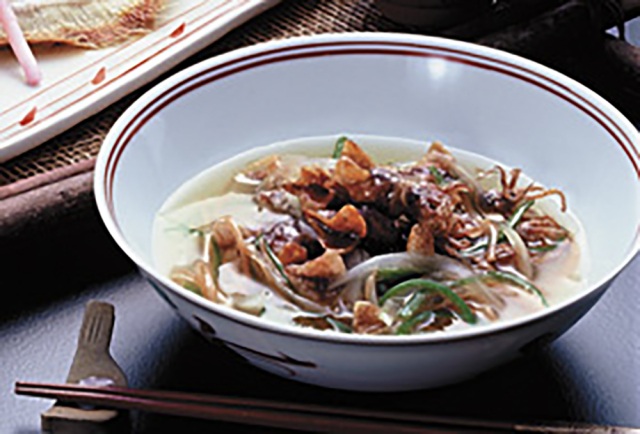
- "Firefly squid (hotaru-ika) covered in a thick starchy sauce" consists of hotaru-ika coated in potato starch and deep-fried, topped with a vegetable sauce made by simmering dashi, granulated sugar, soy sauce, vinegar, and julienned vegetables, then thickened with potato starch dissolved in water. It’s a delectable dish packed with the rich umami flavor of the squid.
Column
Spring in Fukui
Discover the beautifully unique scenery, activities, foods, and events to enjoy in Fukui in the Spring