Fukui’s soul food: Echizen Oroshi Soba Noodles
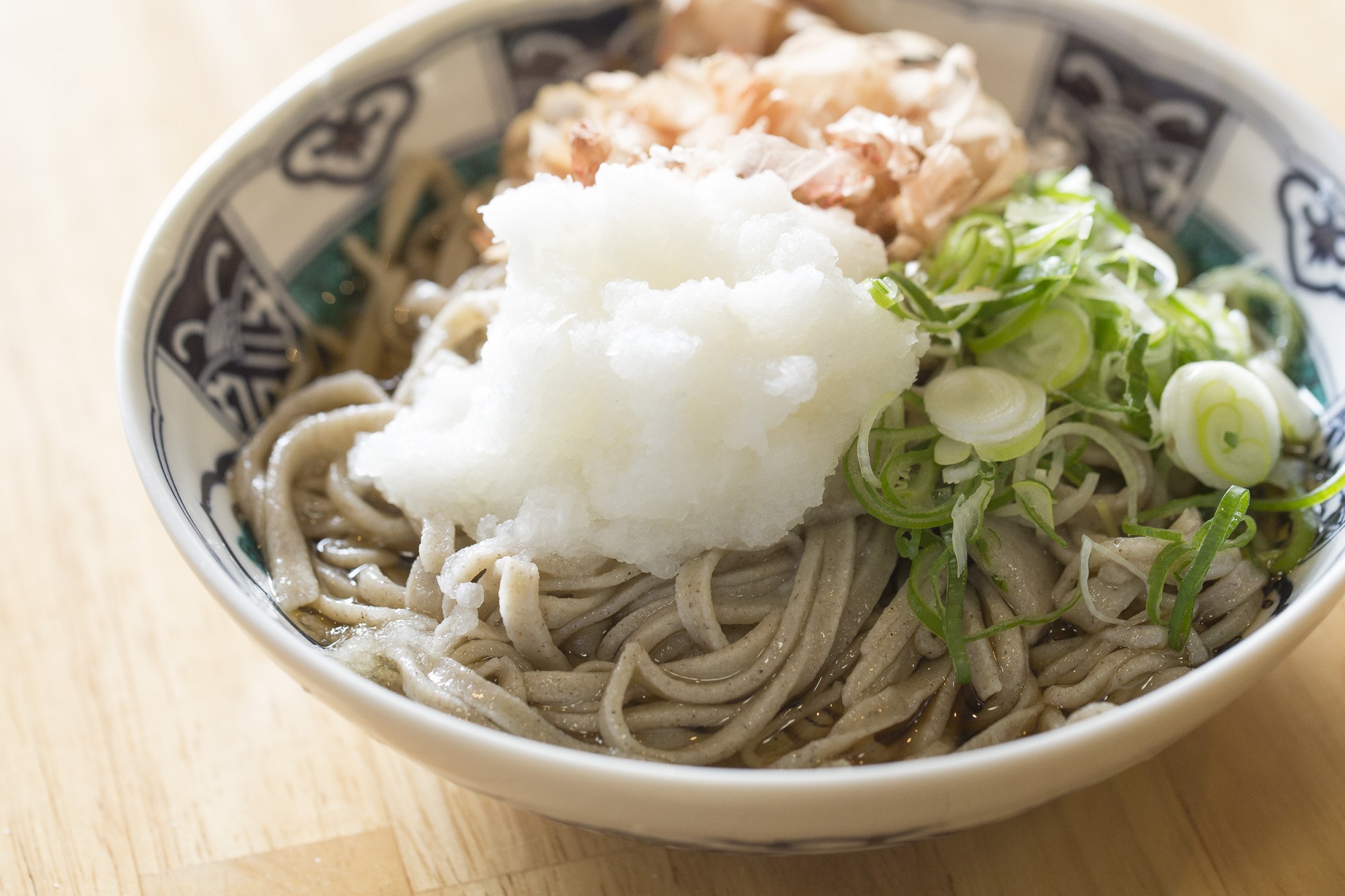
Echizen Oroshi Soba is a cold noodle dish served primarily in the Reihoku region of Fukui Prefecture, topped with a generous amount of grated daikon radish, bonito flakes, and chopped green onions. Despite its simple appearance, this is a dish with great depth, rich in history and a commitment to flavor.
In this article, we’ll take an in-depth look at the characteristics and appeal of Echizen Oroshi Soba Noodles, Fukui’s soul food!
Echizen Oroshi Soba Noodles, the pride of Fukui, the "Soba Capital"
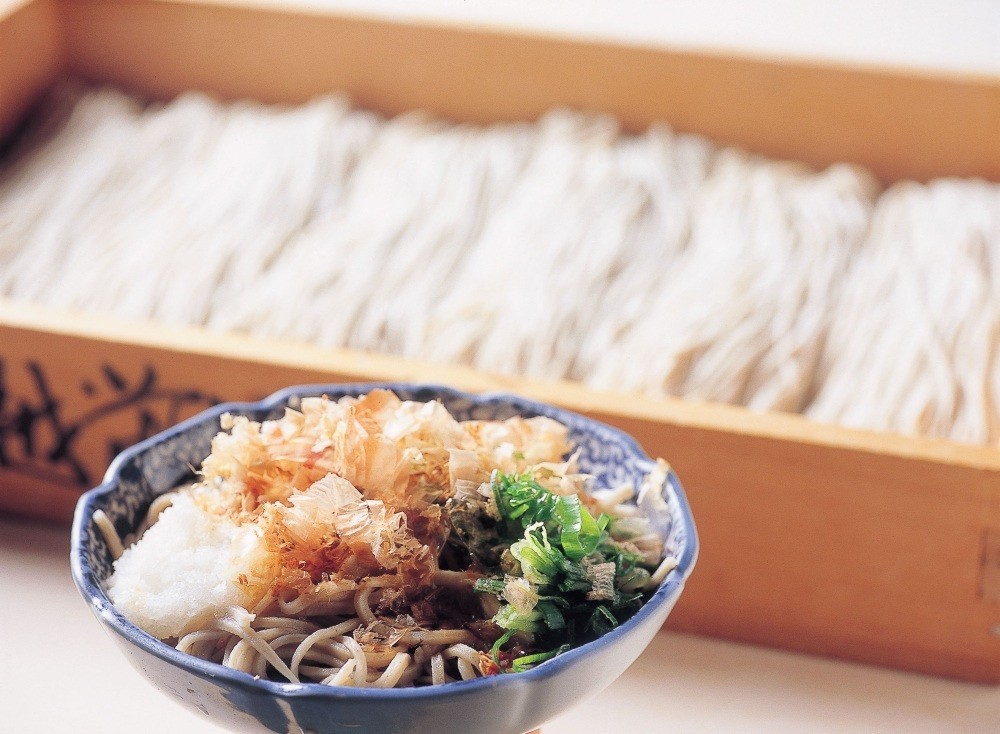
Echizen Oroshi Soba is a cold dish of buckwheat noodles topped with a generous amount of grated daikon radish, bonito flakes, and chopped green onions. The dark-colored, firm noodles are incredibly satisfying to eat: once you try them, you’ll be hooked! The grated daikon is made from spicy daikon radish, giving it a sharper kick than typical grated daikon.
In Fukui, eating cold Oroshi Soba is a staple even during the cold winter months. The simple yet flavorful soba pairs perfectly with the tangy, spicy grated daikon, and soba enthusiasts come from all over the country just to taste Echizen Oroshi Soba noodles.
The fact that Fukui Prefecture’s soba won the National Grand Prix at the “Delicious Soba Production Area Awards 2020” and that the prefecture ranks third nationwide in the number of soba restaurants per prefecture clearly shows that Fukui is a soba powerhouse.
An ancient form of emergency food!? The Origins of Echizen Oroshi Soba noodles
There are various theories about the origins of Echizen Oroshi Soba noodles, but it is believed to date back more than 400 years ago. The story goes that it began when Honda Tomimasa, who became the lord of Echizen Fuchu Castle, brought a soba artisan named Kaneko Gonzaemon from Fushimi, Kyoto. He encouraged the people of the castle town to grow buckwheat (soba) as an emergency food supply in preparation for wars and disasters, and to further enhance its health benefits, he devised a dish of soba served with grated daikon radish.
Incidentally, the name “Echizen Soba” came into use after Emperor Shōwa tasted Echizen Oroshi Soba noodles in Fukui. It is said that during his imperial tour of the Hokuriku region, Emperor Shōwa took a liking to Fukui’s Echizen Oroshi Soba noodles and remarked, “That’s Echizen Soba,” and the name stuck from then on.
Could the secret to soba with rich aroma lie in native buckwheat varieties!?
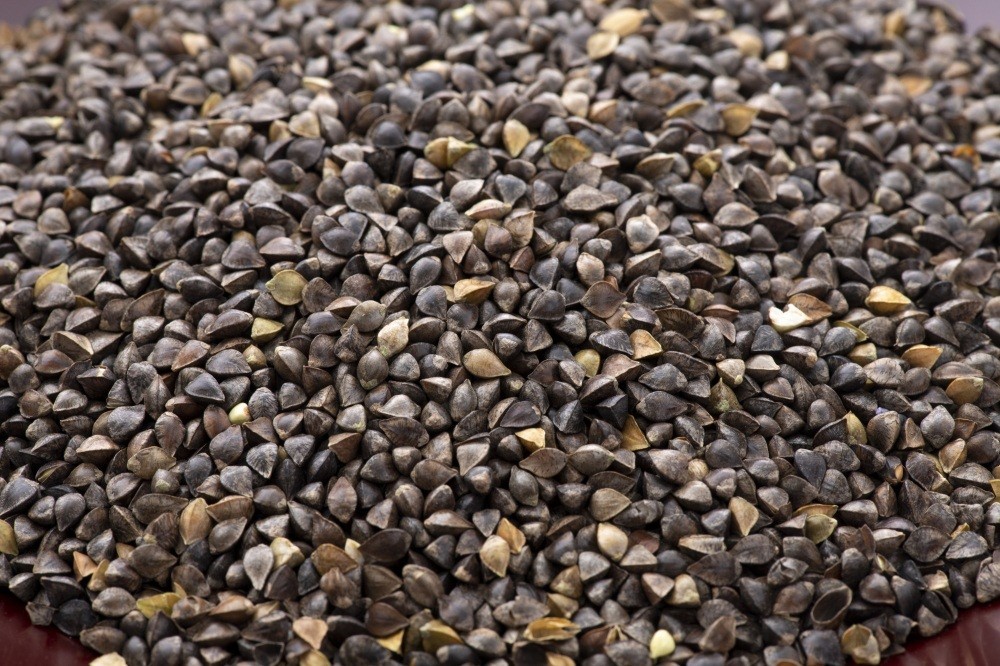
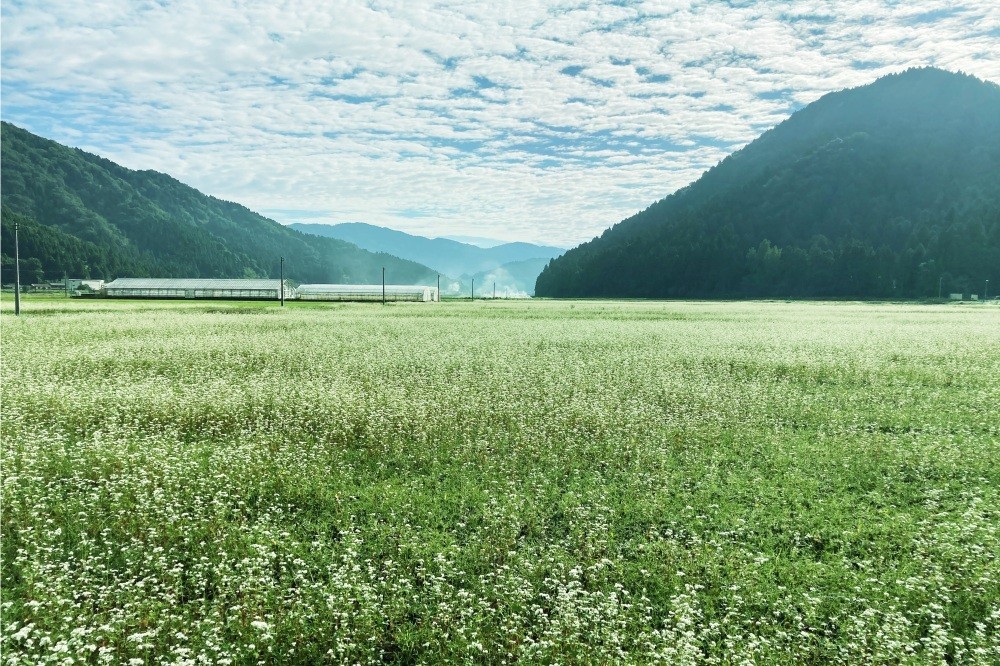
The whole buckwheat seeds (soba grains) grown in Fukui Prefecture are characterized by their small size and dense texture.
Fukui Prefecture is a rare production area that continues to cultivate native varieties of buckwheat throughout the entire prefecture, earning it the nickname “the Kingdom of Native Buckwheat.” “Native varieties” refer to traditional buckwheat that has not been genetically modified. While they are difficult to cultivate and yields are often unstable, they are characterized by their rich aroma and deep flavor.
Twenty-two varieties of native buckwheat are cultivated in Fukui Prefecture, including the Katsuyama, Maruoka, Imajo, and Ono varieties. Since the flavor and taste of these native varieties differ by region, visitors can enjoy a diverse range of tastes right within Fukui Prefecture.
Every year from mid-September to late October, delicate white buckwheat flowers bloom profusely across the fields. Then, when the buckwheat harvest begins around early November, the flavorful "new-harvest buckwheat" makes its appearance in local restaurants.
Column
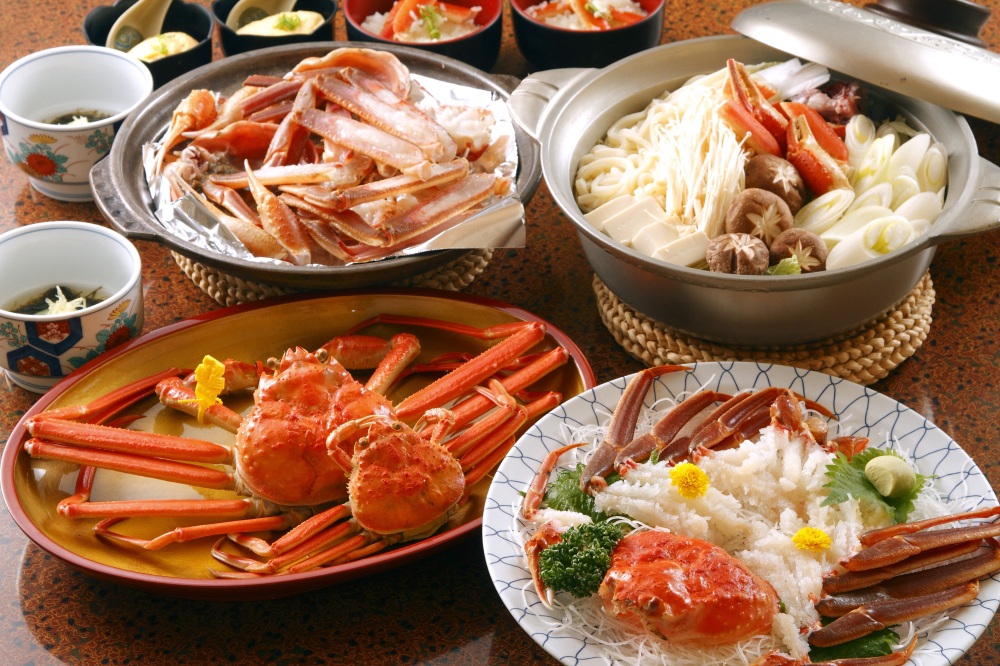
Fukui's Seasonal Food Calendar: Fall (September–November)
Fukui Prefecture is abundant with a rich variety of seasonal foods. Here are some foods that are in season during the fall (September through November).
A carefully stone-ground buckwheat flour!
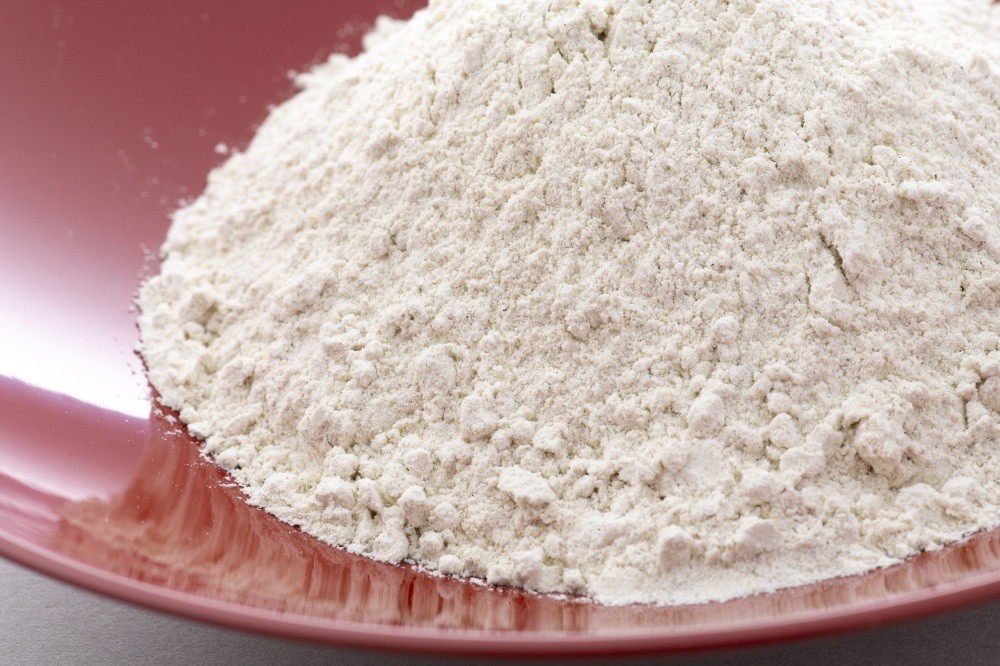
The deliciousness of Echizen Oroshi Soba Noodles is deeply tied not only to the quality of its whole buckwheat grains but also to the milling techniques used to produce it.
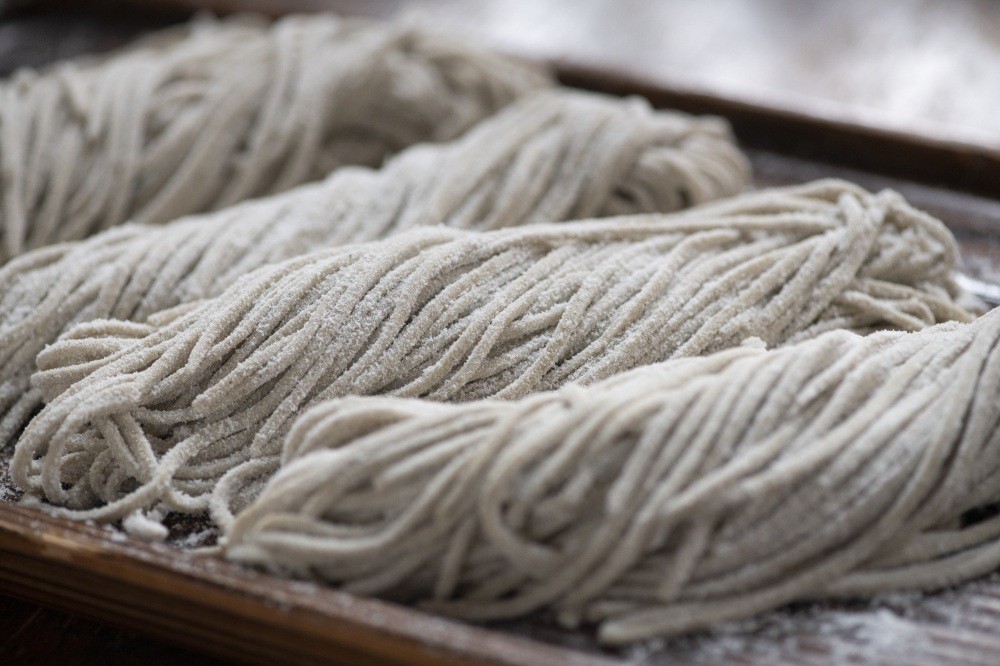
After harvest, the whole buckwheat grains are stored in warehouses with strictly controlled temperature and humidity. The kernels are then ground into flour using traditional stone mills. The buckwheat flour is often made using a method called “hikigurumi,” in which the bran and husks are ground along with the kernels, resulting in buckwheat flour with a characteristic dark color.
Stone-milling is slower and more time-consuming than machine milling, but it preserves the buckwheat’s natural flavor and sweetness, resulting in a fragrant buckwheat flour.
It’s clear that Fukui’s buckwheat prioritizes taste over efficiency.
There are three ways to eat Echizen Oroshi Soba Noodles
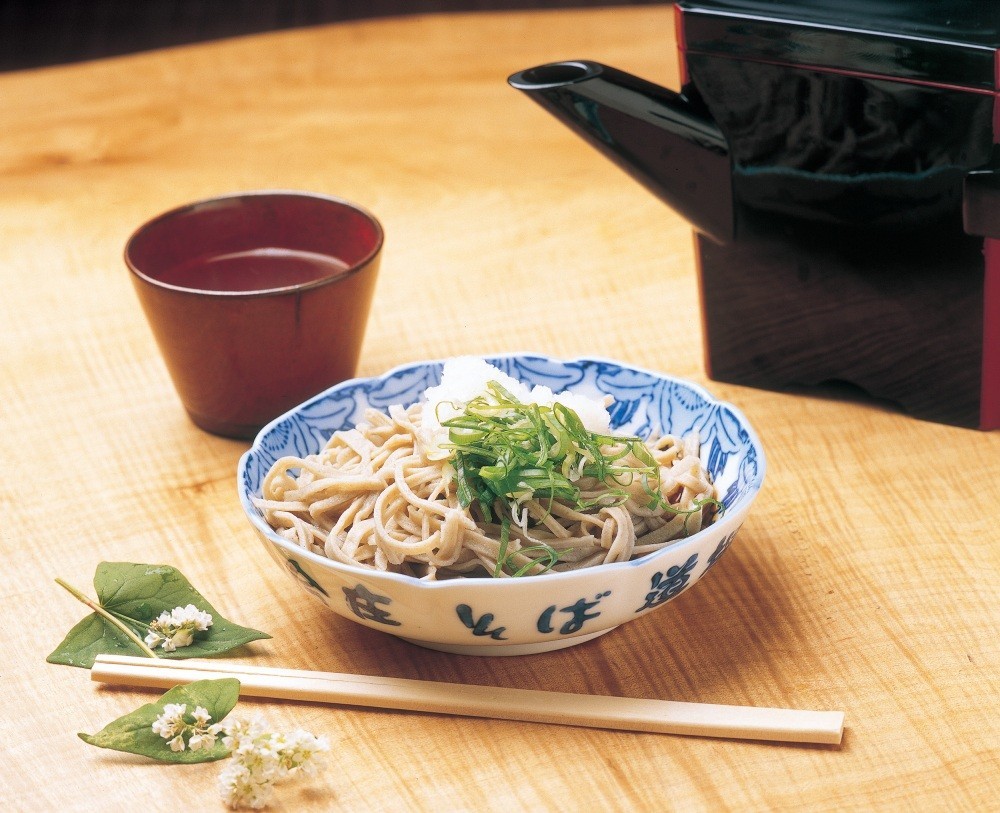
While soba noodles in Japan are generally eaten by dipping it in broth, the standard way to eat Echizen Oroshi Soba noodles is to pour the broth directly over the noodles.
Currently, there are roughly three ways to eat Oroshi Soba in Fukui Prefecture.
① Dashi (broth) and grated daikon are served separately
② The grated daikon radish is added to the broth
③ The juice from the grated daikon is added to the broth
Since each restaurant serves it differently, you can enjoy trying out various ways to eat it.
Health Benefits of Echizen Oroshi Soba noodles
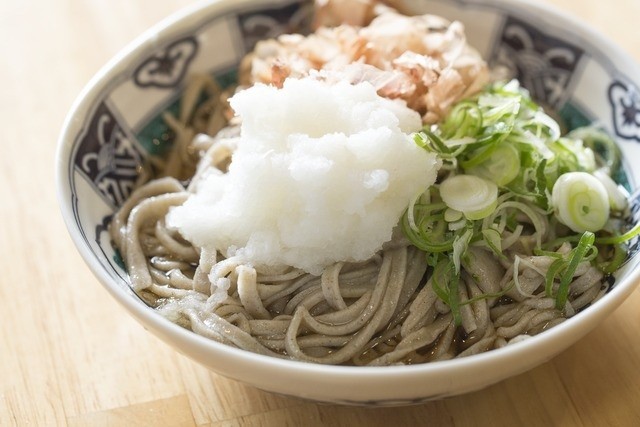
Echizen Oroshi Soba noodles are also gaining attention as a healthy food.
Buckwheat is rich in “rutin,” a type of polyphenol, making it ideal for preventing conditions such as atherosclerosis and high blood pressure.
In addition, the vitamin C found in abundance in grated daikon radish enhances the effects of “rutin,” so eating it together with soba creates a synergistic effect.
Furthermore, grated daikon radish is rich in enzymes called “diastase” and “amylase,” which aid in digestion and absorption, making it easy on the stomach.
Echizen Oroshi Soba Noodles aren’t just delicious—they’re also nutritionally excellent, making them a dish with nothing but benefits. Please enjoy their delicious flavor, which is perfect for everyone, regardless of age or physical condition.
Note: Echizen Oroshi Soba Noodles are topped with bonito flakes and often use fish-based broth, so they are not vegan. (Pescatarians OK)
Restaurants Where You Can Eat Echizen Oroshi Soba Noodles
Here are some restaurants in Fukui Prefecture where you can enjoy Echizen Oroshi Soba noodles!
Click here (External site: Fukui Prefecture’s soba information site, Fukui Soba Online—Japanese only)
Column
Explore Japan’s Undiscovered Food Haven in FUKUI
Blessed with a rich climate, pure spring water, and exceptional ingredients, Fukui has long supported the food culture of Japan’s ancient capital. Often called a true “culinary treasure trove,” Fukui offers the freshest seafood, mountain harvests, and traditional local dishes—authentic flavors that bring out the best of each season. In the southern Wakasa region, generations of fishermen and farmers have even supplied fresh delicacies to the Imperial Family for centuries. For food lovers, there’s no place quite like Fukui.