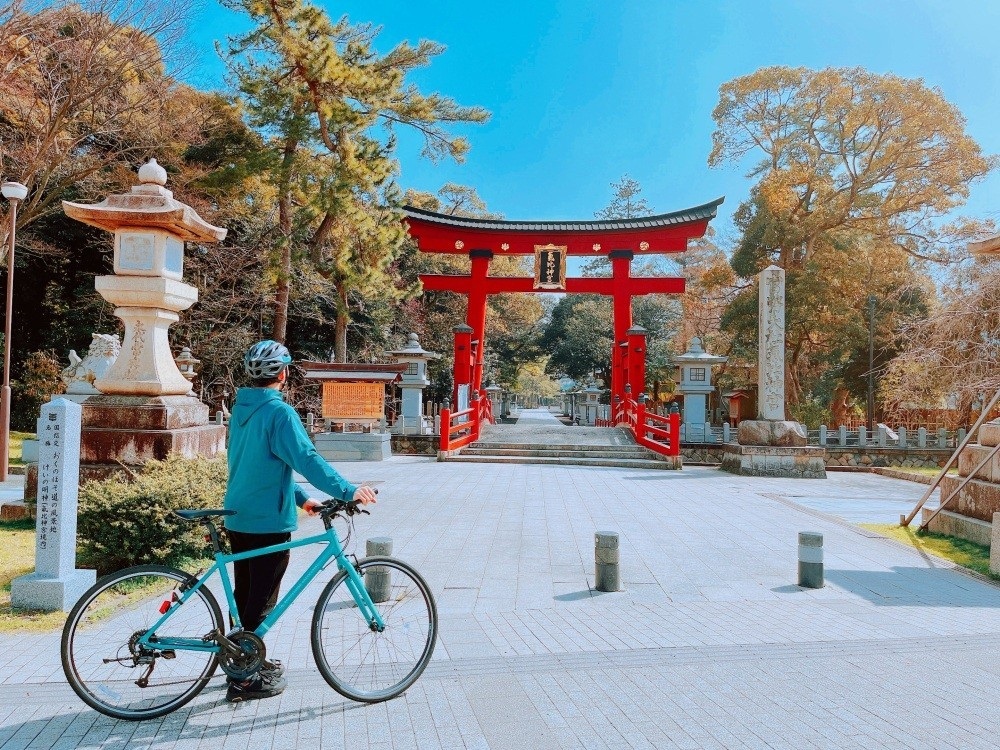
Enjoy the Five Lakes of Mikata cycling route: Gokoichi
The Gokoichi is an easy cycling route that can be enjoyed as a day trip from the Kansai and Chukyo (Nagoya) regions. The approximately 33-kilometer course makes a loop around the Five Lakes of Mikata and takes about 4 hours to complete. With minimal elevation changes and scenery that varies from lake to lake, this itinerary can be enjoyed even by beginner cyclists.
Follow us on our Gokoichi day trip to experience its charm firsthand!
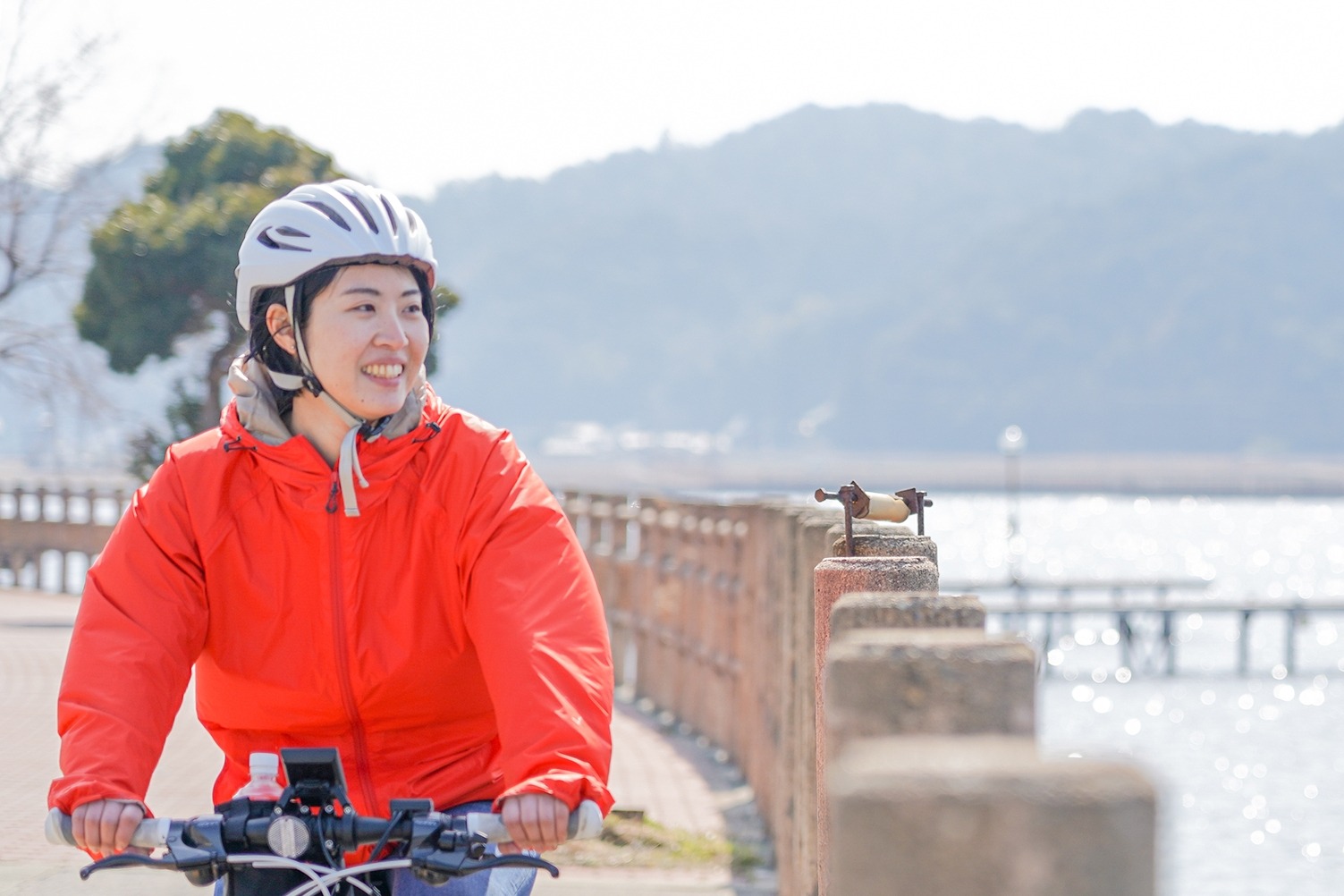
Gokoichi: Enjoy The Five Lakes of Mikata all at once
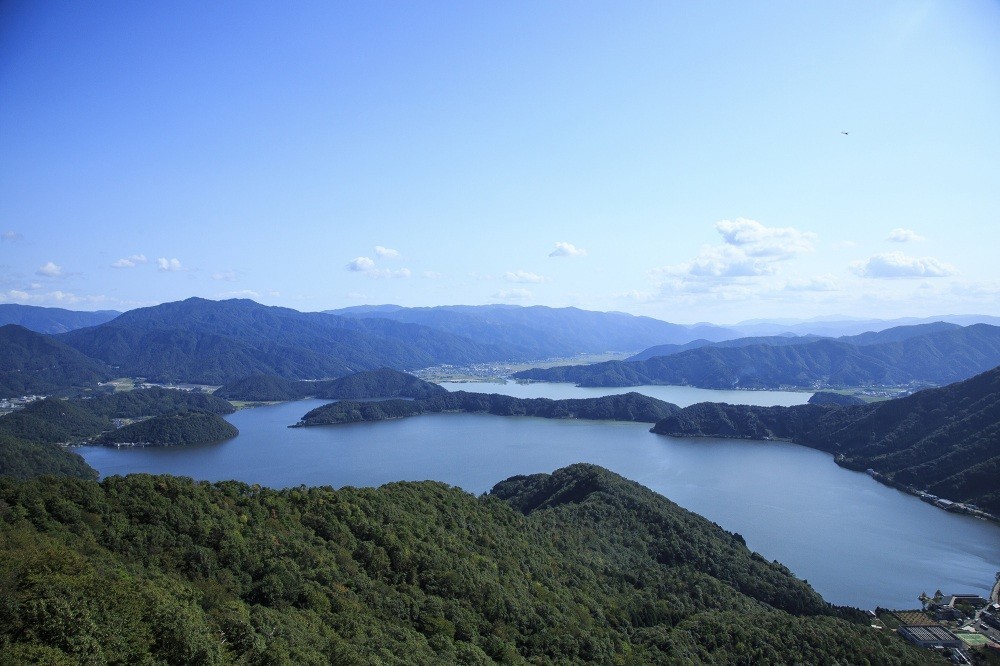
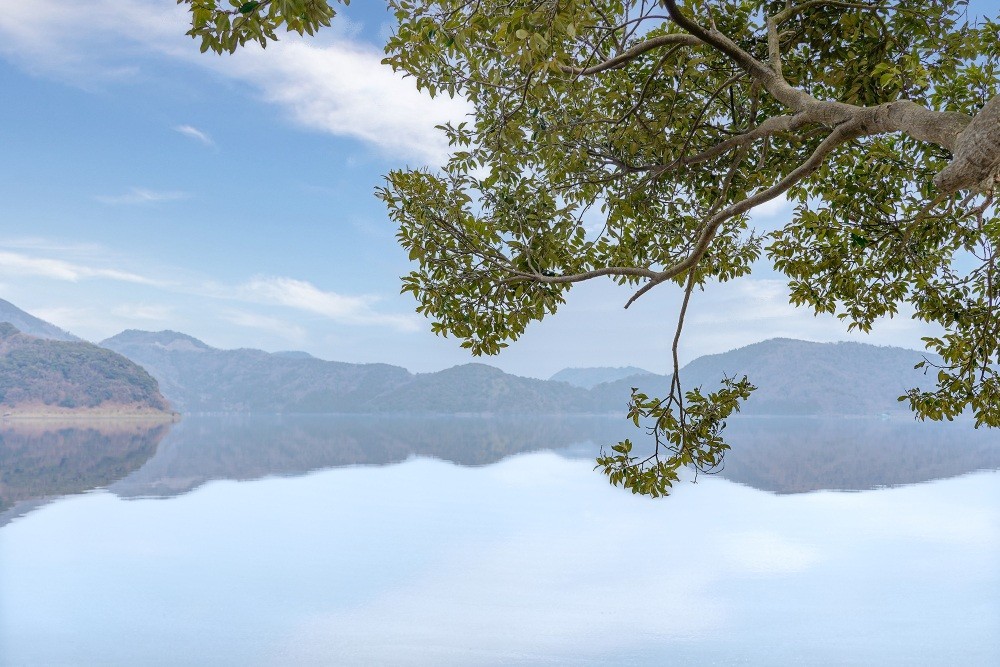
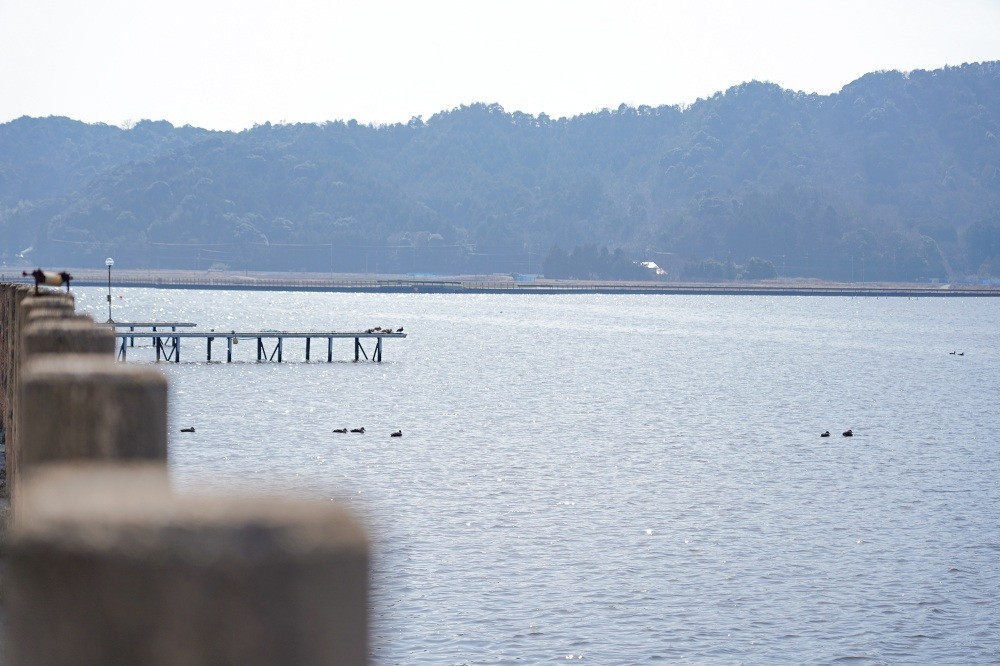
The “Five Lakes of Mikata” (Mikata Goko in Japanese) is the collective name for five lakes—Lake Kugushi, Lake Hiruga, Lake Mikata, Lake Suigetsu, and Lake Suga—that span over Mihama and Wakasa Town in Fukui Prefecture.
While each of the Five Lakes of Mikata has its own unique characteristics and scenery, the "Gokoichi”—a bike ride that circles all the lakes—lets you enjoy them all at once! This time, we set our starting point at the Wakasa-Mihama Tourism Association, located inside JR Mihama Station—a 9-minute drive from the Wakasa-Mihama Interchange.
For this article we challenged ourselves and gave the Gokoichi route a try! Read the rest of the article to learn all you'd need to enjoy this journey yourself!
Choose among 8 bicycle types to ride in your style!
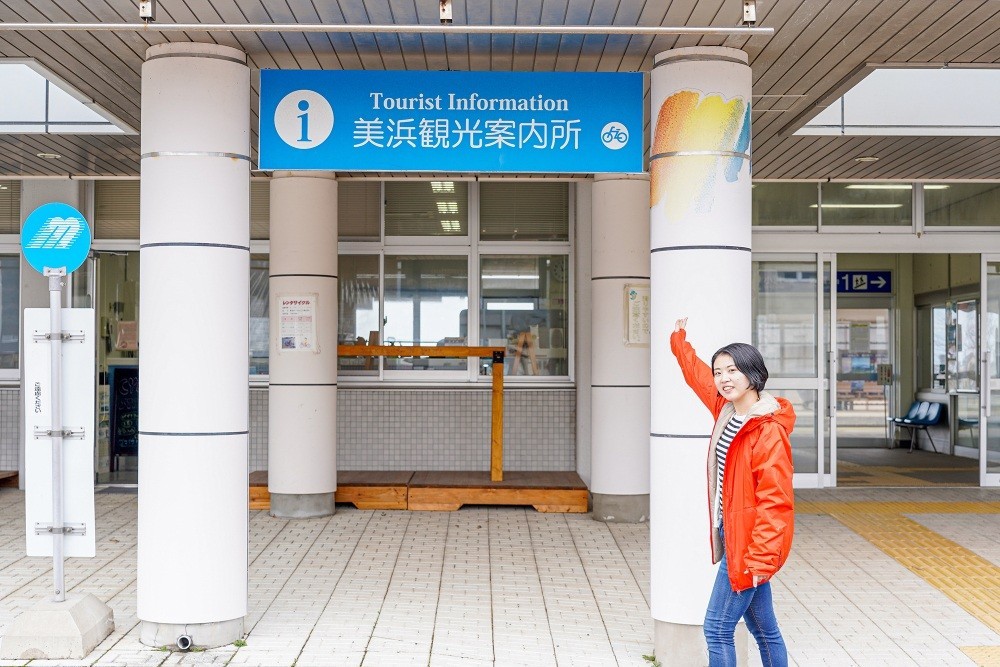
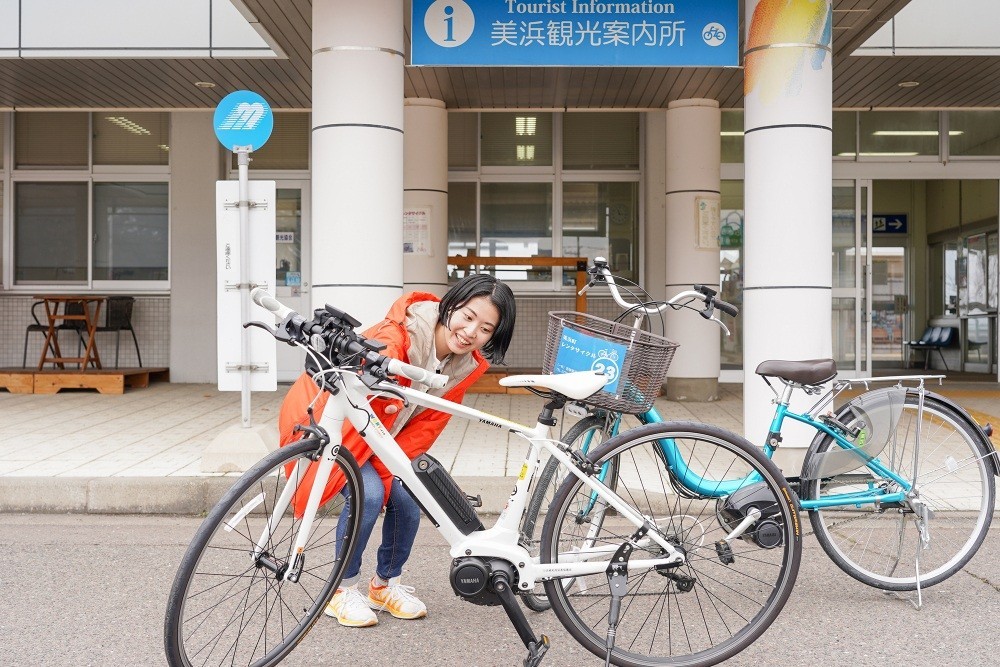
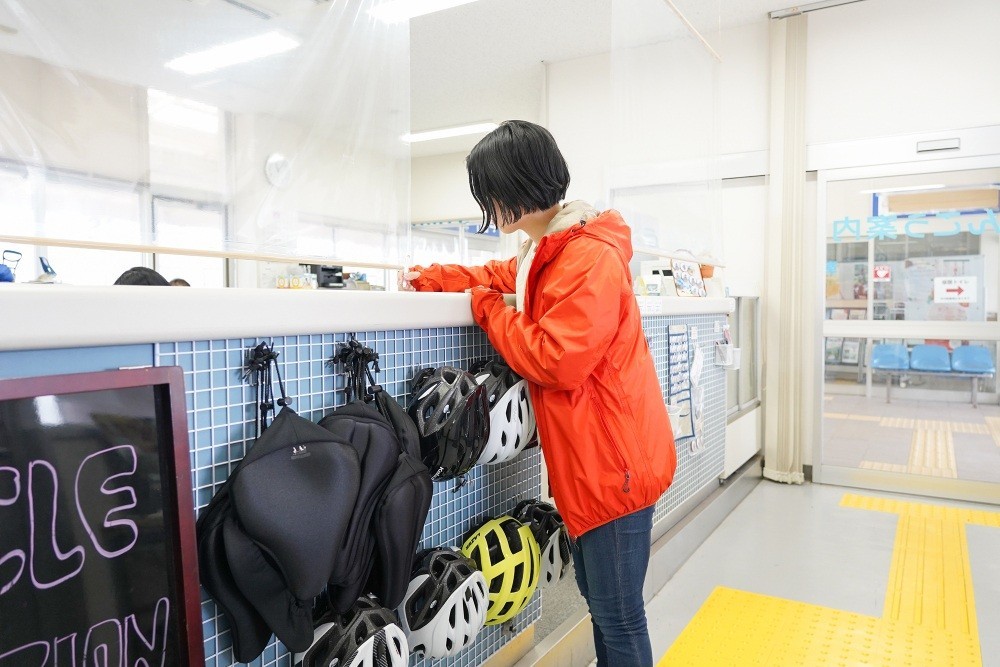
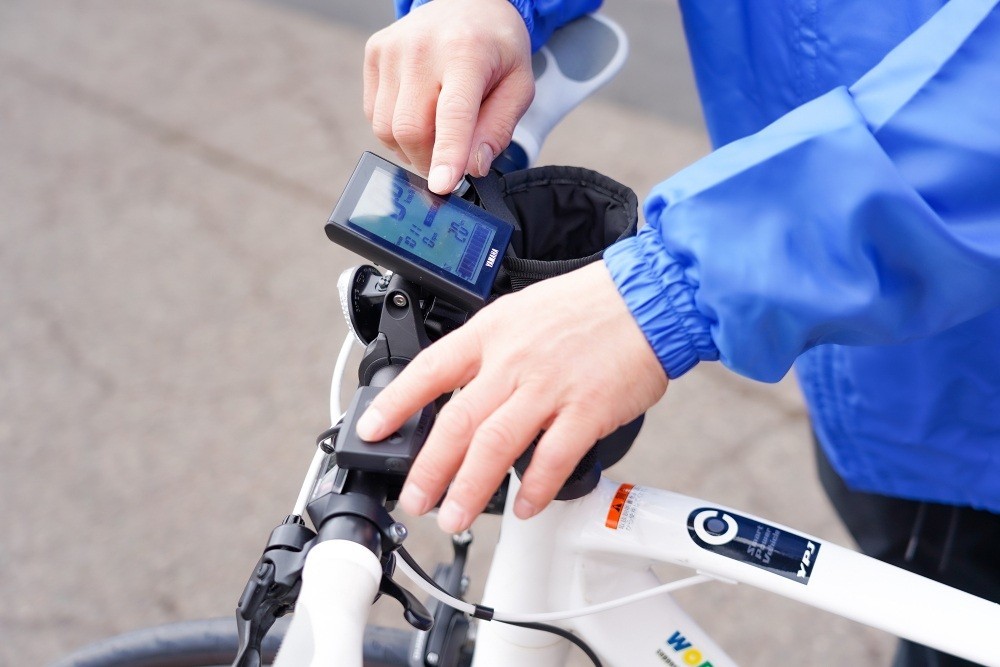
First, rent a bike at the Wakasa-Mihama Tourism Association. Here, you can choose from eight different types of bikes, ranging from electric-assist bikes—perfect for beginners—to full-fledged road bikes (reservation required). You can also rent accessories like helmets and locks, so you can ride on the go!
Rates start at 500 yen for a 4 hours rental plan. Prices vary depending on the bike model and rental duration, so please check the Wakasa-Mihama Tourism Association’s official website for details (Automatic translation).
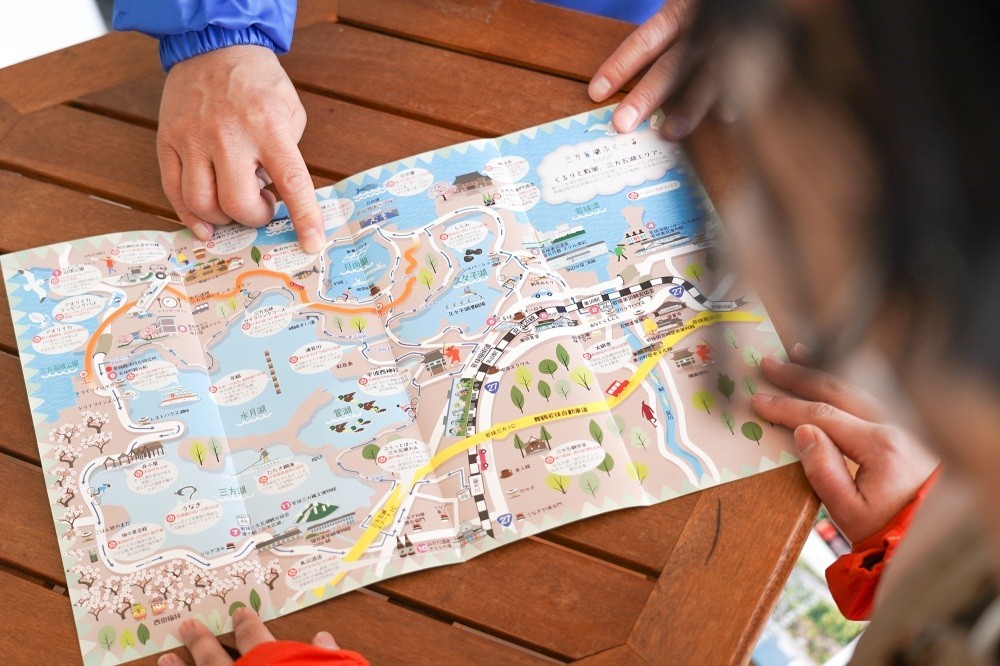
This time, we chose hybrid bikes with electric assist. Simply fill out the registration form with the required information and present your ID to complete the check-in. We also picked up a cycling map and various brochures to plan our route.
Column
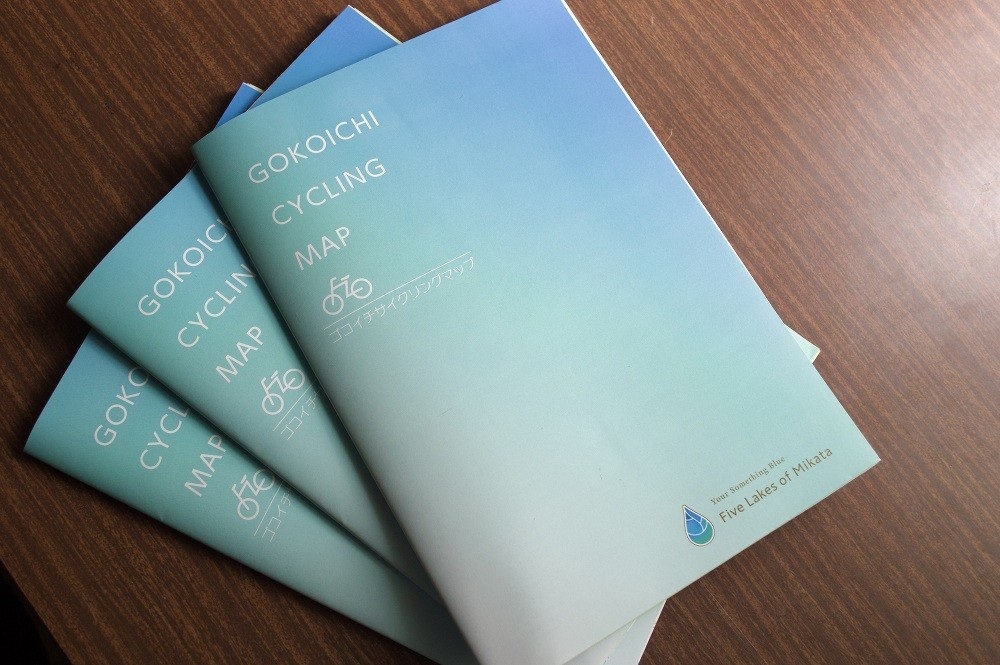
The GOKOICHI CYCLING MAP is now available!
In March 2022, a new must-have cycling map for the Gokoichi route made its debut! Packed with information—from route descriptions to dining spots and sightseeing attractions, as well as details on the characteristics of the five lakes—this single map has everything you need to fully experience the charm of the Gokoichi route. It also includes a guide to traffic rules, which is especially helpful for beginners. So, when you’re ready to take on the Gokoichi challenge, be sure to pick up a copy at the Wakasa Mihama Tourism Association or other locations along the route.
It's Go time! We set out from JR Mihama Station and head north toward Lake Kugushi
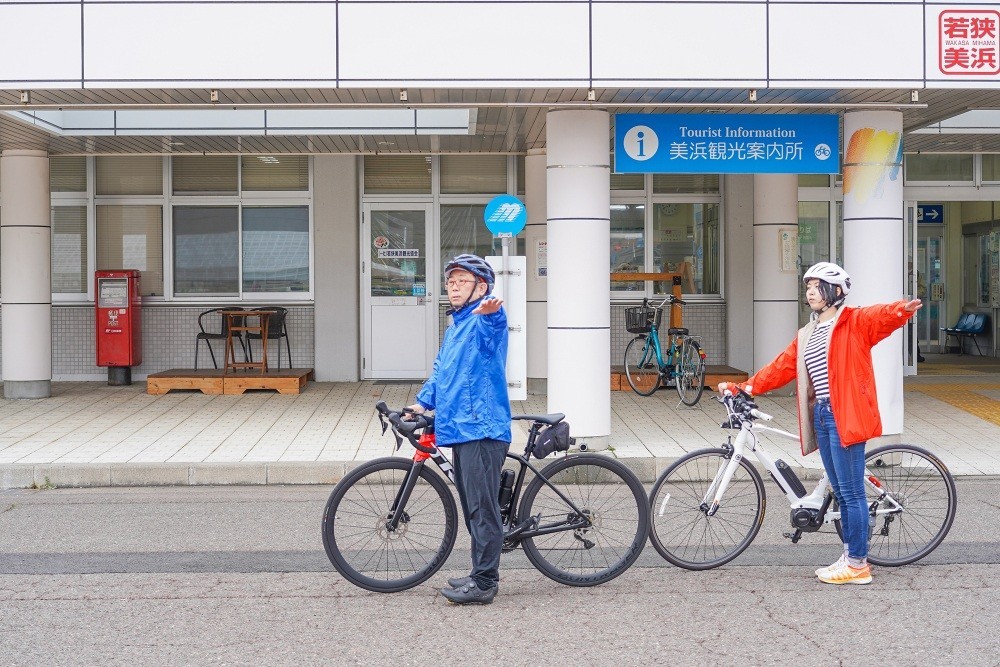
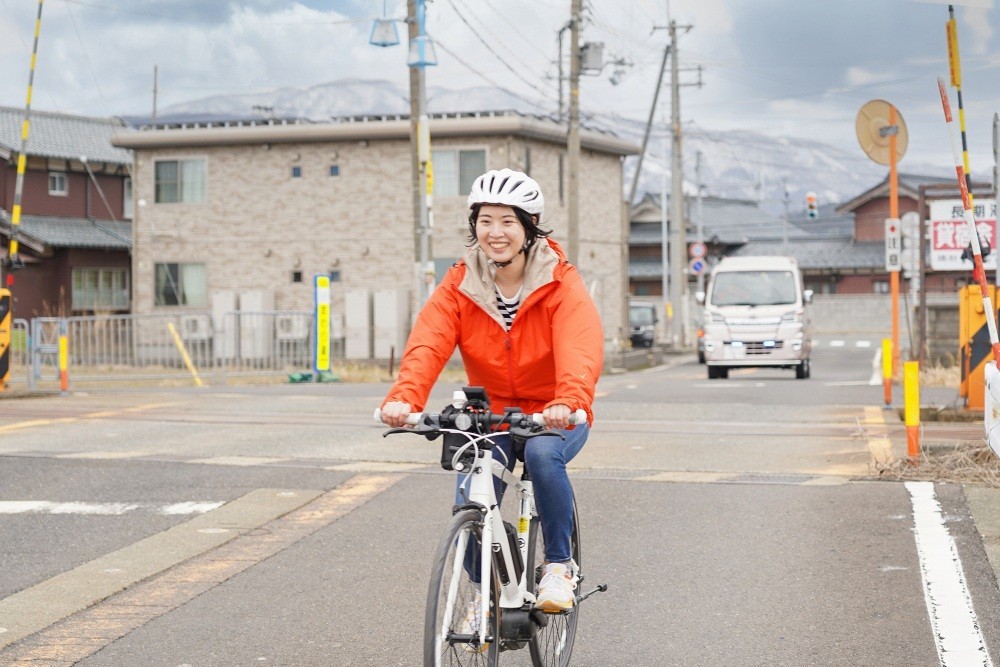
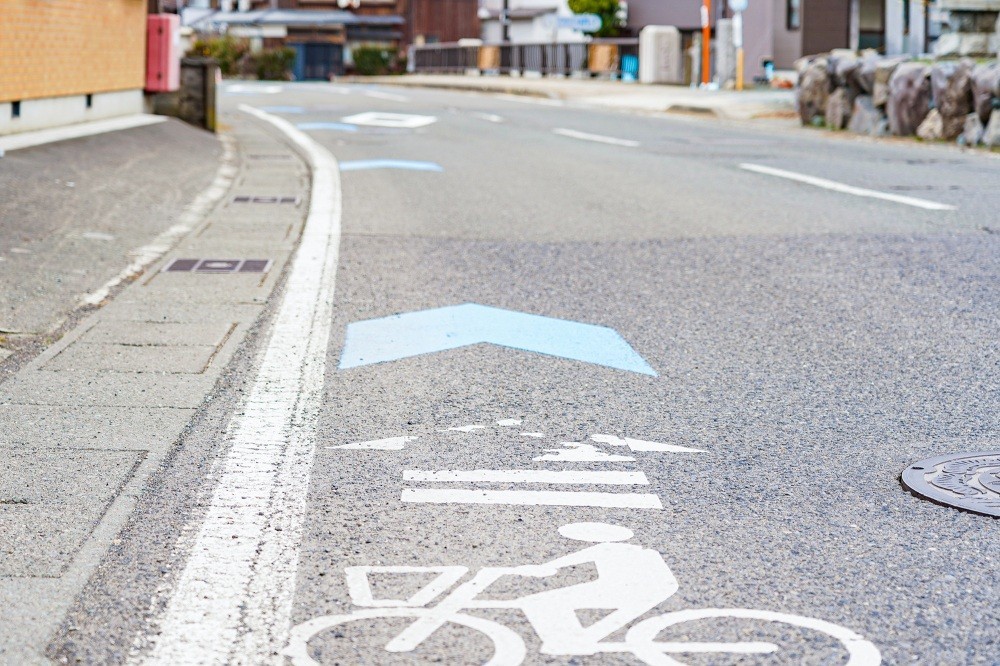
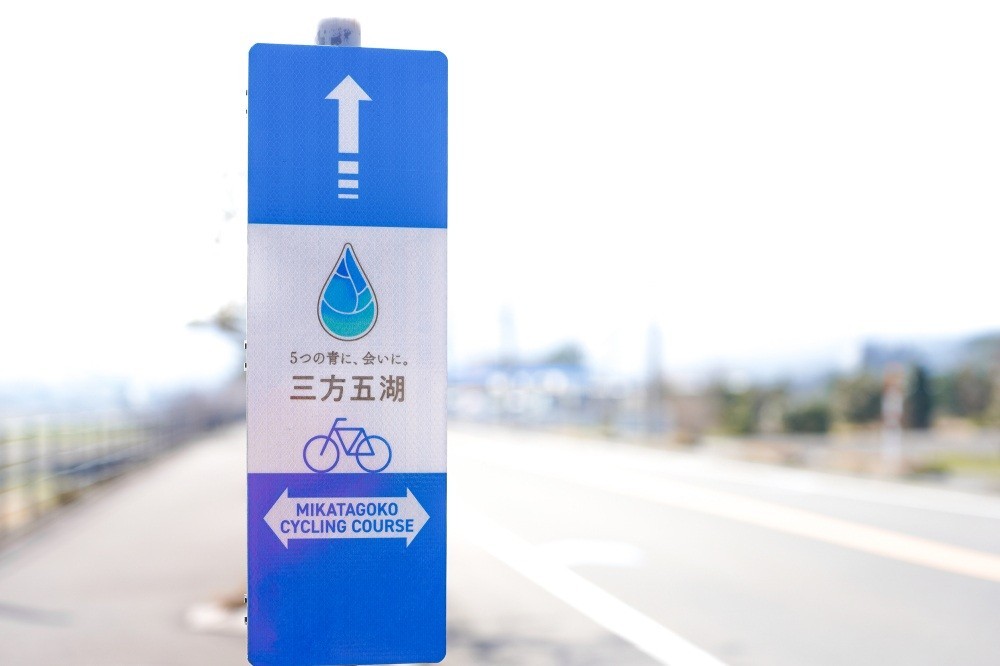
Once you’ve reviewed the rules of the road for cyclists, it’s time to set off! Along the way, follow the arrowheads marked on the ground—which serve as route guides for cyclists—and the signs for the “The Five Lakes of Mikata Cycling Course.”
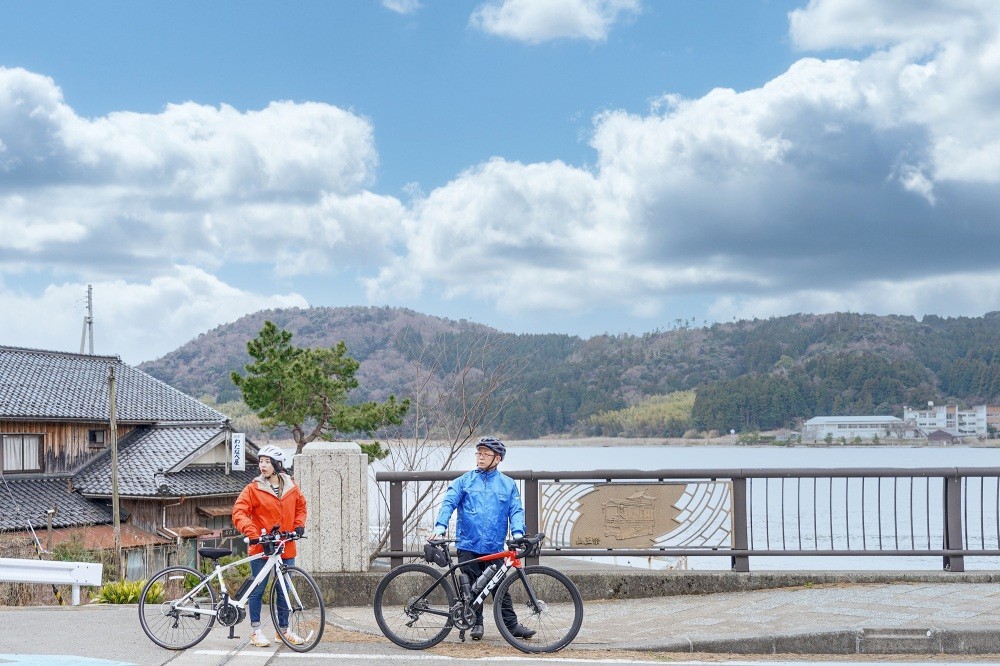
After a short ride, the first lake, Lake Kugushi, came into view. Our guide for this Gokoichi tour was Mr. Noboru Nakamura from the Wakasa-Mihama Tourism Association. An avid cyclist himself, Mr. Nakamura shared plenty of off-the-beaten-path spots that make the Gokoichi experience even more enjoyable.
Column
Exploring the neighboring hamlets!
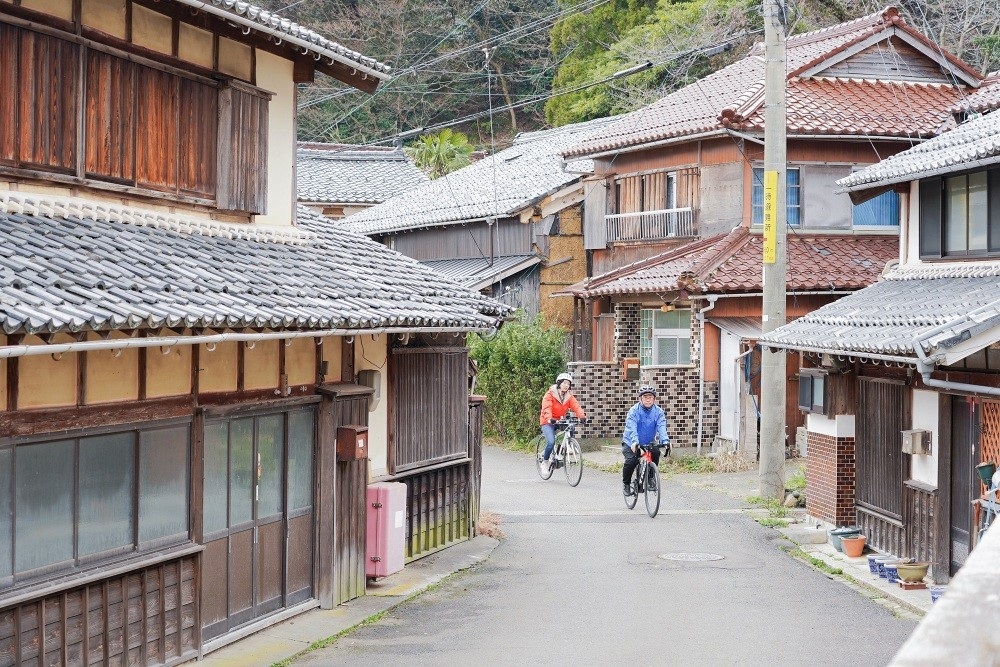
On the north shore of Lake Kugushi, Mr. Nakamura veered off the cycling path into a side street, to take a little detour by the hamlet of Hayase. As we explored the narrow alleys with excitement, we discovered the Zuirin-ji Temple—the setting for the movie "Sakura Saku", based on a story by the singer-songwriter Masashi Sada! It was surprising to see this magnificent ancient temple, built in the mid-Muromachi period (1336 - 1573) , suddenly appear in the middle of a residential neighborhood.
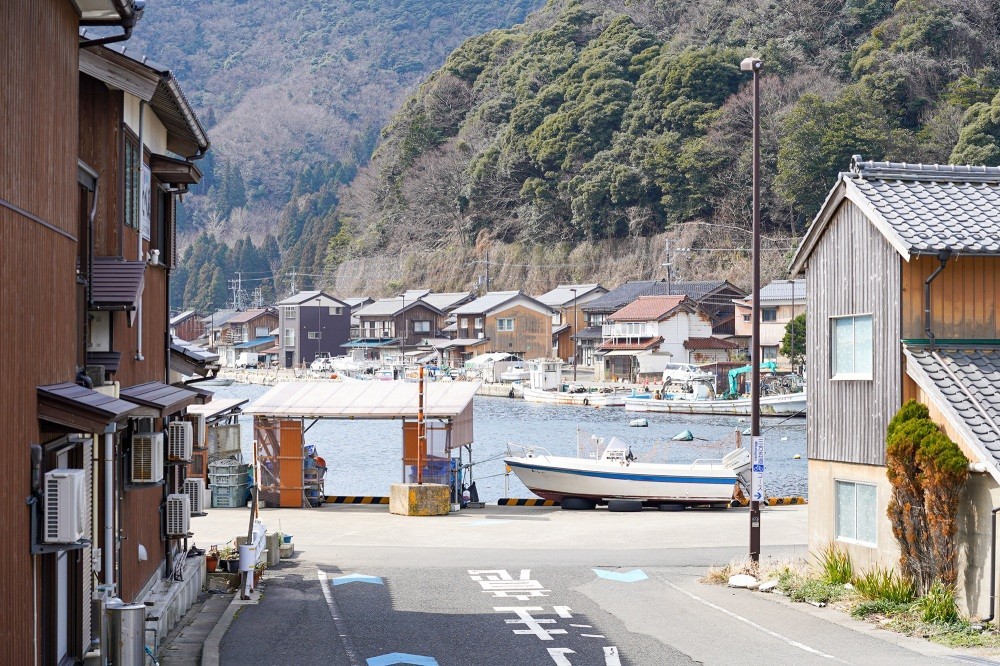
Lake Hiruga and its quiet fishing port atmosphere
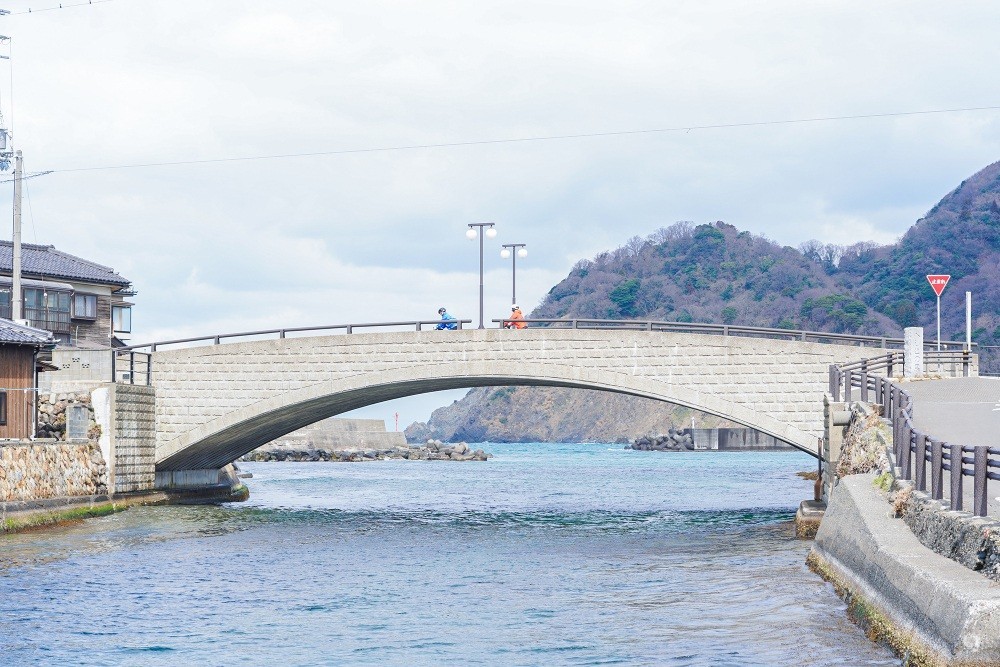
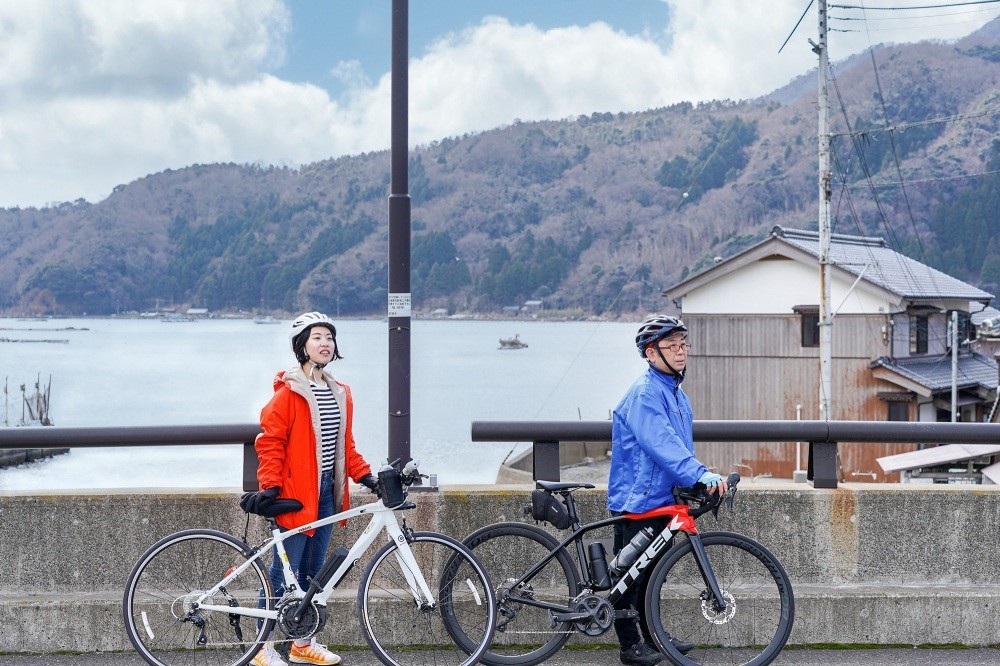
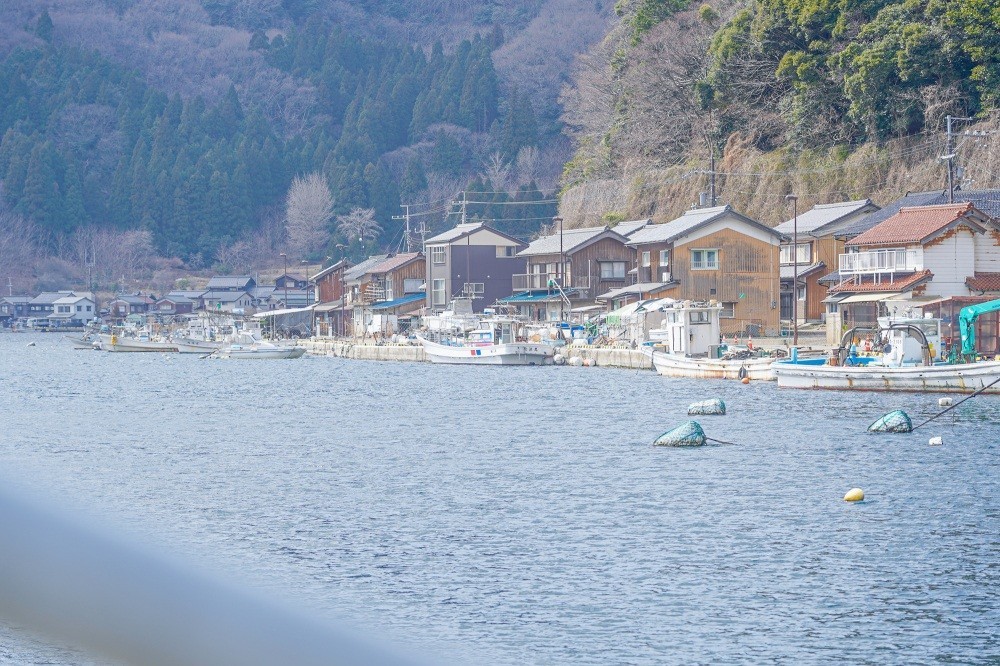
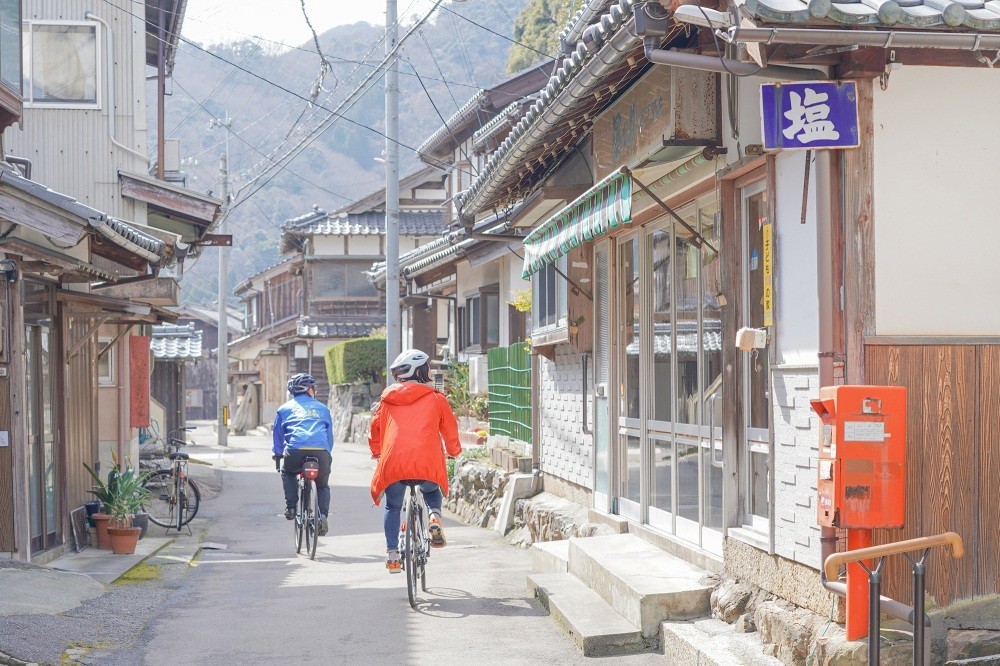
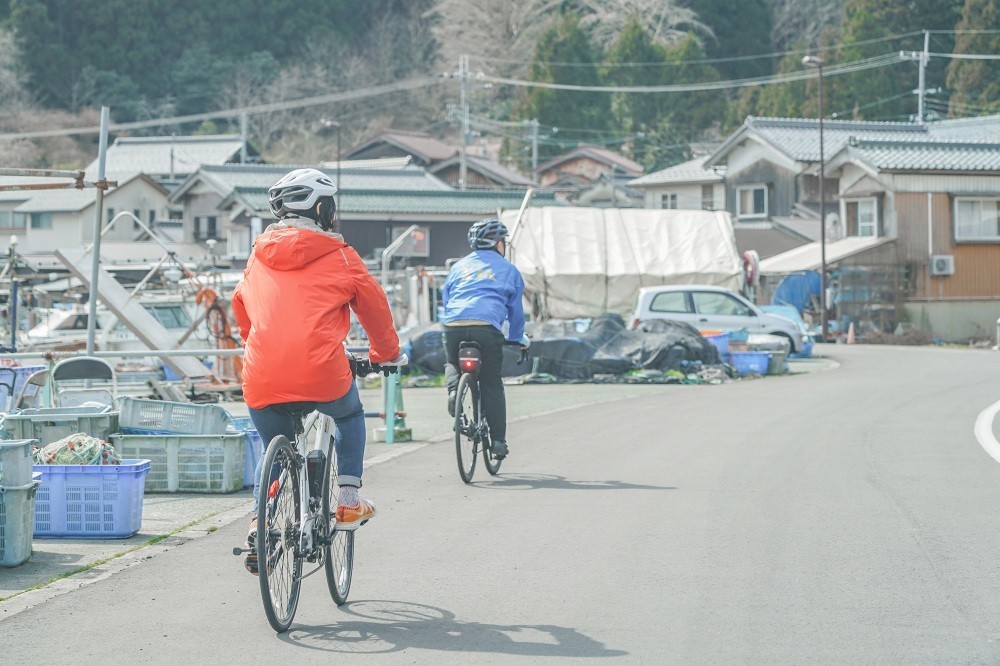
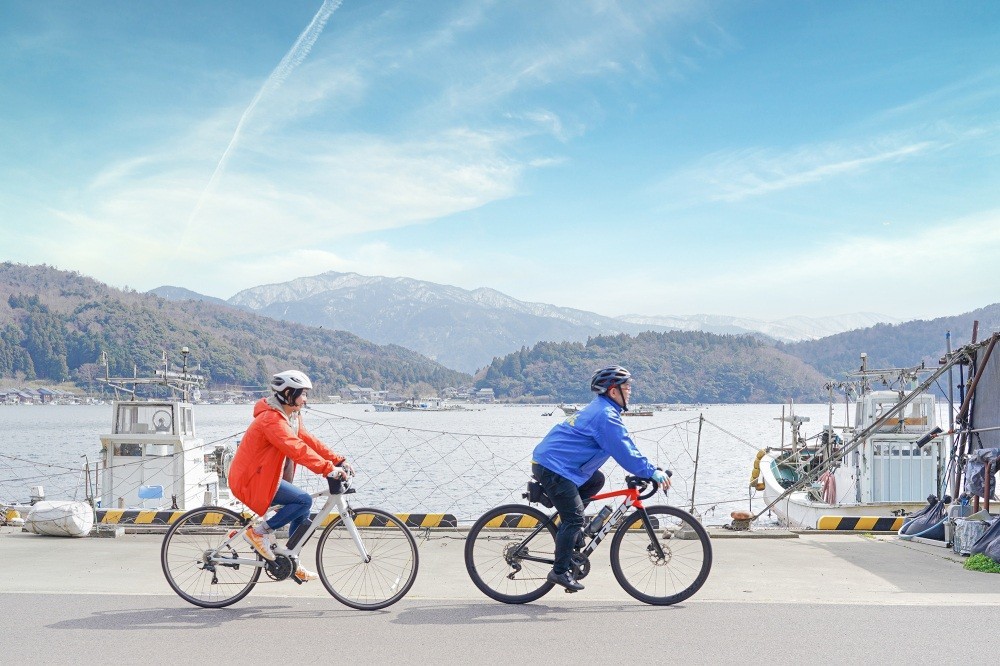
Returning to the Gokoichi route, we head next for Lake Hiruga. After traveling a short distance away from the lake, Wakasa Bay comes into view on the right. Lake Hiruga is connected to Wakasa Bay by a canal. Every year on the third Sunday of January, a festival called the “Hiruga Underwater Tug-of-War”—designated as a Nationally Selected Intangible Folk Cultural Property—is held on the “Hiruga Bridge” that crosses the canal.
"The ritual," where young people jump into the freezing water from the bridge and compete to cut a thick straw rope from both ends of the canal, "is a must-see when visiting in winter,” says Mr. Nakamura.
As we pass by, imagining this traditional ritual that has continued since the Edo period, we catch sight of a lakeside townscape reminiscent of a fishing port. Lake Hiruga—the only saltwater lake among the Five Lakes of Mikata—has a unique atmosphere distinct from the other lakes, with fishing boats moored on the lake and fishing ponds and traditional guesthouses dotting the surrounding area.
Lake Suigetsu ーthe largest of The Five Lakes of Mikataー and its many attractions
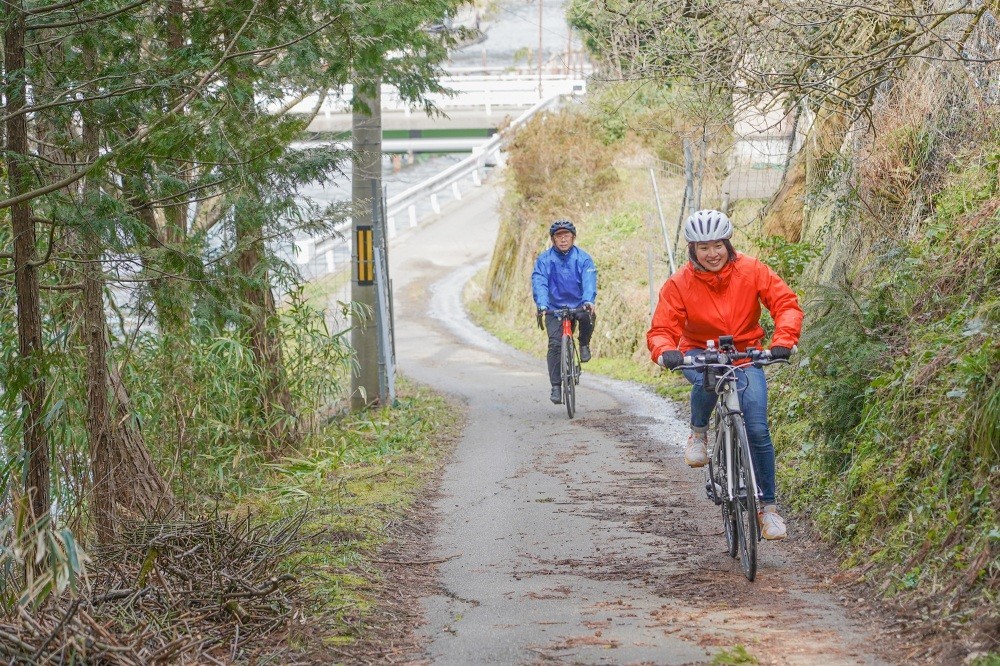
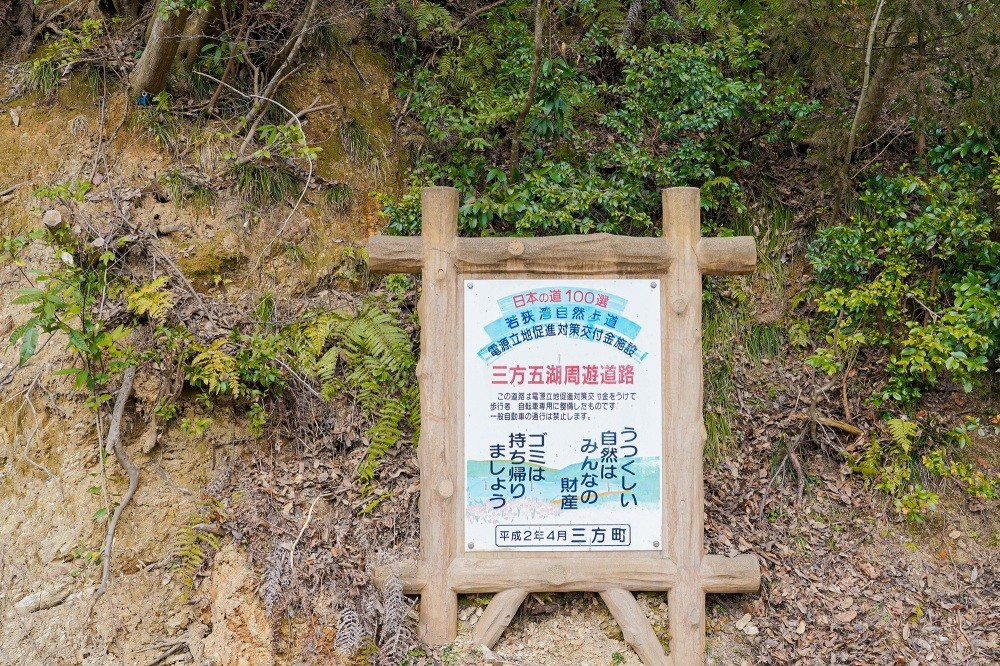
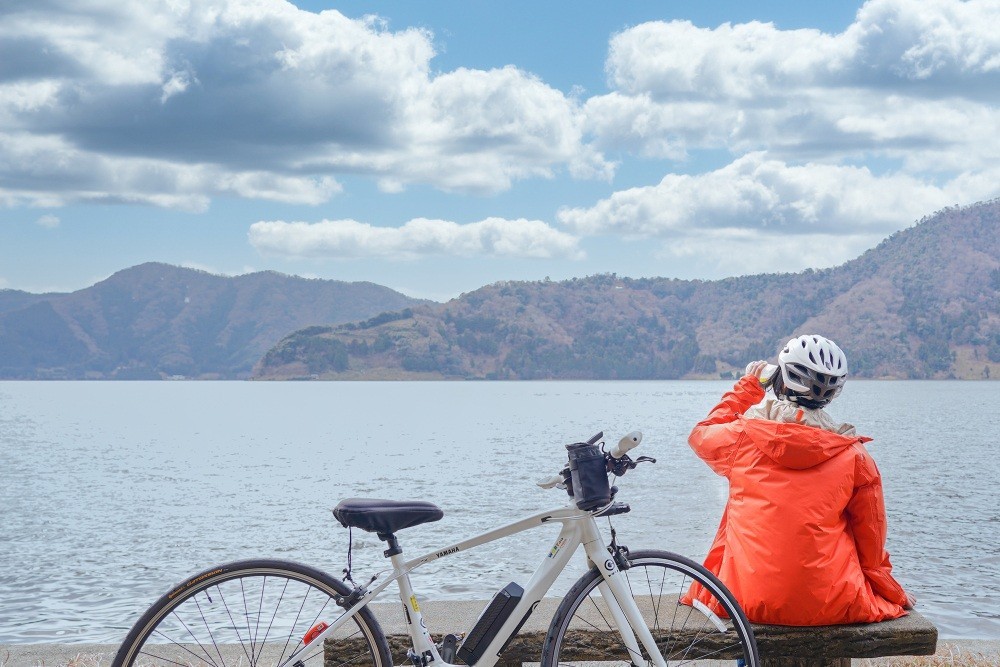
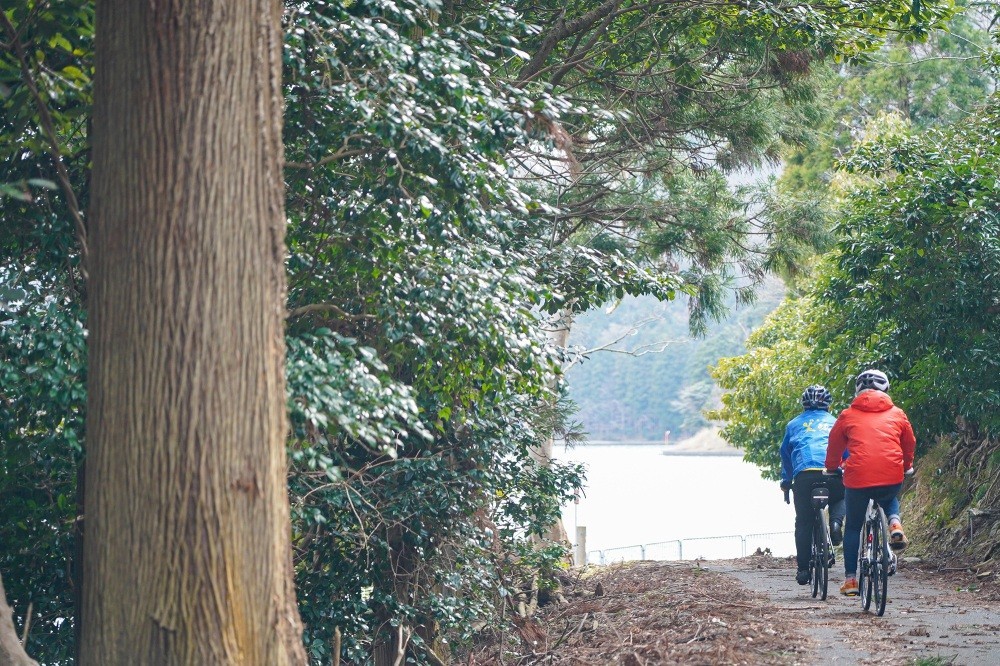
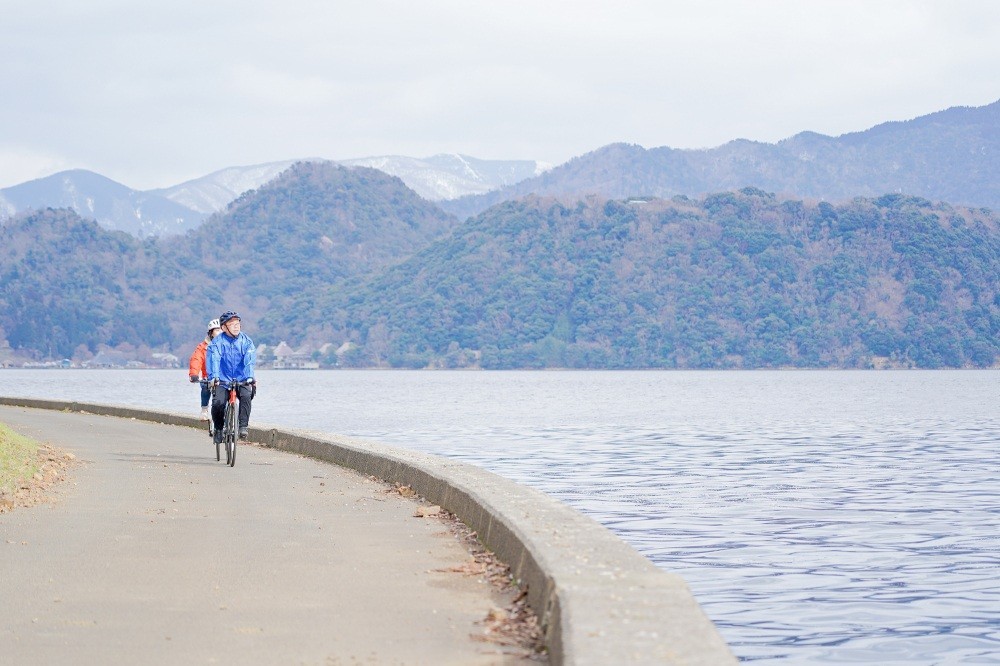
After circling Lake Hiruga, we ride away from the lake once again, heading for Lake Suigetsu. The path along the Urami River—which connects Lake Kugushi to Lake Suigetsu just before reaching the latter—is the steepest incline on the Gokoichi route. But even that hill is a breeze with electric assist!
Once you’ve climbed it in one go, you’re in for a downhill stretch. The narrow Five Lakes of Mikata Loop Road runs right alongside the lake, making for a pleasant ride.
Cycling while observing the tranquil lakes, waterfowl taking flight, and the drifting clouds is exhilarating! The magnificent natural scenery is incredibly soothing.
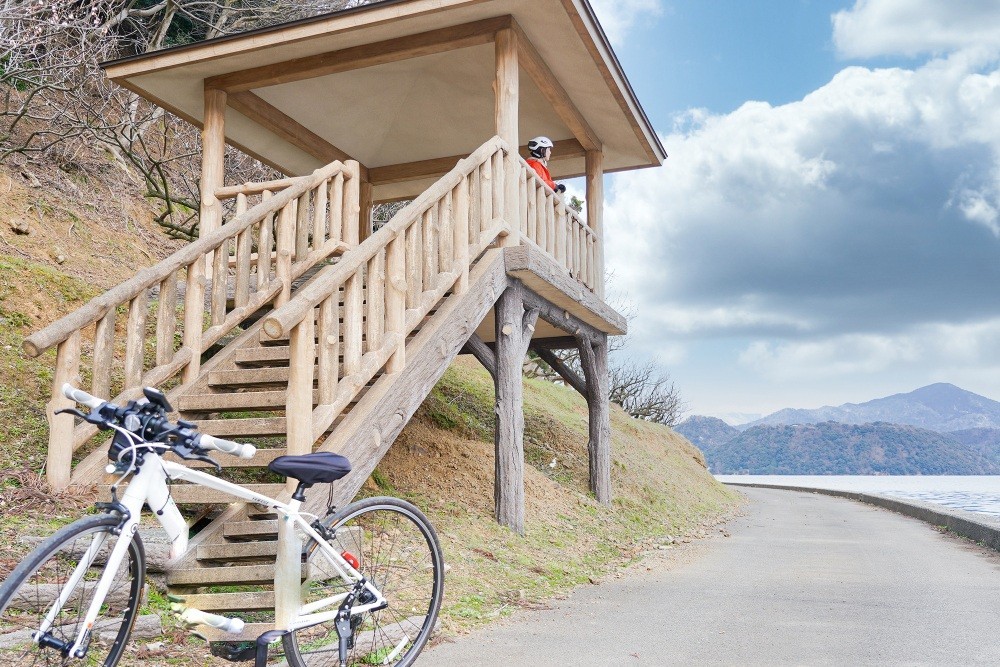
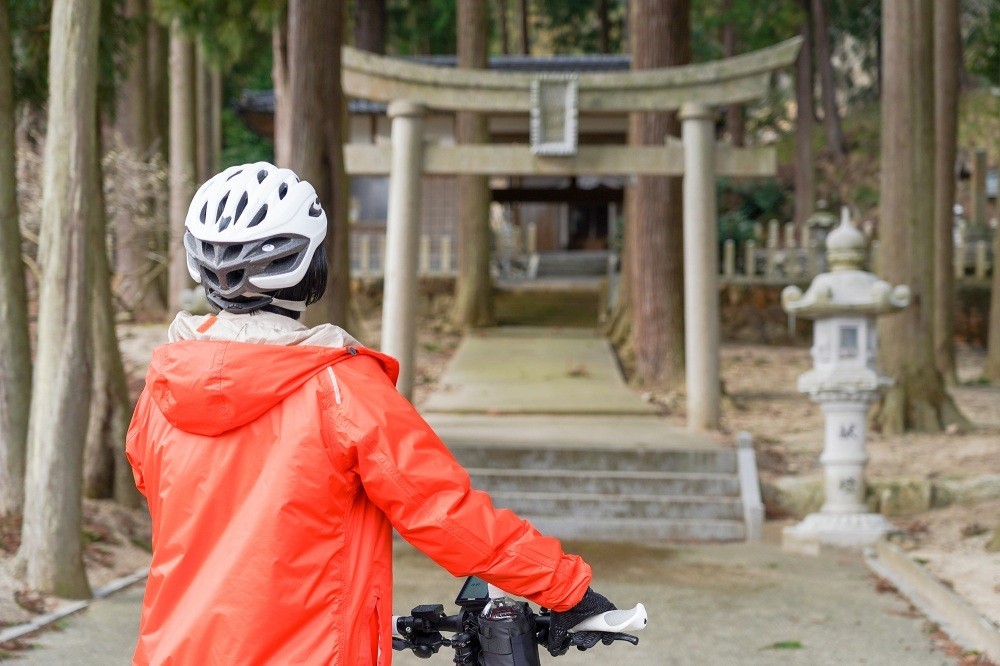
We also recommend stopping at the bird-watching hut along the way to take in the view of the lake. Among our discoveries, we also suddenly came upon a mysterious shrine, nestled among towering trees.
Column
Hidden history: the Urami River
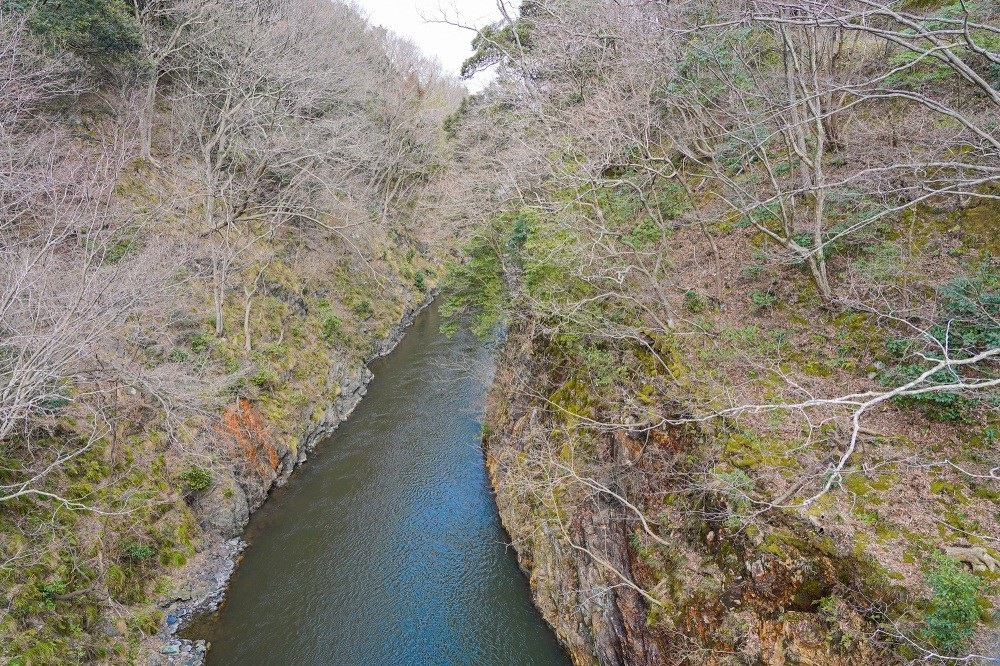
The Urami River, which connects Lake Kugushi and Lake Suigetsu, looks like a natural river with exposed rock faces, but according to our guide, it’s actually a waterway that was dug by hand!
During the Edo period (1603–1868), The Five Lakes of Mikata were flooded by an earthquake. To drain the excess water, the Urami River was carved out under the direction of Namekata Kyubei, a samurai of the Obama Domain.
It is said that the bedrock was extremely hard, making the construction a difficult undertaking, but the completion of the Urami River lowered the water level. This led to the emergence of new settlements around the Five Lakes of Mikata, and Namekata Kyubei’s achievements contributed significantly to the region’s development. The canal remains in its original form and is still used today.
A road lined with Plum Trees
Before we knew it, we were about halfway through the Gokoichi route.
“Lake Suigetsu is a double-bottomed lake—the upper part is brackish water mixed with seawater, while the lower part is freshwater. In contrast, Lake Mikata is the only freshwater lake among The Five Lakes of Mikata,” explained Mr. Nakamura as he told us about the lakes’ characteristics. Although all five lakes are connected by canals and rivers, the water composition varies slightly from lake to lake, which is why the water colors differ!
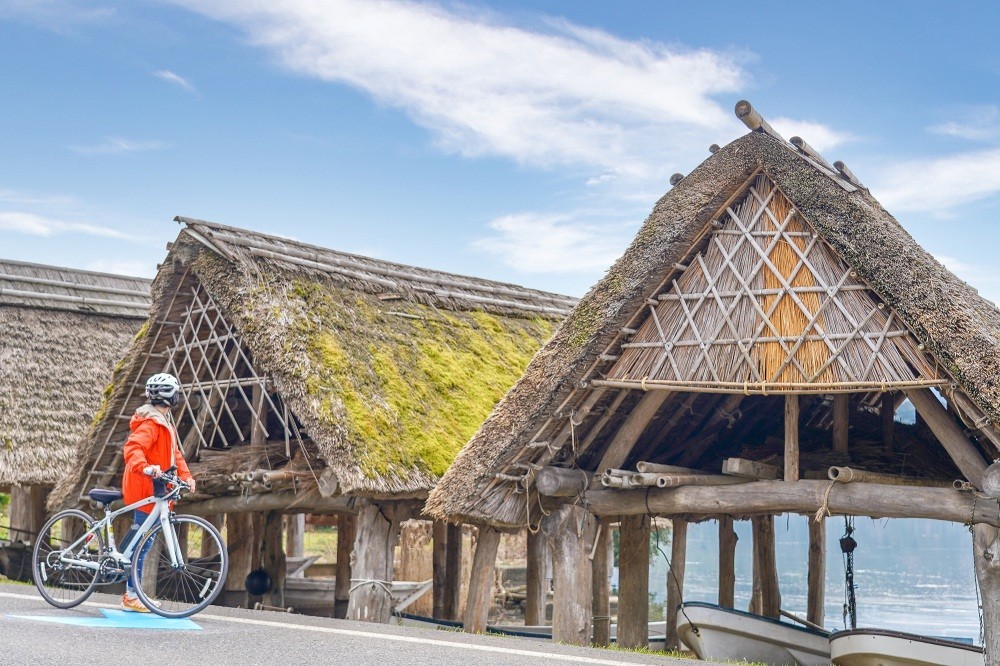
As we rode along the shore of Lake Mikata, a thatched-roof boat shed suddenly appeared from the corner of the road! It felt as if we’d suddenly slipped back in time, and couldn’t help but stop in our tracks to take in the view.
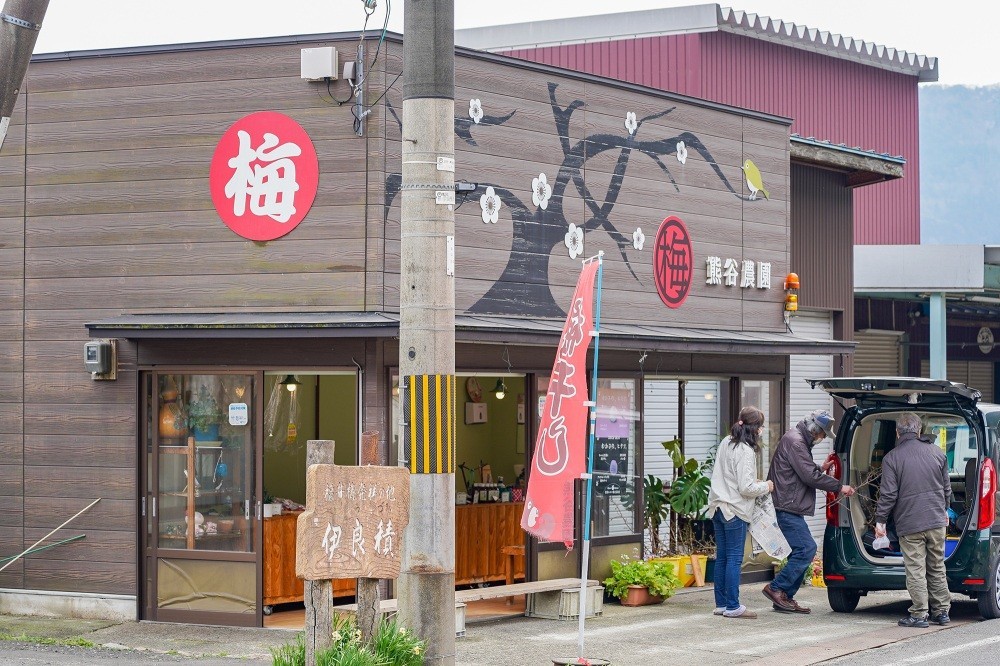
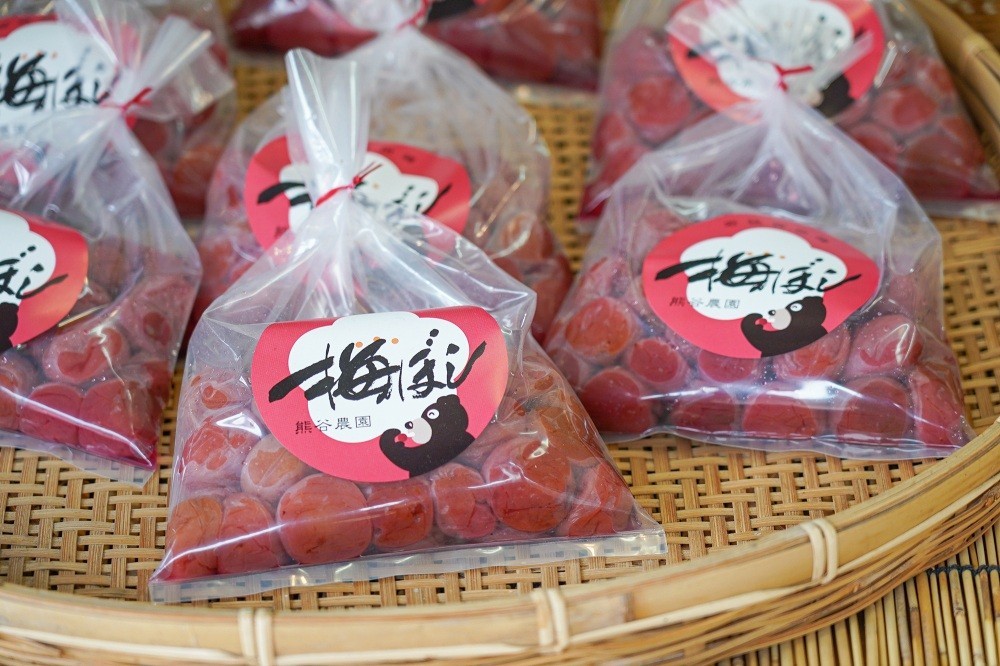
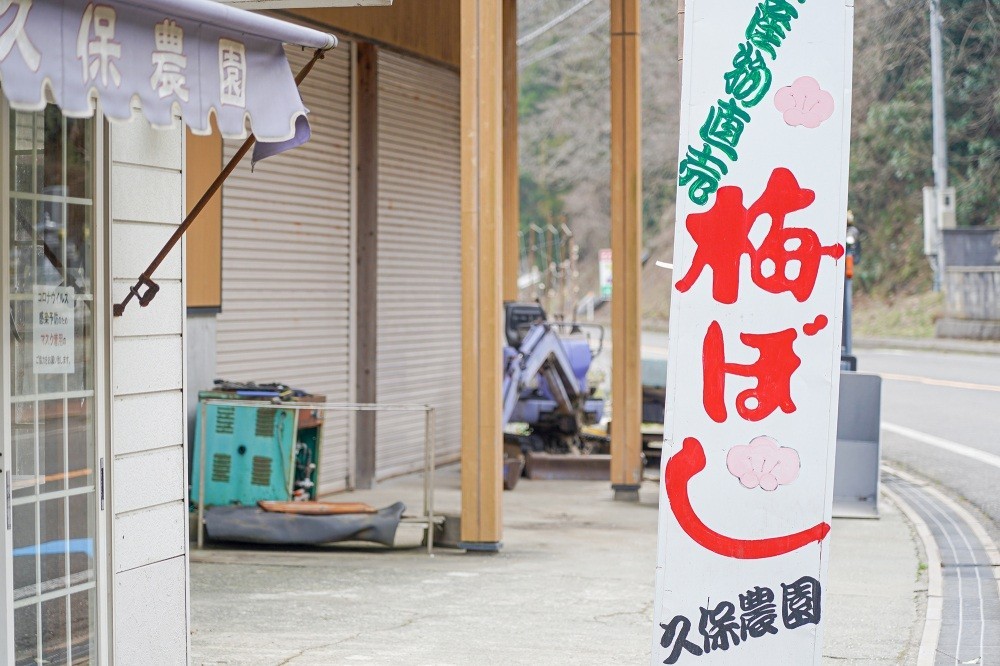
From this point on, signs for “umeboshi” (pickled plums) begin to multiply, with shops selling "Fukui Ume Plums" and plum products lining the roadside. In fact, plum cultivation is thriving around The Five Lakes of Mikata, and we were told that the boat shed we spotted earlier was once used to transport plums harvested from the opposite shore of the lake.
Since you can see several plum orchards from the cycling route, we definitely recommend the Gokoichi route during plum season!
Savoring Fukui Ume Plums at Café Shima
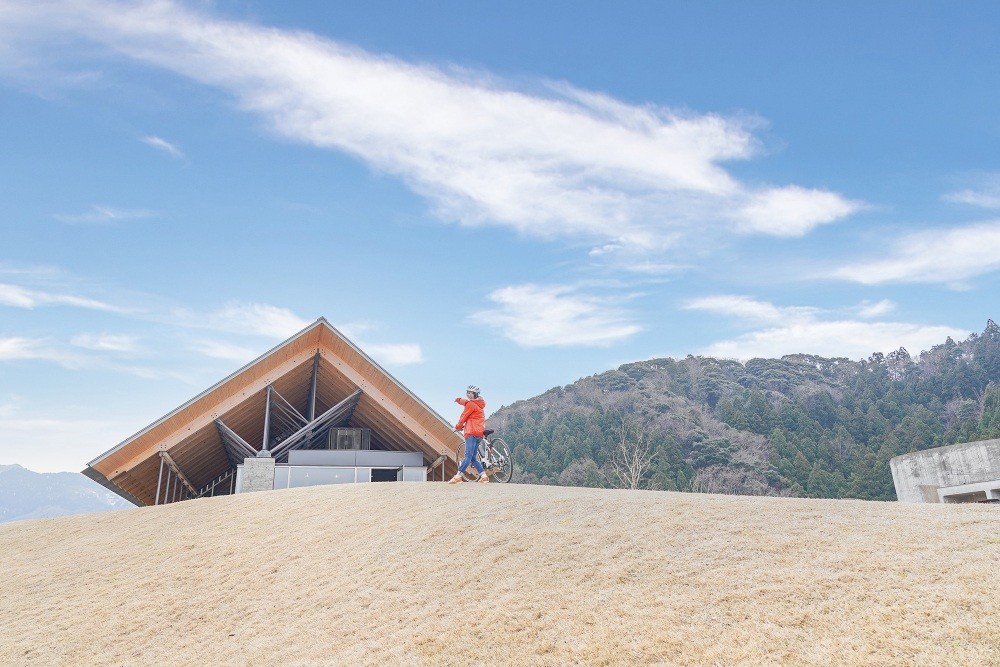
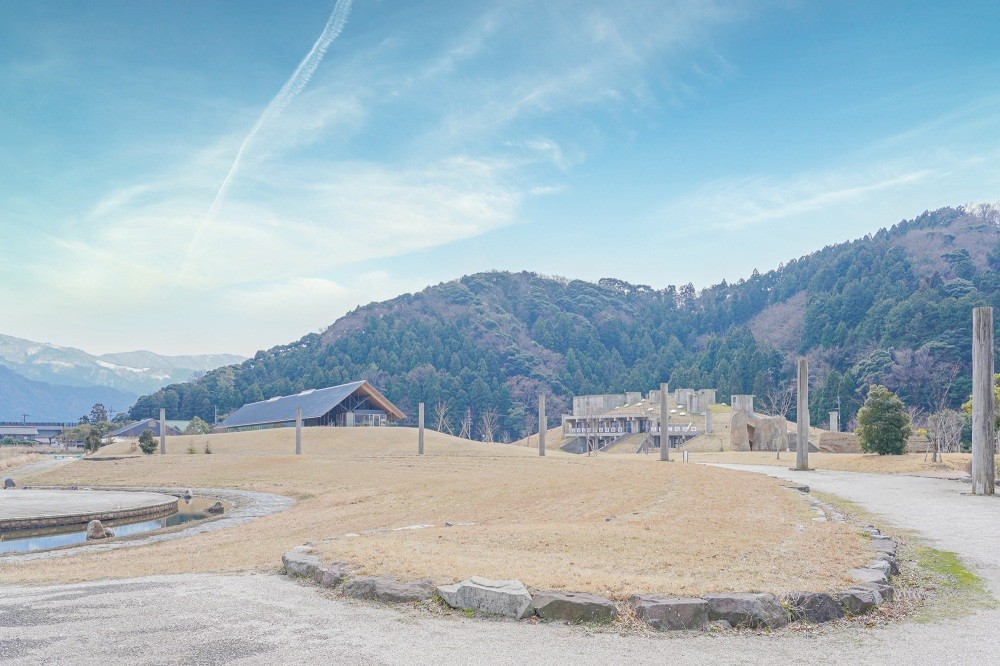

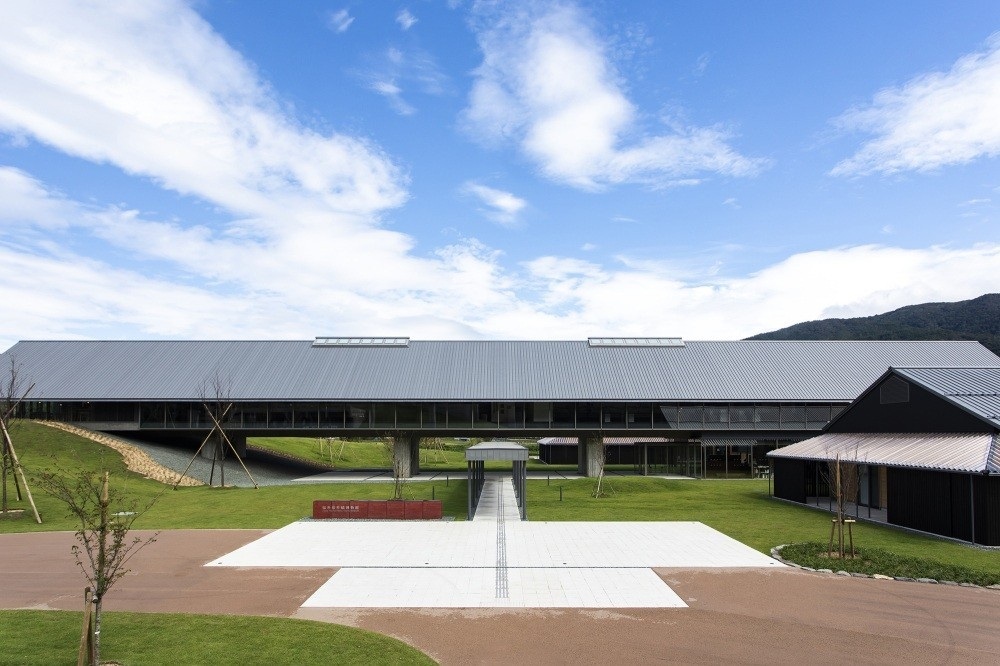
As we were starting to get hungry, we took a break at “Café Shima,” which is attached to the Fukui Prefectural Varve Museum.
You can walk right into the café from the top of a small hill. Here, we enjoyed the signature dish, “Fukui Ume Plum Curry.”
This dish features a light, refreshing curry with a hint of plum flavor, served with plenty of seasonal vegetables. The tartness of the plums slowly soaked into our bodies after all that exercise.
After your meal, you can discover the history of Lake Mikata and Lake Suigetsu at the Fukui Prefectural Varve Museum or the adjacent Wakasa Mikata Jomon Museum, or simply enjoy the tranquil lakeside atmosphere at a leisurely pace along the walking trail—both options have their own unique charm.
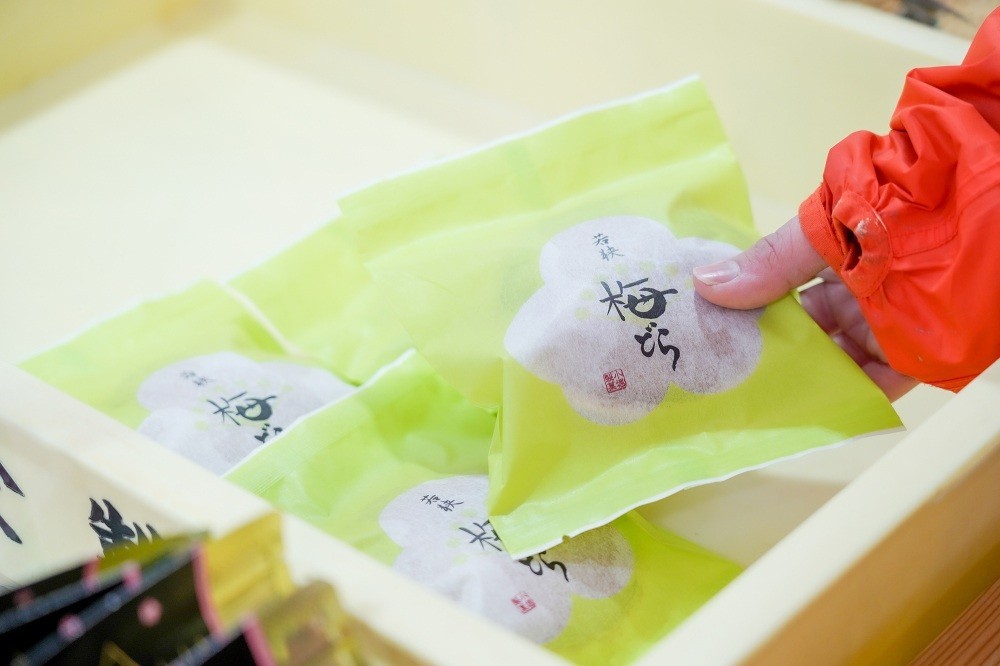
We stopped by the nearby Mikata-Goko Roadside Station and picked up some of Mr. Nakamura’s top-recommended snacks to keep us energized for the rest of the trip.
Column
Unraveling the History of Humanity and the Earth Through the Lakes
Within the Jomon Roman Park, home to Café Shima, there are two museums: the Fukui Prefectural Varve Museum and the Wakasa Mikata Jomon Museum.
These museums trace the history of humanity and the Earth through Lake Mikata—which is closely linked to the Torihama Shell Mound, a Jomon-period (c. 14,000–300 BCE) archaeological site discovered in Wakasa Town—and Lake Suigetsu, where the world’s first Varves, spanning 70,000 years, were discovered.
The Fukui Prefectural Varve Museum, which opened in 2018, was recognized for its aesthetically designed exhibits, contributions to regional revitalization, and research of global significance, and received the “2nd Japan Museum Association Award” in 2021.
After cycling to see the lakes in person, learning about their history at these museums may allow you to appreciate the grandeur of nature even more deeply.
Lake Suga and its beautiful green tunnel
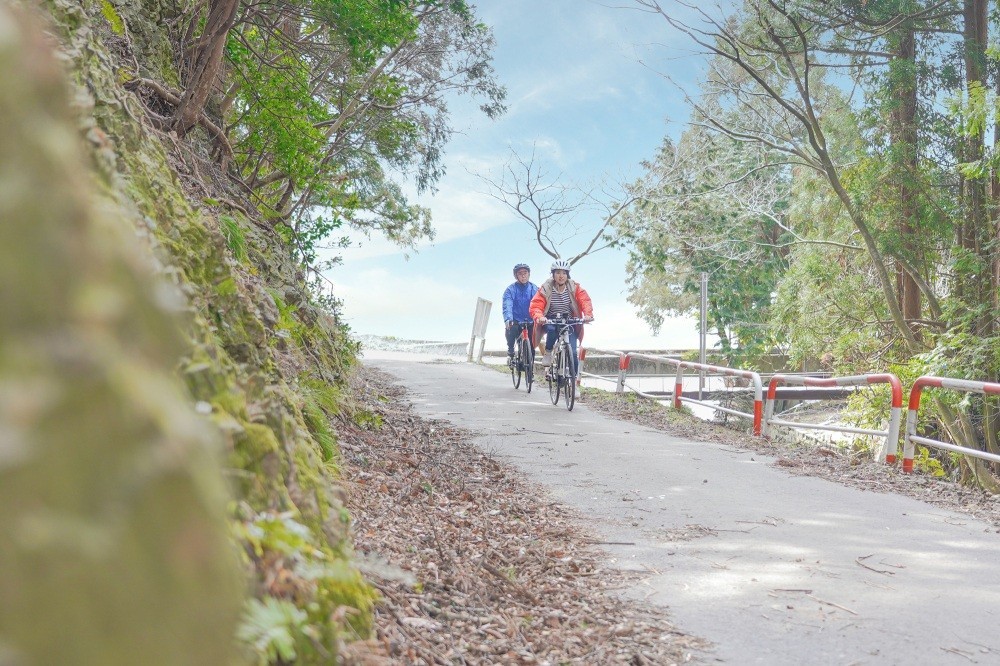
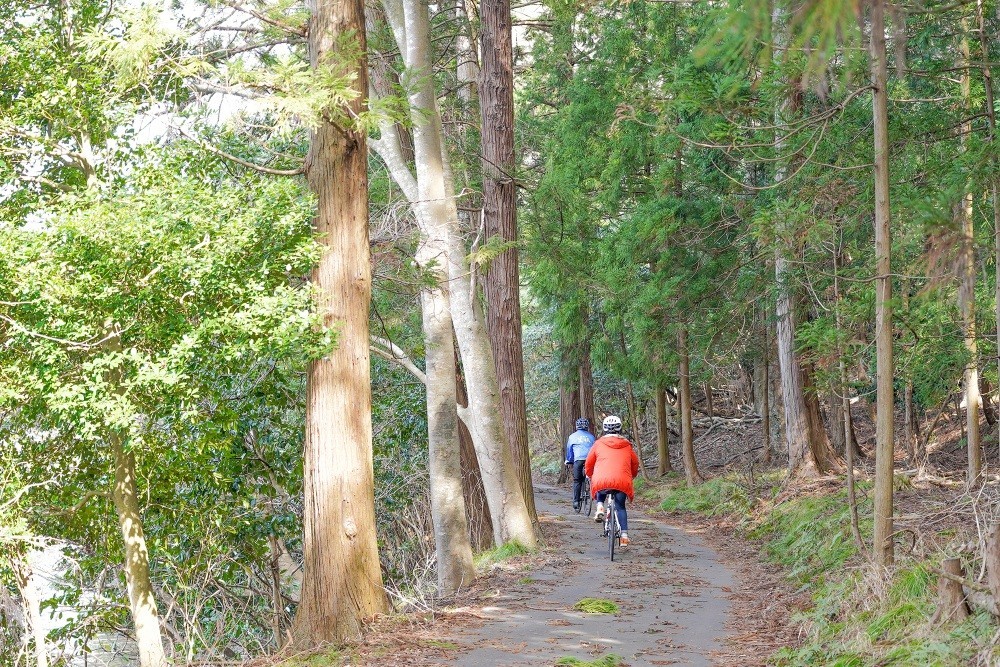
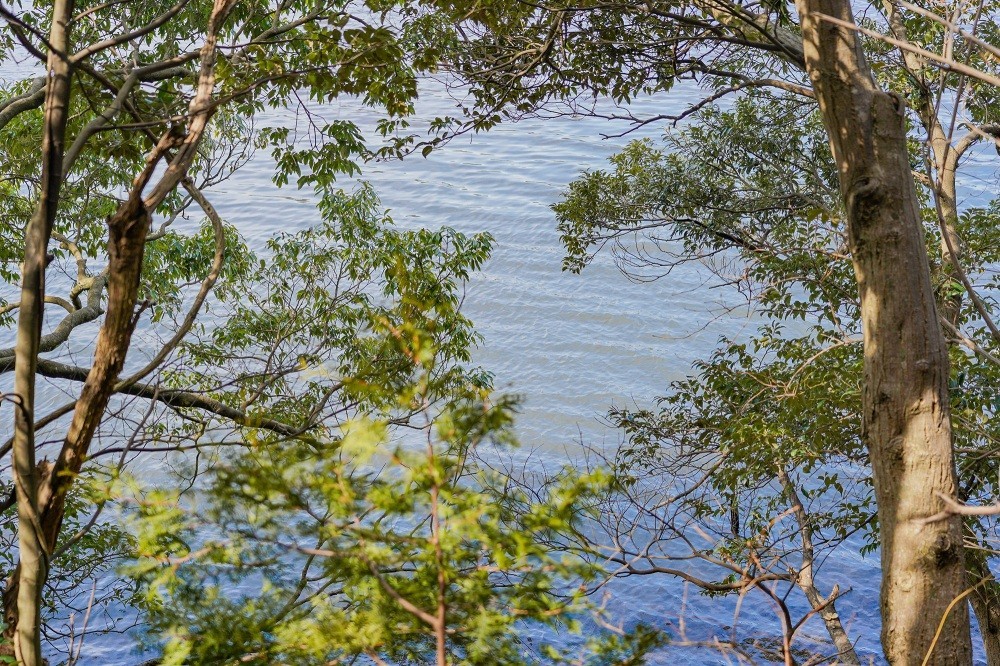
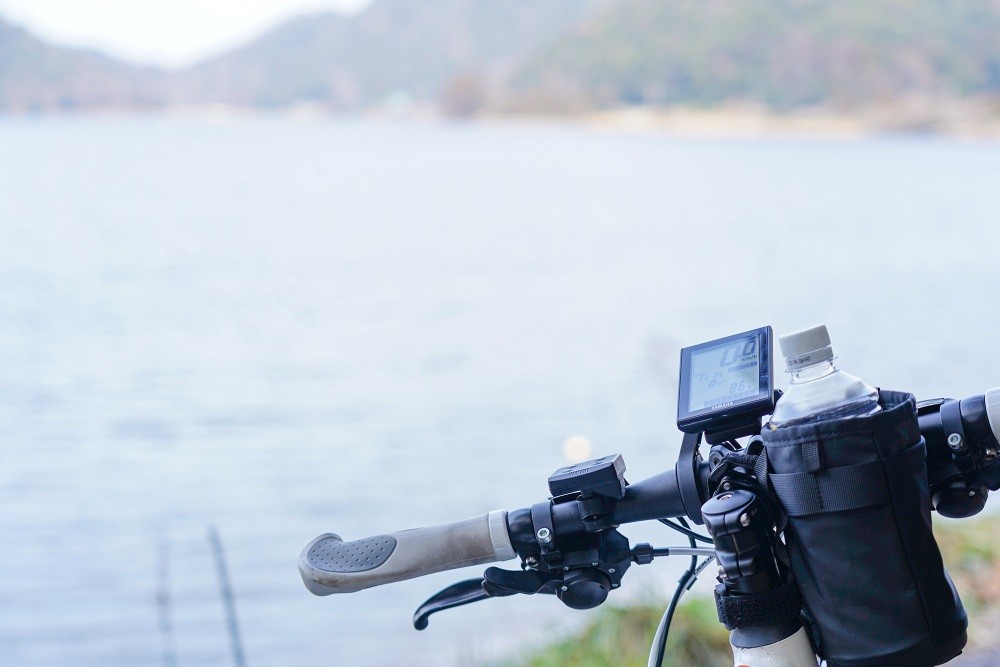
After taking a good break, we headed back out onto the cycling course. Passing under the Five Lakes of Mikata Smart Interchange, we turned onto a quiet side road once again and rode toward the shore of Lake Suga, with Lake Mikata behind us.
With a circumference of about 4 km, Lake Suga is the smallest of The Five Lakes of Mikata. Surrounded by tall trees, this area truly felt like riding through a green tunnel. Along the way, there was a clearing where the trees had been cut back, and we took this as an opportunity to enjoy the beautiful sight of the setting sun glinting off the lake’s surface.
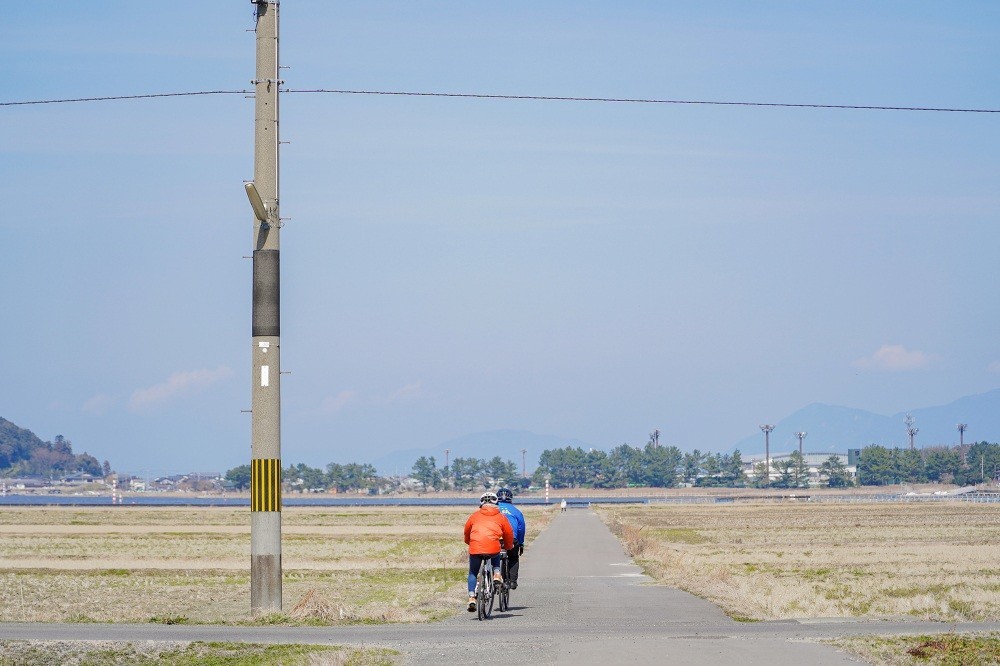
As we were enjoying the unspoiled nature—feeling as if we’d wandered into another world—the lakeside path came to an abrupt end, and the scenery changed in the blink of an eye. As we turned onto the Ume Kaido (Plum Road), heading toward the finish line, we found ourselves surrounded by vast rice fields stretching as far as the eye could see.
Lake Kugushi: the Holy Land of Rowing!
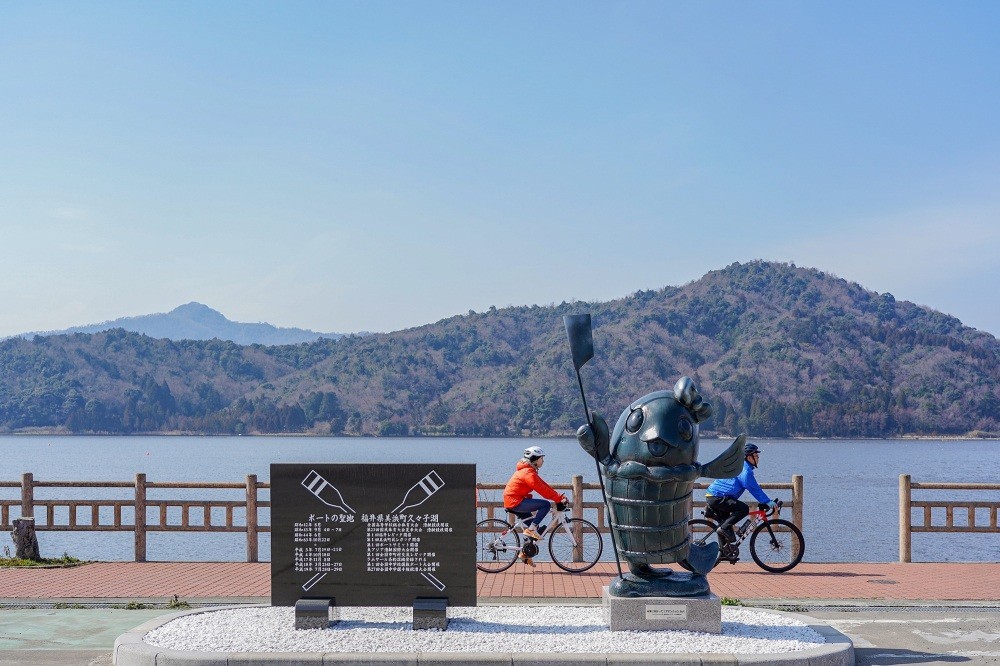
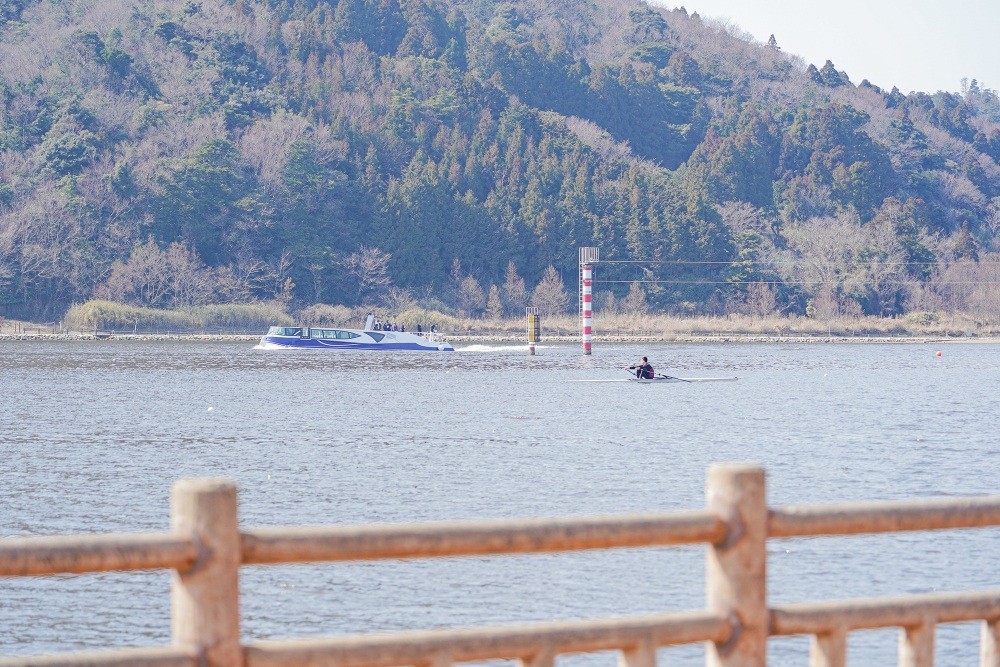
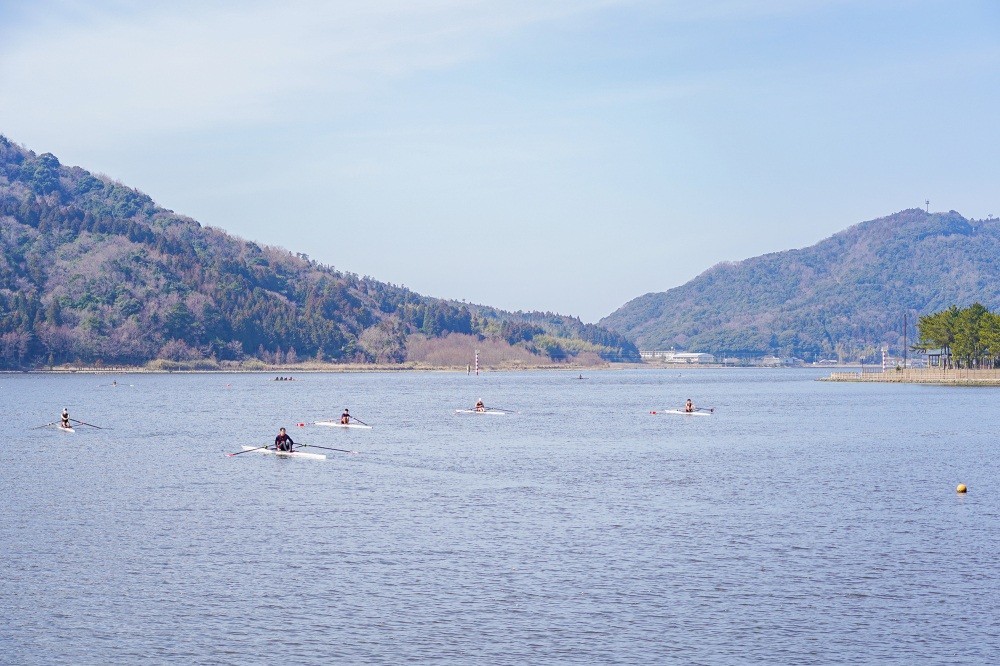
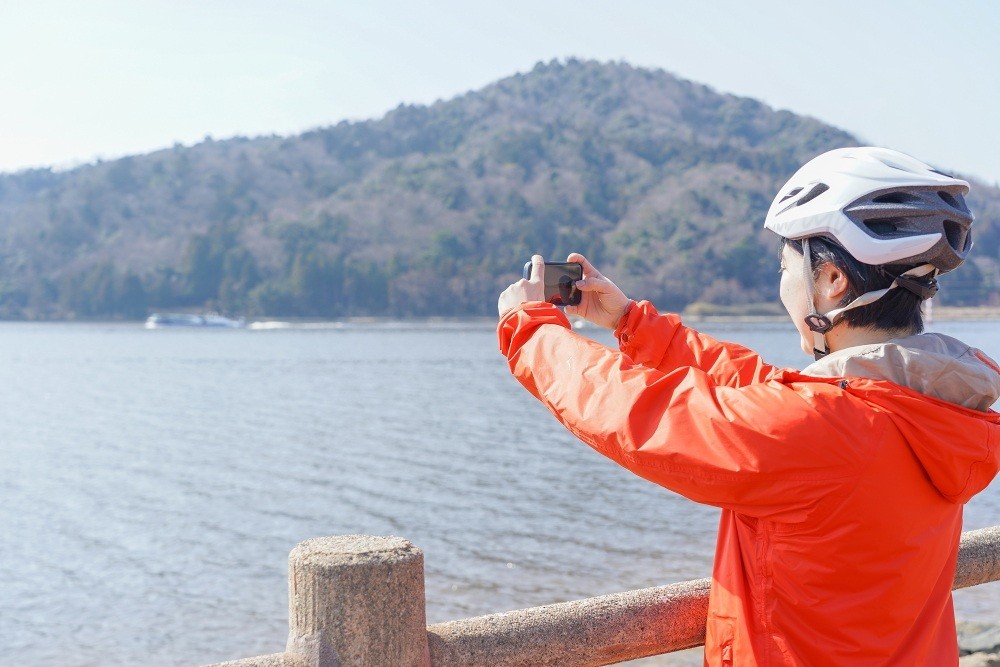
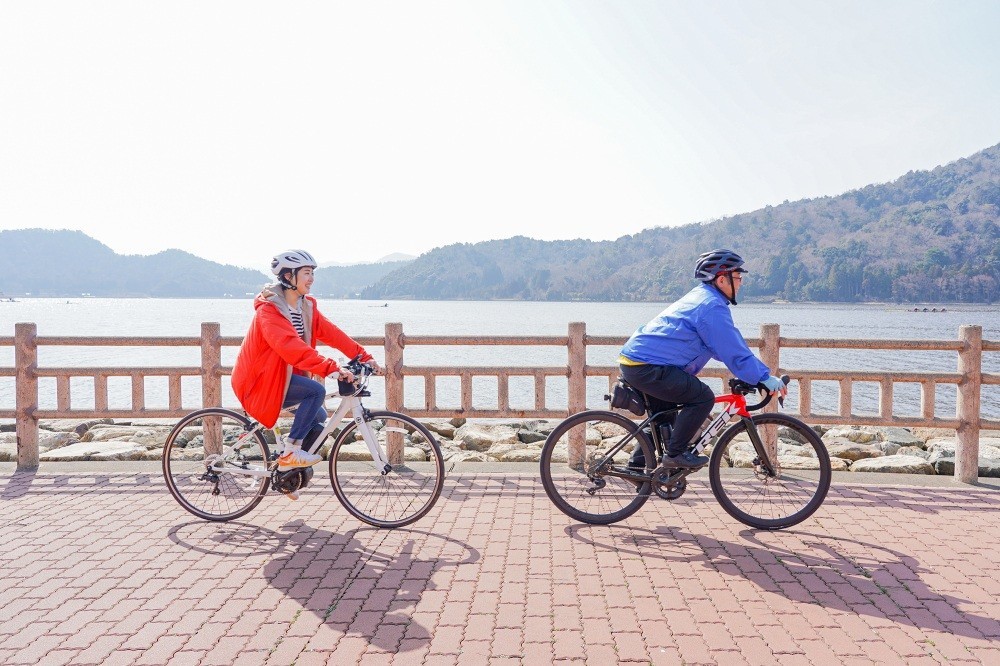
Finally, we passed once more by the shores of Lake Kugushi on our way to the finish line at the JR Mihama Station.
Lake Kugushi is long and narrow, and the scenery on the ocean side and the inland side are completely different. A cobblestone promenade has been built along the inland shore, making it a very popular jogging spot.
On the lake, you can often see people rowing boats. In fact, Lake Kugushi is also a rowing venue, and there is even a stone monument inscribed with the words “The Holy Land of Rowing”! On early mornings or evenings when the weather is nice, students from around the prefecture come here to practice rowing.
Back at JR Mihama Station: we completed the Gokoichi route!
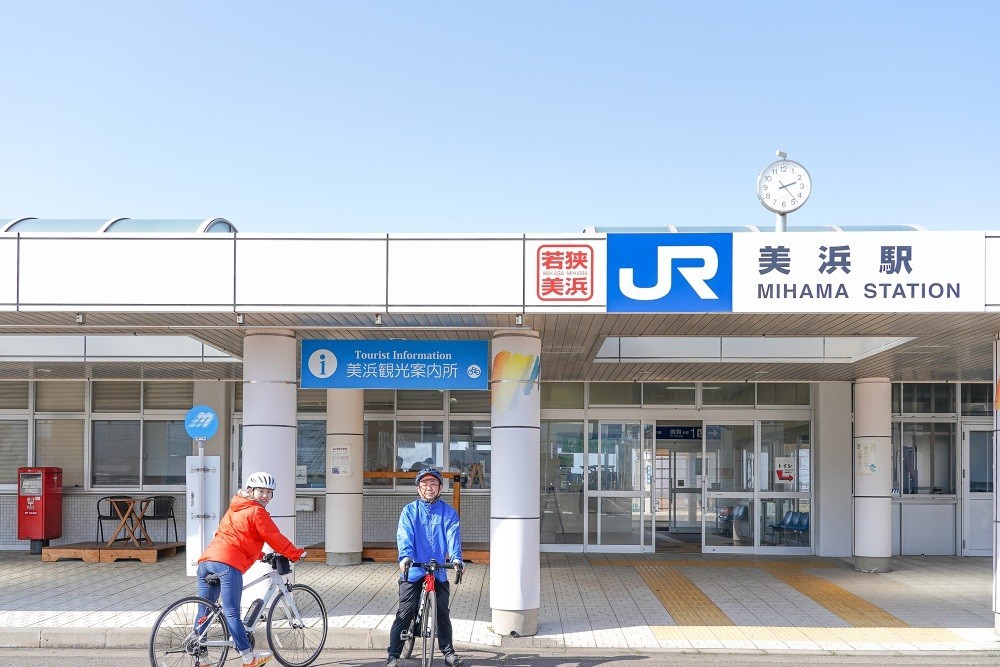
We did it! After cycling all the way around the Five Lakes of Mikata, we arrived at the JR Mihama Station!
The route was mostly flat and easy to ride, and with the help of the electric assist, we ended up feeling just the right amount of fatigue and a great sense of accomplishment. For this demonstration, we took our time, with many breaks for photos, and the total ride took us about 5.5 hours.
After completing the Gokoichi, there’s plenty of time left to enjoy other nearby activities or savor the delicious seafood of the Mihama and Wakasa areas. While it’s possible to make a day trip from the Kansai or Chukyo regions, the Gokoichi route has many more highlights that we couldn’t cover here—so we highly recommend staying overnight to enjoy it at a leisurely pace!
Column
If you want to fully enjoy Wakasa Bay, we recommend Wakacycle, the Wakasa Bay Cycling Route!
Go for a bike ride while taking in views of the ocean and lakes!
Enjoy the distinct scenery of Wakasa Bay and The Five Lakes of Mikata!
If you’re an experienced cyclist, why not try tackling the approximately 130 km route from JR Tsuruga Station to Wakasa-Takahama Station?