Fukui's Seasonal Food Calendar: Summer (June–August)
Fukui Prefecture is abundant with a rich variety of seasonal foods. Here are some foods that are in season during the summer (June to August).
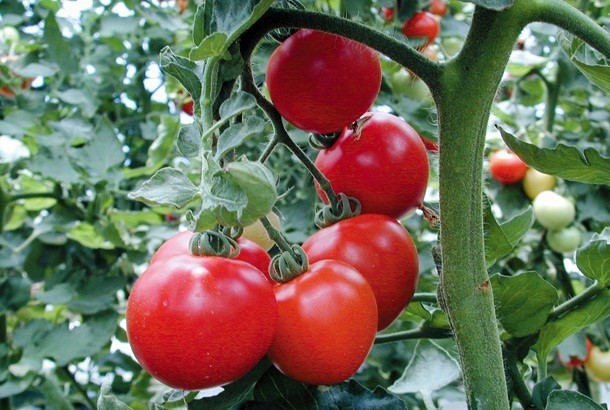
Koshi-no-Ruby Tomatoes
That sweetness is a gift from the sun
It’s the perfect size—just right to fit snugly in the palm of your hand.
With its glossy, vibrant red skin, it’s truly beautiful enough to be called a "ruby."
Shirakata-cho in Fukui City, one of the areas in Fukui Prefecture where "Koshi-no-Ruby" is produced, is located on a stretch of sandy beach called Sanrihama facing the Sea of Japan.
This area has long been used to grow a variety of crops, taking advantage of its excellent drainage. "Fukui Watermelons" and "Hana Rakkyo" are particularly famous.
Although efforts to cultivate "Koshi-no-Ruby" have been underway in this area since 1989, growing tomatoes on sandy soil—where water management is difficult—proved challenging, and the early days were reportedly a constant struggle.
Hiroyuki Hamanaka, one of the growers, explained, “If the water volume is too low, the quality deteriorates. Conversely, if you use too much water, the sugar content drops. Compared to other crops, it’s a delicate plant that requires many times more effort.”
"Koshi-no-Ruby" tomatoes are grown in plastic greenhouses. The ideal temperature for tomato growth is around 27 degrees Celsius (80.6°F). However, when the outside temperature rises, the temperature inside the greenhouse can quickly exceed 40 degrees (104°F). For this reason, constant attention must be paid to temperature control through ventilation and the use of shade curtains.
“Tomatoes can’t tell us what they need, so we have to notice even the smallest changes—like when they need water or if the temperature is too high. If we don’t give them exactly what they need, they won’t produce good fruit,” Hamanaka-san said, smiling.
In this way, only by receiving plenty of sunlight, soil, and the growers’ love can the sweet and beautiful “Koshi-no-Ruby” be produced.
Fukui Plum
Fukui plums, with their thick flesh, are a beauty and health food rich in minerals and carefully handcrafted.
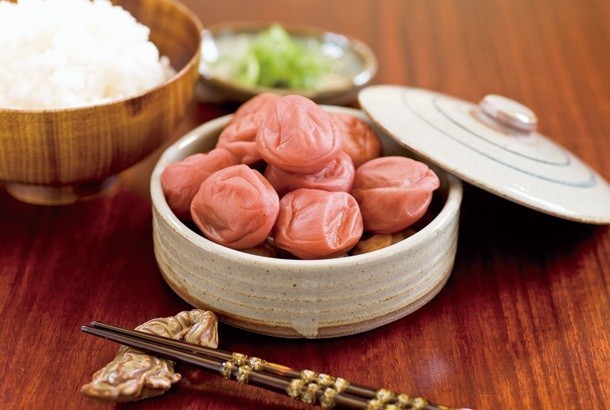
"Fukui Plums," a specialty of the Wakasa region in southern Fukui Prefecture, have been widely used in recent years in rice balls and boxed lunches sold by major convenience store chains, where they have been very well received. While their delicious taste is the primary reason for their popularity, there are several other factors as well.
For example, no additives are used in the pickling process; the plums are made using only plums, shiso leaves, and salt. Furthermore, the labor-intensive "Tsuchiyoboshi" (sun-drying) process is carefully carried out by hand. Additionally, compared to plums from other prefectures, Fukui Plums are rich in minerals such as calcium and potassium, making them a reliable ally for modern people concerned about beauty and health.
Although Fukui plums are highly popular today, their origins date back to the Tenpō era (1830–1844) of the Edo period. It is said to have begun with plum trees at two homes in the Nishida district (formerly Nishida Village), which remains the center of Fukui plum production. Subsequently, through repeated breeding improvements during the Meiji era (1868-1912), the varieties evolved into “Beni-sashi” for umeboshi pickled dried plum, and “Kensaki” for plum wine.
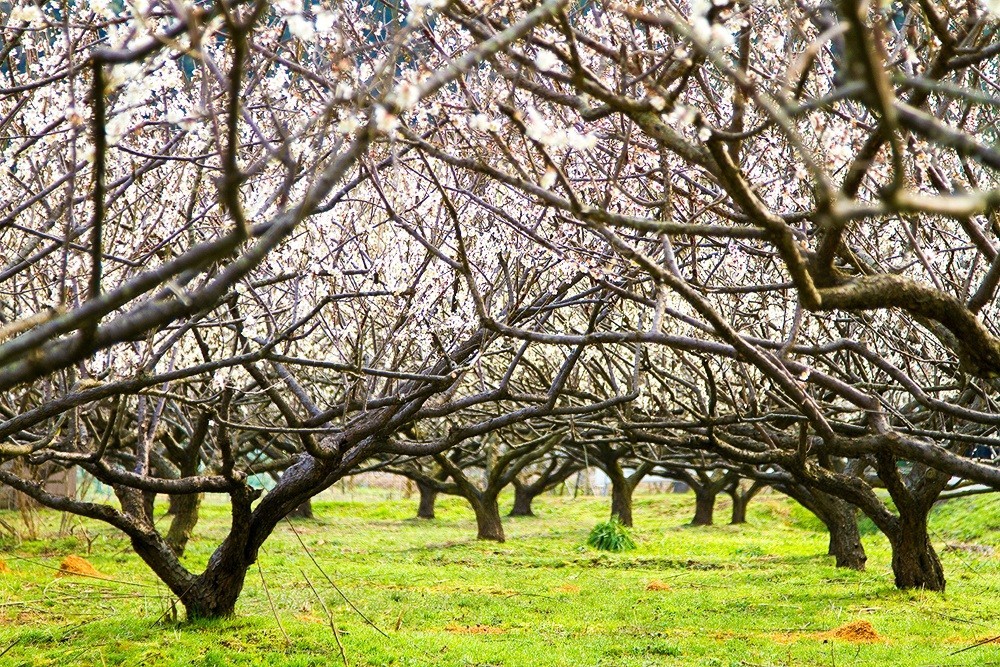
The plum trees bloom with fragrant flowers around late February, bear fruit, and harvesting begins in early summer.
“To produce delicious Fukui plums, it goes without saying that the first crucial step is whether the flowers bloom. Blooming leads to fruit set, which in turn leads to a harvest. To ensure this, we apply ample fertilizer after the harvest to prepare for the following year’s crop. Of course, we also work to revitalize the local community by sharing information, providing guidance, and fostering interaction with producers,” says Bo-san, director of the Ume no Sato Kaikan.
The “Ume no Sato Kaikan” serves as the hub for the production, processing, and sales of Fukui plums. For decades, it has actively promoted the use of Fukui plums as ingredients in the aforementioned convenience stores and in department stores. Bo-san adds that in recent years, these efforts have finally begun to bear fruit.
With the recent boom in beauty and health trends, the popularity of plums—which are also considered a health food—is sure to continue growing. Thanks to the efforts of the producers and the cooperation of related facilities, Fukui Plums plan to further improve quality, develop new products utilizing plums, and increase the number of events to revitalize the local community. Please look forward to it.
From late February to mid-March, when the plum groves are in full bloom, the trees are adorned with white flowers. Fukui Plums are highly regarded for their delicious taste, featuring small seeds and plenty of flesh, and are famous for being presented to the winners of the Grand Sumo Tournament. We invite you to experience the traditional flavor, passed down since the Edo period, right in your own home.
Ayu Sweetfish
The fins are large and taut, and the flesh is firm
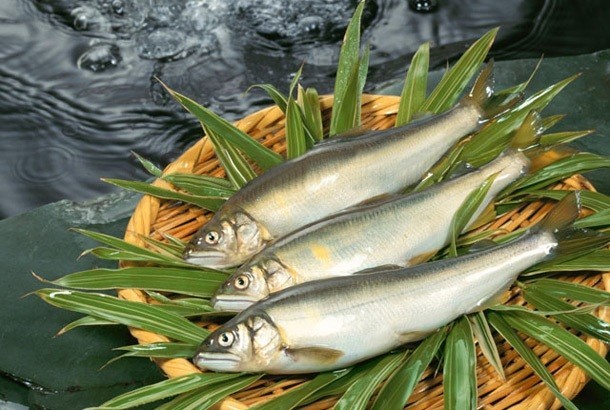
The "Kuzuryu," a whitewater paradise that anglers across the nation dream of
The Kuzuryu River is the longest river in Fukui Prefecture. Its headwaters lie in one of Japan’s heaviest snowfall regions, covered in deep, pristine beech forests and flanked by a range of 1,500-meter-high peaks such as Mt. Bishamon, Mt. Arashimadake, and Mt. Heike. Abundant water, including snowmelt, flows vigorously down from these steep mountains. In these pristine waters, you can spot cherry salmon—considered living proof of the water’s clarity—and the Araregako, whose habitat is designated as a National Natural Monument. The Kuzuryu River, with its combination of “abundant water,” “rapid currents,” and “purity,” fosters fresh, high-quality moss that nurtures exceptional sweetfish.
Wasaku Kawamura of Katsuyama City explains, “The ayu of the Kuzuryu River swim powerfully through the abundant water and turbulent currents, resulting in large, taut fins and firm, delicious flesh.” Furthermore, in addition to the abundant wild ayu migrating upstream from the sea, the Kuzuryu River is known as a prime fishing spot because it receives what is said to be the largest release of juvenile ayu on the Sea of Japan coast.
The "Kitagawa" River: Ranked 3rd in the National Water Quality Survey
In the 2002 national water quality ranking of Class 1 rivers released by the Ministry of Land, Infrastructure, Transport and Tourism of Japan, the "Kitagawa" was selected as the 3rd place. Ayu are also known as "fragrant fish," and in Fukui, where many clear streams remain—including the Kitagawa—you can catch ayu that have a scent reminiscent of watermelon.
In Fukui, ayu have long been an integral part of daily life, prepared and enjoyed in a variety of ways, such as grilled with salt, dengaku-style, simmered in sweet soy sauce, and as ayu sushi. Furthermore, ayu are not only enjoyed in the summer; they are often frozen and stored for later use, to be served during family gatherings, such as when entertaining guests or during memorial services. Along the banks of rivers like the Kuzuryu and Asuwa rivers, there are restaurants where you can enjoy dishes made with locally caught ayu.
Wakasa Guji Tilefish
An elegant sweetness that gently melts on the tongue: Wakasa-yaki-style Wakasa Guji
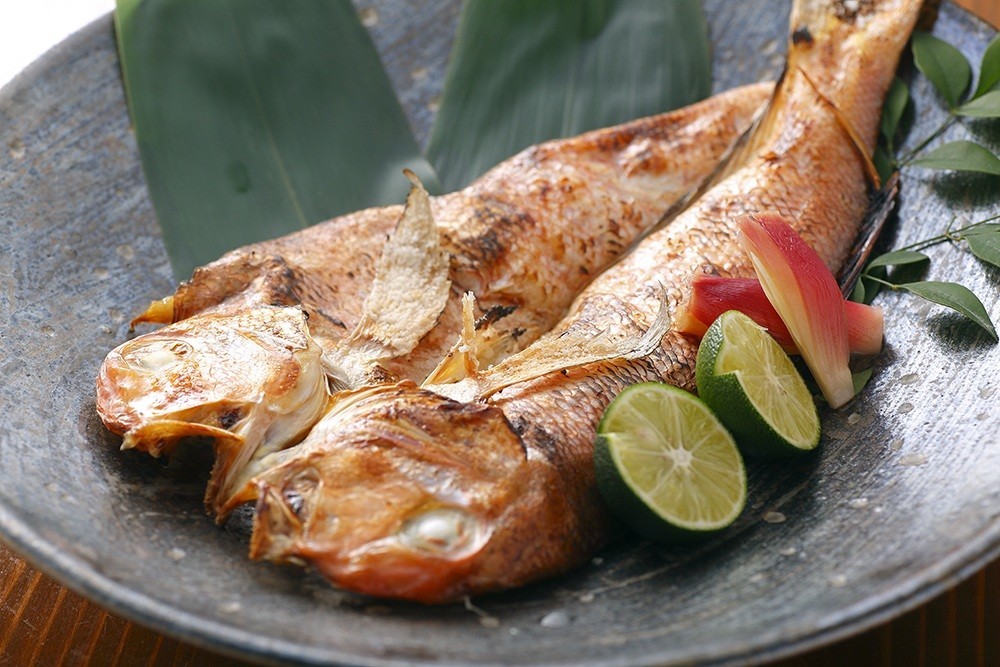
"Wakasa Guji," a premium ingredient in Kyoto cuisine nurtured by the Wakasa Bay.
The red sea bream caught in Wakasa Bay is known as “Wakasa Guji,” and has long been transported to Kyoto alongside mackerel and Wakasa flatfish.
With its elegant sweetness that melts on the tongue and its graceful appearance, it remains an indispensable luxury ingredient in Kyoto cuisine to this day.
"Wakasa Guji" is a delicate fish with "tender, easily damaged flesh." It is placed in special insulated boxes designed for line-caught Guji and transported to the port under strict temperature control. Only the largest specimens with the most beautiful appearance are carefully selected from this batch, and only those handled under special conditions—such as ensuring the ice does not come into direct contact with the fish—are permitted to bear the name "Wakasa Guji."
A famous cooking method is “Wakasa-yaki,” in which the guji is split open along the back and grilled whole without removing the scales. In Kyoto, this dish is so deeply rooted in tradition that the quality of a chef’s Wakasa-yaki is considered a benchmark of their skill. It is also prepared in a variety of other ways, such as steamed or deep-fried, and continues to captivate many people.
A delicious and beautiful fish that takes center stage in Kyoto cuisine.
"Wakasa-yaki" refers to a dish in which the fish is lightly salted without removing the scales and then grilled as is. The fish used in this extremely delicate dish, which can be considered the epitome of Japanese culinary culture, is the "Wakasa Guji."
In Fukui Prefecture, it is caught year-round using longline fishing, in addition to being harvested in the summer using gillnets.
However, not all guji caught in Wakasa Bay are called “Wakasa Guji.” To be designated as “Wakasa Guji,” the brand fish that Fukui takes pride in, it must clear several high hurdles.
First and foremost, it must be caught by hook-and-line or longline fishing. Fish caught in nets lose their eligibility to be called "Wakasa Guji" at that point. It must also be fresh and have a beautiful shape. Only large red seabream that meet these criteria are carefully selected, and only then can they be shipped as the "Wakasa Guji" brand product.
Once selected, the Wakasa Guji are handled with the utmost care to avoid damaging the fish, and each one is individually labeled with a special tag bearing the name of the port and the vessel that caught it.
The process leading up to shipment is also strictly regulated. Ice is placed in designated fish boxes, and a urethane sheet is laid on top to prevent the fish from coming into direct contact with the ice, after which the Wakasa Guji are arranged. A special vinyl cover called a “patch” is then placed over the top to prevent the fish from drying out, and finally, the lid is closed to complete the preparation for sale. Even after packaging, the fish are strictly stored in a fresh fish refrigerator until the time of sale.
Wakasa Guji is a truly exceptional delicacy—not only for its taste and beautiful appearance, but also for the meticulous care taken in its handling.
Suitable for sashimi up to 72 hours after catch
Although Wakasa Guji was once considered difficult to handle due to its delicate flesh and tendency to lose freshness quickly, research conducted by Fukui Prefectural University has shown that by following the freshness management manual—a prefecture-wide initiative—the fish retains enough freshness to be eaten raw for up to approximately 72 hours (3 days) after being caught.
Echizen Uni Sea Urchin
"Echizen Uni," one of Japan's three great delicacies, has been renowned since the Edo period of 1603-1868.
The flavor of "Echizen Uni" is an integral part of Fukui's culinary culture. It pairs perfectly with warm rice or as a snack with sake.
In addition to Japanese cuisine, it has recently gained attention as a premium ingredient in French cuisine as well.
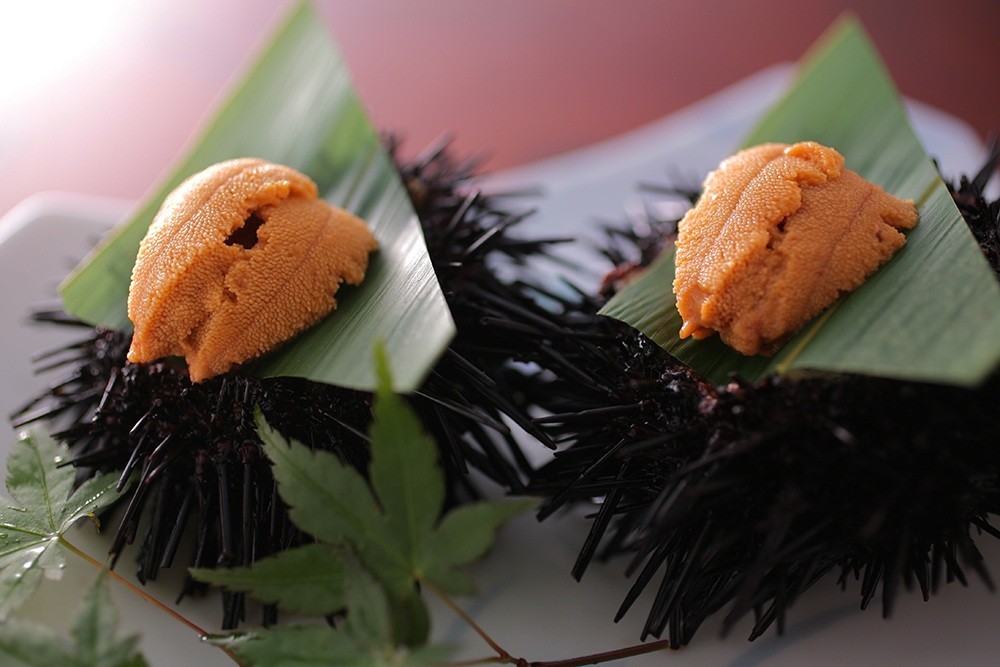
"Echizen Uni," one of Japan's three great delicacies
This "Echizen Uni" refers to salt-cured red sea urchin. The red sea urchins used are small, measuring about 3 to 4 cm (about 1 to 1.5 inches) in diameter, and are said to have the richest flavor among sea urchin species; when salt-cured, their flavor becomes even more concentrated.
The red sea urchins harvested along the Echizen coast in Fukui differ from those found in other regions; they have less of a bitter aftertaste and are delicious enough to be eaten raw. For this reason, red sea urchin fishing has flourished here since ancient times. Due to distribution and preservation needs, they are salted, and the techniques and culture associated with this process have been passed down through the generations.
The season for catching red sea urchins on the Echizen Coast opens on July 20 and ends after about two weeks. Consequently, the production of Echizen Uni is limited to this period. Each red sea urchin is cracked open by hand, and the roe is carefully extracted using a paintbrush to prevent it from breaking apart. Next, salt is added to seawater, and the mixture is chilled with ice to prevent the roe from falling apart. From there, the internal organs are removed, and the salting process begins.
It takes over 100 sea urchins to produce just 100 grams (about 11 ounces) of the final product. With its rich aroma of the sea and a flavor that is both delicate and intense, “Echizen Uni” is a masterpiece representing Japan, passed down through generations by the people of Fukui.
Starting around 6:30 in the morning, female Ama divers begin gathering one after another. At exactly 7:00, the sea urchin harvest begins all at once. The harvest is strictly limited to 10:00. During that time, the divers work without rest, diving repeatedly to harvest the sea urchins. Afterward, the processing begins and continues until late afternoon.
Boasting a tradition of over 200 years, "Echizen Uni" is known as one of Japan’s three great delicacies. "Echizen Uni" refers to salted red sea urchin and is only produced during the summer.
Wakasa Rock Oysters
The Milk of the Sea, Filled with the Scent of the Shore
The key to growing delicious rock oysters is clean water.
It also requires a rich natural environment, including the mountains that line the coast.
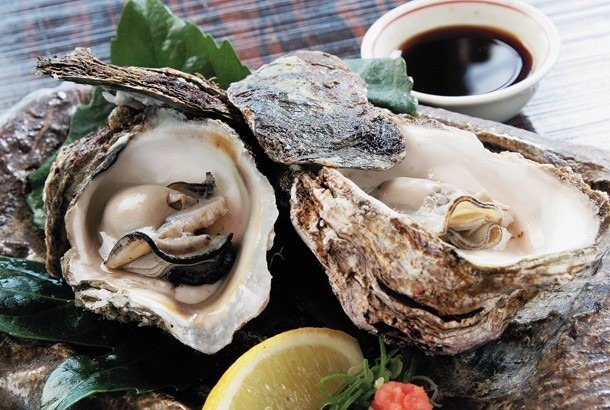
Please enjoy these fresh, delicious Wakasa rock oysters with their firm, succulent meat.
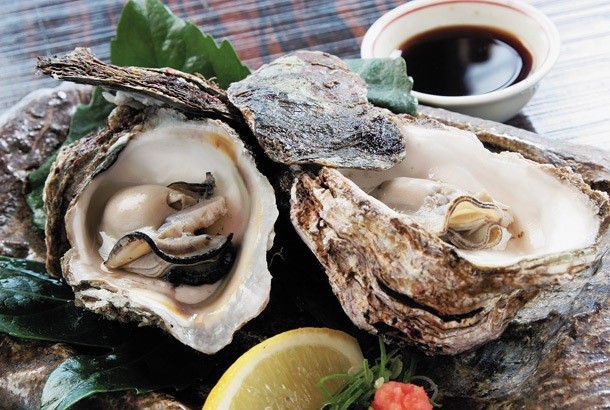
Rock oysters are often called “summer oysters” in contrast to the winter “Maga-gaki,” and their rich flavor makes them ideal for eating raw. They are more than three times larger than Maga-gaki. Their most distinctive feature is their rich, intense flavor, full of the essence of the sea.
Rock oysters are also known as “the milk of the sea” and are rich in amino acids, vitamins, minerals, and glycogen. They have long been cherished for their high nutritional value and unique flavor. They have also been considered a nutritious tonic for restoring physical strength during the summer.
For rock oysters to be delicious, not only must the sea be clean, but the mountains surrounding it must also be lush and fertile. In Wakasa Bay, rivers flowing from these lush mountains carry abundant nutrients into the sea, creating the perfect conditions for raising delicious rock oysters.
All Wakasa rock oysters are wild-caught. Because rock oysters are literally firmly attached to rocks on the seabed, fishermen must expend considerable effort to harvest them. They dive into the sea, carefully pry the oysters loose with a crowbar, surface to catch their breath, and then dive back down to collect them.
The rock oysters harvested in this way do not go directly to market. From early summer—June through August—the Obama Branch of the Fukui Prefectural Fisheries Association processes the rock oysters caught by fishermen so they can be eaten raw. They are washed in sterilized cold seawater before being sent to market. Only after being washed in this sterilized cold seawater for at least 20 hours do they become the safe, reliable, and delicious Wakasa rock oysters we know.
To truly enjoy Wakasa rock oysters, eating them raw is definitely the best way. Drizzle them with ponzu or lemon juice to your liking, and the moment you put one in your mouth, the aroma of the sea fills your palate, spreading an indescribable deliciousness. Of course, they are also excellent fried, in a gratin, or in oyster rice, but first, please try eating them raw to experience their rich flavor.
Wakasa rock oysters are large, firm, and packed with nutrients.
This is a new brand from "Miketsukuni," a region with a long history of supplying delicious ingredients to the imperial court. Please be sure to savor their rich, delicious flavor.
A Fisherman’s Testimony
Rock oysters grow in the bountiful waters of Wakasa. These oysters cling so stubbornly to the seabed that you could almost call them “rocks” themselves, making it extremely difficult to harvest them by free diving. They’re delicious and packed with nutrients. We hope that many people will have the chance to savor the deliciousness of these wild oysters—a true gift from the sea of Wakasa.
Column
Summer in Fukui
Discover the beautifully unique scenery, activities, foods, and events to enjoy in Fukui in the summer