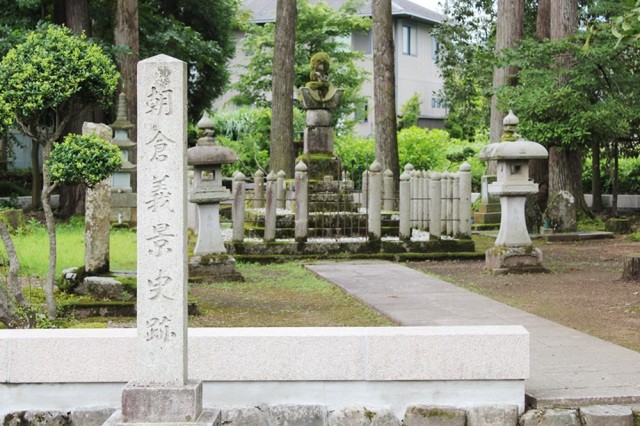
Somayama Castle Ruins
Mount Somayama, standing at an elevation of 492 meters, was once called the Hiei of the North, referring to the famous Kyoto mountain. During the Nanbokucho period of 1336-1392, it became a stronghold for the Southern Court and was the site of many wars. Overlooking the Hokuriku Expressway, the castle grounds served as the residence of the Uryū clan from the late Kamakura period (1185-1333). After the death of Uryū Tamotsu, a loyal retainer of the Southern Court, Nitta Yoshisada took refuge here. The surrounding area is dotted with sites evoking the past, such as Kitsukake Rock, Himeana Cave, and Tono Pond. Today, well-maintained hiking trails blend seamlessly with nature, making it an ideal spot for exploring historical traces while strolling.
Overview of Somayama Castle
Somayama Castle is located at the southern tip of the Minamietsu Basin, where the mountains of the Nanjō Range press into the narrow valley of the Hino River, making it a key transportation point along the Hokuriku Road. Somayama stands on the east side of the Hino River, flanked by the Akuwa Valley and the Takura Valley. Its quartzite mountain face is steep and formidable, making it a natural fortress. A mountain castle existed on the summit of Somayama, centered around the "Honmaru" (main keep) at an elevation of 492 meters, with baileys called the "East Palace" and "West Palace" built east and west of it.
At the mountain's base, the lord's residence is believed to have stood, and the "Residence Site" remains, featuring earthen ramparts (Ichino-jōdo) and foundation stone building traces. Somayama Castle, encompassing the castle mountain with its fortress and part of the base town (approximately 170 hectares), was designated a National Historic Site in 1934 (Showa 9) and 1979 (Showa 54).
History of Somayama Castle
Somayama Castle is a mountain castle situated within the medieval manor of "Somayama-shō." The name "Somayama-shō" appears in ancient documents from the Kamakura period. It was originally a domain of Shichijō-in, the birth mother of Emperor Go-Toba. In August 1228 (Antei 2), it was transferred to the Shūmyōmon-in, the retired empress of the former emperor, and later passed to the Daikaku-ji faction. Throughout the medieval period, this Somayama Manor was managed as a court noble's estate by individuals connected to the imperial court. The mountain castle is said to have been built in the late Kamakura period by Uryū Hiraku, father of Uryū Yasusada, who moved here from Uryū Village in Mishima District, Echigo Province (present-day Niigata Prefecture). Since then, it served as a gateway to Echizen (present-day northern Fukui Prefecture) alongside other castles such as Kanegasaki, Hachifuse, Kinome Pass, and Hiuchi.
In 1336 (Enbun 1), when Nitta Yoshisada brought the two imperial princes, Tsunenaga and Tsunenori, into Kanegasaki Castle, the Uryū clan supported Kanegasaki Castle. According to the Taiheiki, on the 11th day of the first month of 1337 (Enbun 2), Uryū Yasusada, who had marched out to rescue Kanegasaki Castle, is said to have been killed in battle near Kashimagari in Tsuruga City. The Tokue Yorikata Gunchūjō (Tokue Yorikata's Military Loyalty Document) records that Somayama Castle fell on the night of June 25, 1341 (Kōei 1). Afterwards, Ashikaga (Shiba) Takatsune garrisoned the castle, but he died of illness there in July 1367 (Jōji 6). Subsequently, the Kai clan, retainers of the Spā clan who had served as deputy governors of Echizen Province, took up residence and confronted the Asakura clan. However, they were defeated at the Battle of Hinokawa in the first month of 1474 (Bunmei 6) and the castle fell. During the Asakura clan's era, their retainer, Kawai Aki no Kami Muneyoshi, resided in the castle. However, in 1573 (Tenshō 1), the castle was abandoned due to Oda Nobunaga's invasion of the Hokuriku region. Subsequently, in 1574 (Tenshō 2), it is said that the Ikkō Ikki (Purple Robe Rebellion) took up residence at Somayama, though details remain unclear.
Mountain Castle
Excavation and restoration work on the mountain castle section was conducted from 1970 to 1975. Today, visitors can see restored foundation stones and building sites.
Honmaru
Located atop the 492-meter peak. It offered a panoramic view of the castle town below and allowed observation of enemies advancing over Kinome Pass, making it a crucial strategic point as the gateway to Echizen.
East Palace
This irregularly shaped flat area, approximately 600 square meters long and narrow from north to south, retains the remains of foundation stone buildings.
West Palace & Palace Pond
The western ridge of the main keep, known as the "West Palace," features 17 flat areas of varying sizes. Some of these flat areas have foundation stones, suggesting buildings may have once stood there. The West Palace also contained a pond called "Palace Pond," which served as a water source.
Princess Cave
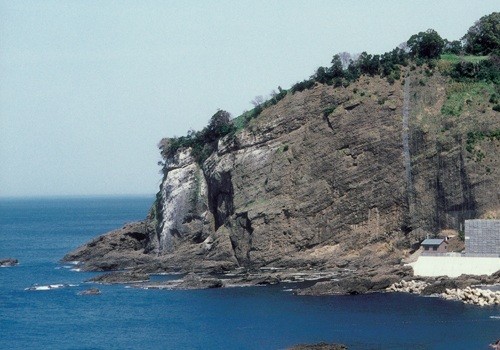
This is said to be the place where Nitta Yoshisada's wife, Kōtō Uchimachi, temporarily hid. Kitsukake Rock Legend has it that upon hearing of Uryū Yasushi's death in battle, his wife and female attendants hung their kimono robes on this sheer cliff rock and leaped to their deaths.
Inu Modori Komagawashi
This name is said to derive from the steep, impassable cliff face where even dogs and horses that had climbed this far were unable to ascend further and had to turn back.
- Area
- Tannan
- Category
- History & Culture Natural Scenery Castles
- Preferences
- Open before 9 AM Open after 5 PM

Information
- Telephone Number Details
- Minami-Echizen Town Board of Education 0778-47-8005 / Minami-Echizen Town Nanjo Tourism Association
- Address (in Japanese)
- 福井県南越前町阿久和
- Getting There
- From the Hokuriku Expressway Imajo Interchange to the trailhead: 10 minutes by car
- Car Park
- No
- Website