Attractions
Area
Category
Preferences
Distance
- Sort
- Most Popular
- Last Updated
- Nearest
- Layout
- List view
- Grid view
- Map view
Ishaku-ji Temple
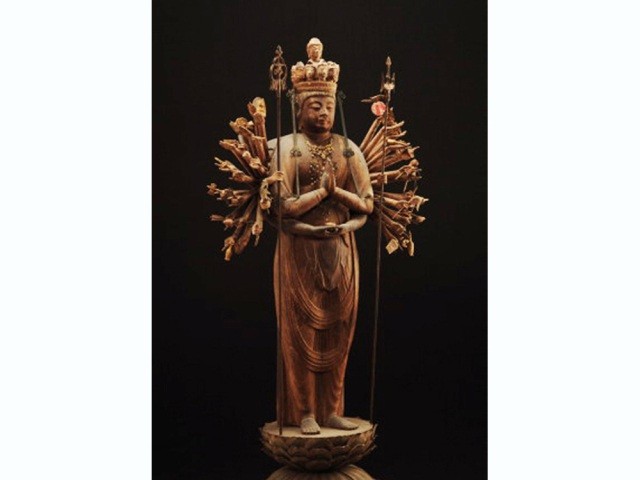
Soto Zen sect. The principal image is a standing statue of the Eleven-Faced Thousand-Armed Kannon Bodhisattva. This temple originally stood on the site of Chōei-ji Temple (in Tara-shō, Obama City), but it is said to have been relocated to its prese…
- Wakasa
Legendary Battlefield of Yoshisada Nitta at Tomyoji-nada (…
According to the Taiheiki (Volume 20), in the first year of the Kōei era (1338), Nitta Yoshisada was heading to relieve Fujishima Castle when he encountered the forces of Spada Takatsune from the Ashikaga-aligned Kuromaru Castle near Tomyoji-nawa. …
- Awara,Sakai,Fukui
Ounenji Temple
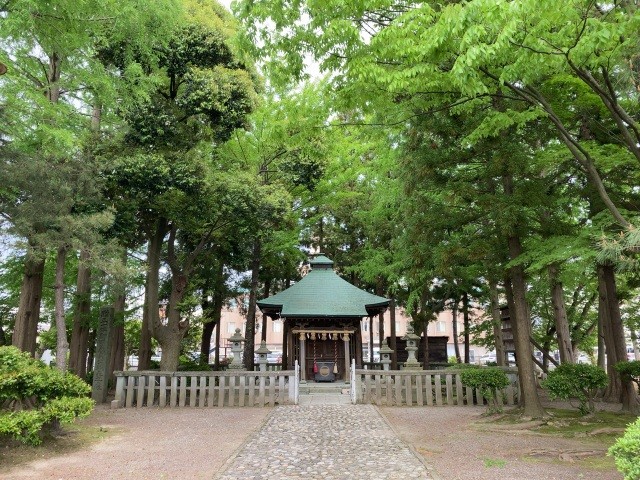
This temple, originally the residence of Hidemi—a disciple of Kusunoki Masashige's younger brother—was converted to the Jōdo Shinshū sect. Its proper name is Kongōzan Okunenji. From the Tenpō era through the early Shōwa period, it produced many lea…
- Tannan
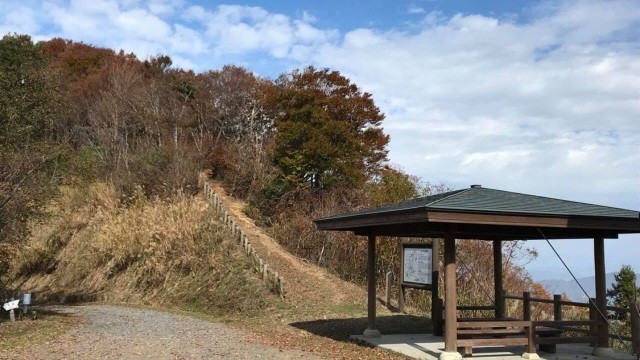
Honoke Mountain
From the summit, you can see the Tannan Plains, Tsuruga Bay, and the Sea of Japan. It is cherished as a mountain where much of its natural beauty remains. Legend holds that Honoke Mountain derives its name from the watchtowers once used to signal e…
- Tannan
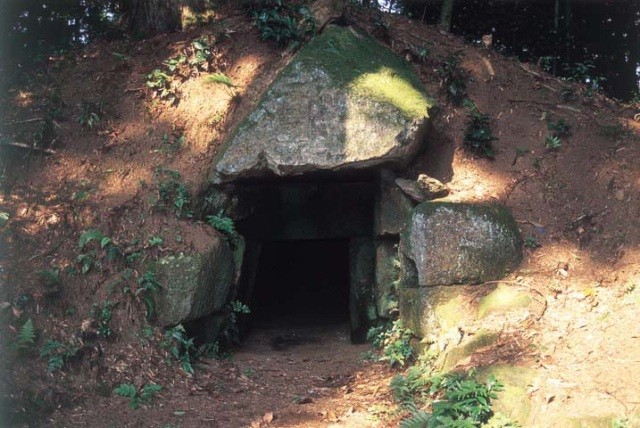
Kuguri Kofun (Stone Chamber)
This ancient tomb in Kusunoki, Awara City, is a prefecturally designated historic site. Its ceiling and rear wall are constructed from a single slab of tuff, exhibiting the advanced structural features of the late Kofun period. It is also a rare to…
- Awara,Sakai,Fukui
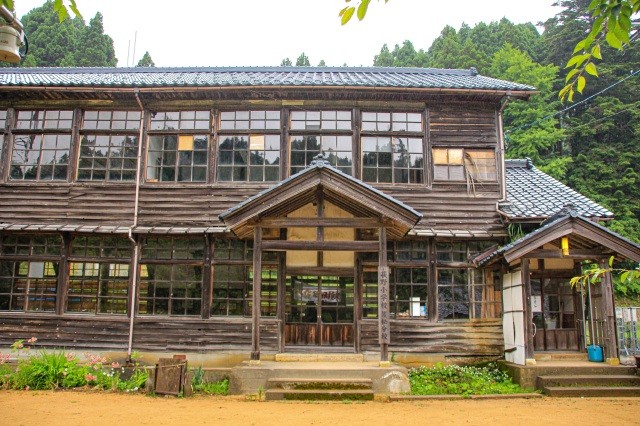
Site of Hagino Elementary School, Oimatsu Branch School
The site of Hagino Elementary School's Oimatsu Branch School is the former school building located in the Oimatsu district of Echizen Town, Fukui Prefecture. The Oimatsu district is a mountain village nestled in a valley about a 15-minute drive up …
- Tannan
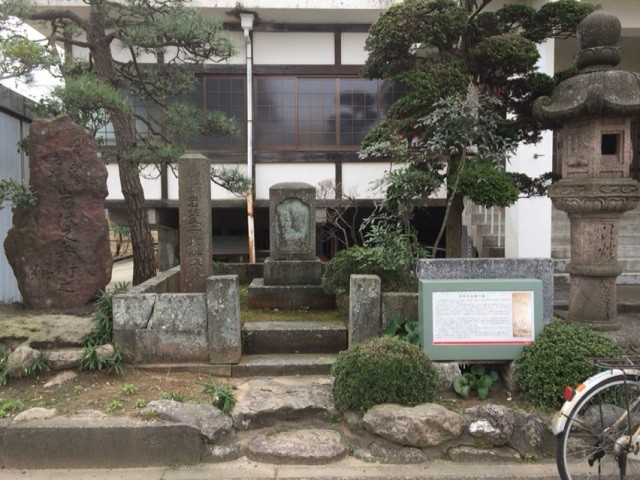
The Grave of Iwasa Matabei
Iwasa Matabei was an artist active in the early Edo period, often regarded as the originator of ukiyo-e. He was highly valued by Tokugawa Iemitsu, the third shogun of the Edo shogunate, and left behind works considered foundational to ukiyo-e. Mata…
- Awara,Sakai,Fukui
Taro Kusakabe, Griffith Statue
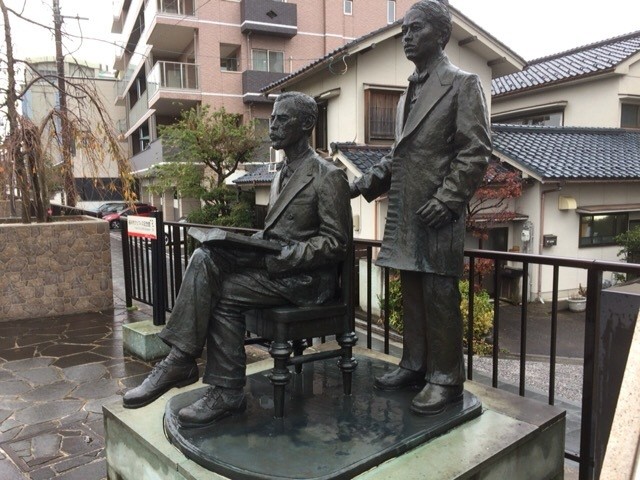
Taro Kusakabe was the first student from the Fukui domain to study in America. Next to his bronze statue, erected on the embankment in front of the site of Kōnan Yokoi's residence, stands a statue of Griffith, his senior at the university where he …
- Awara,Sakai,Fukui
Kadashiwa Shrine
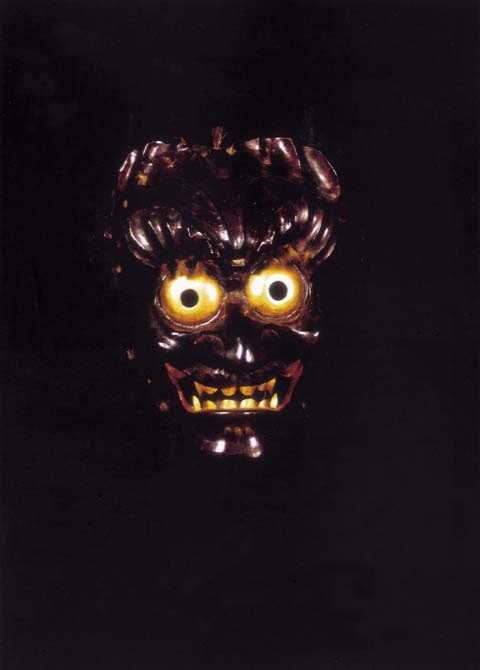
The wooden demon masks (Tsuina masks) of parents and child at Kadashiwa Shrine, believed to date from the late Kamakura period, are designated as Important Cultural Properties of Japan. They are publicly displayed every February 11th, when the ritu…
- Tannan
Zengonzan Koboji Temple
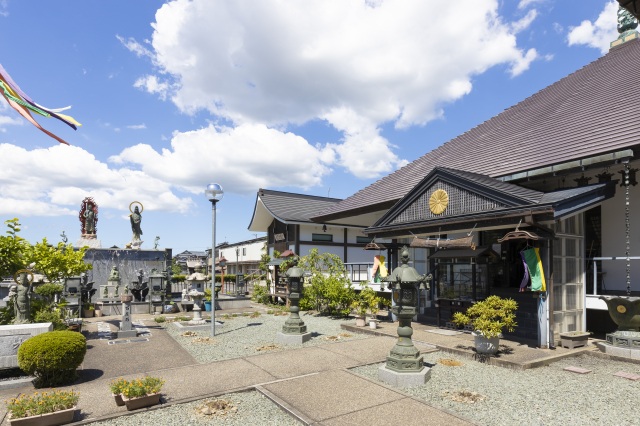
Murasaki Shikibu ーthe author of the Tale of Genji, believed to be one of the oldest novels in the worldー spent about a year and a half in Echizen City. Our temple is located adjacent to the east side of Murasaki Shikibu Park. It is a Shingon Budd…
- Tannan
Kagetsuro
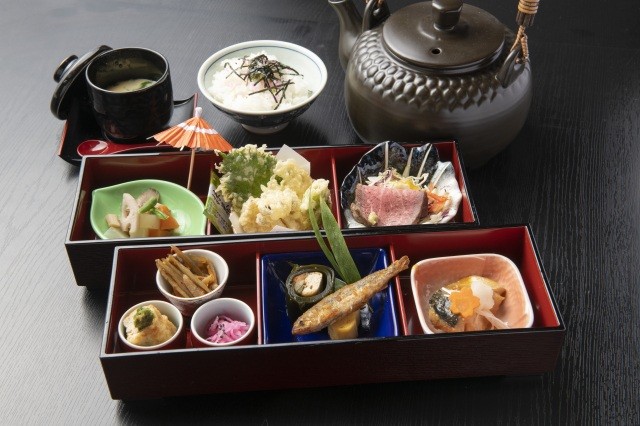
Renovated from the former ryotei restaurant Kagetsuro, a cultural asset built in 1897. This charming building once thrived as part of the geisha district.The first floor features a dining area where you can enjoy lunch featuring local cuisine or a …
- Eiheiji, Okuetsu
Hoenji Temple
A temple protected by Maeda Toshiie, the first lord of the Kaga domain. The cemetery contains memorial towers for Toshiie's parents.Toshie's connection to Takefu (present-day Echizen City) began when Oda Nobunaga, having suppressed the Ikko…
- Tannan
Ukan Shrine (Ikeda Town)
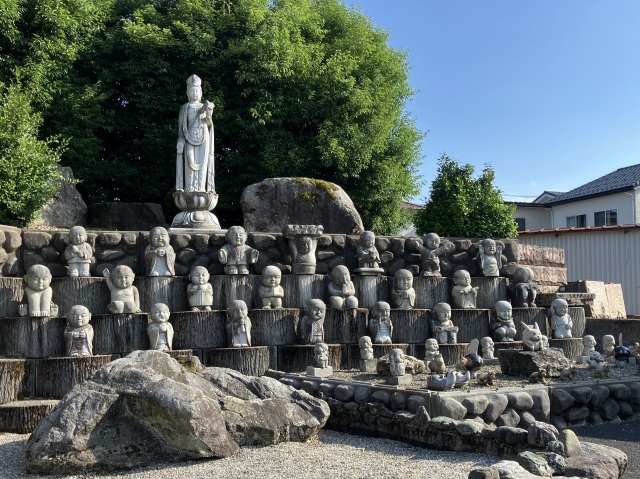
Ukan Shrine, where the Dengaku and Noh Dances of Mizuumi are performed. Its history is ancient, said to have been founded in 463 AD.Since ancient times, the Dengaku dance, born in this land, took root as a ritual offering.Later, due to exchanges wi…
- Tannan
Izumioka Ichigoto Shrine
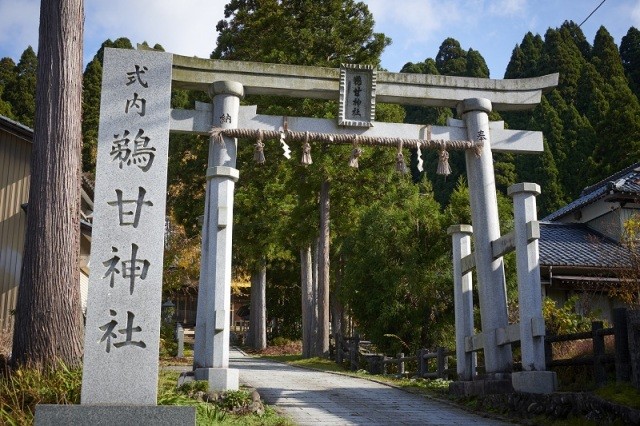
As per the words of the deity Ichimon, who said "Do not build a shrine," Wakasa Town's Ichimon Shrine is a rare "shrine without a shrine building" in Japan. It is said that if you make a single wish with a pure heart and tell no one, it will come t…
- Wakasa
Furusato Gallery Shura
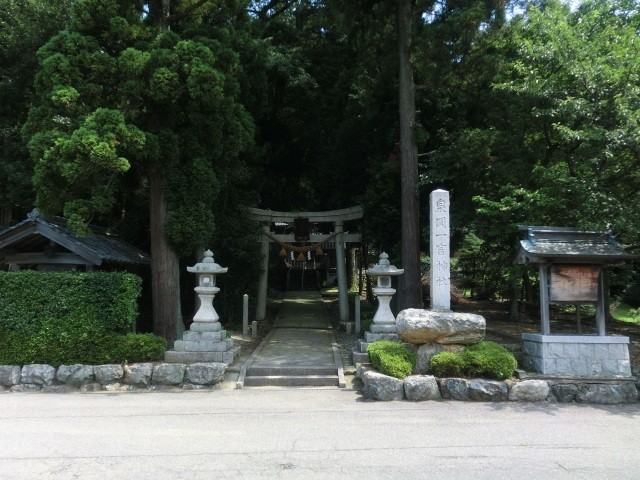
The first floor features an exhibition room, a lobby, and a Japanese-style room suitable for use as a tea ceremony room. The second floor has two exhibition rooms, which serve as display spaces for citizens' paintings, calligraphy, crafts, and othe…
- Tannan
Kako Satoshi, Echizen City Hometown Picture Book Museum "R…
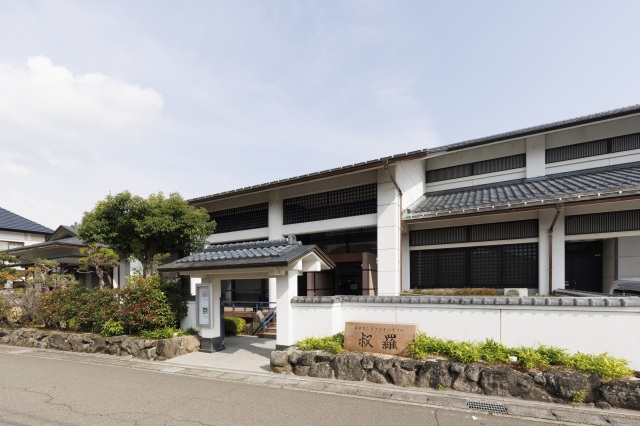
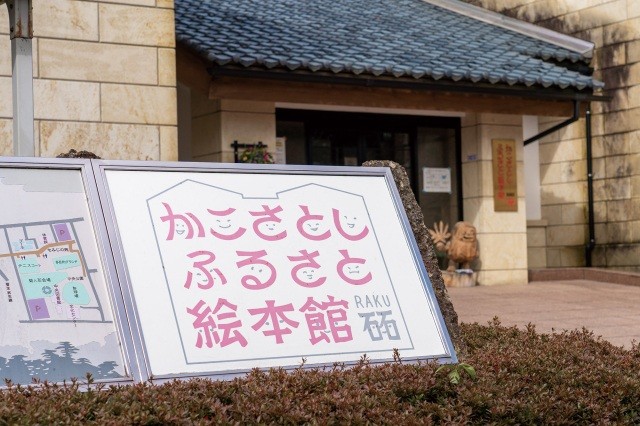
The museum houses a collection of 5,000 picture books and kamishibai (paper theater) works by various domestic and international authors, including Satoshi Kakō. It also displays reproductions of paintings and original picture book illustrations cr…
- Tannan
Cycling Tour Exploring the Roots of Echizen Lacquerware
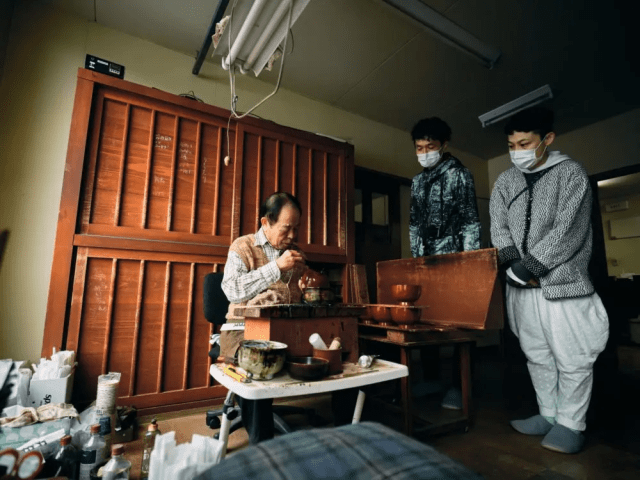
Highlights Kawada, the town of Echizen lacquerware with 1,500 years of history. It is said that lacquerware began in Echizen when Emperor Keitai's broken crown was skillfully repaired with lacquer, leading to the encouragement of lacquer craftsmans…
- Tannan
Hole Horse Shrine
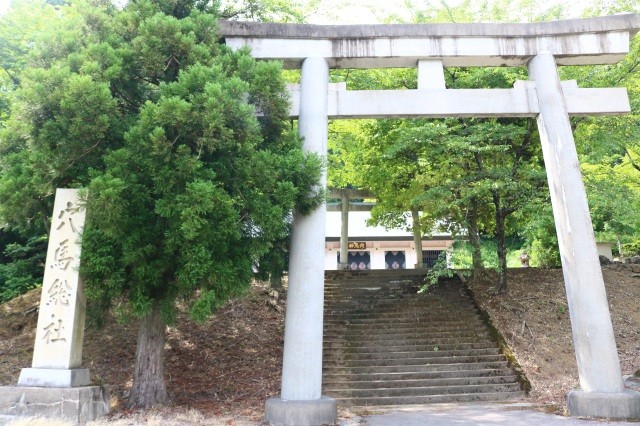
Many villages were submerged for the construction of the Kuzuryu Dam, but the "Anuma Sōja" shrine, which consolidated shrines from the Anuma district, has become a popular spot among horse racing fans due to its name. The beauty of the four seasons…
- Eiheiji, Okuetsu
Statue of Umeda Unbin
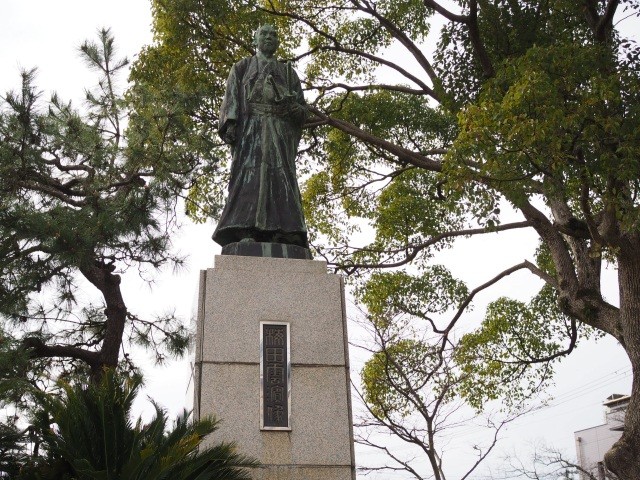
Umebana Unbin was born in 1815 to a family of samurai in the Obama domain and studied at the Junzōkan academy. After repeatedly criticizing the shogunate before the domain lord Sakai Tadayoshi, Unbin was expelled from the domain and became a ronin.…
- Wakasa
Crafts and Historical Culture Experiences
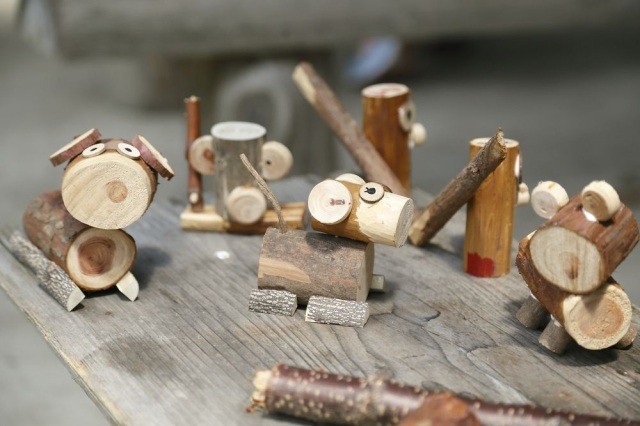
Example: Vine Craft Experience We gather materials from the mountains and challenge ourselves to create vine crafts. ※Other Woodworking Experience, Beach Crafts, etc.
- Wakasa