Attractions
Area
Category
Preferences
Distance
- Sort
- Most Popular
- Last Updated
- Nearest
- Layout
- List view
- Grid view
- Map view
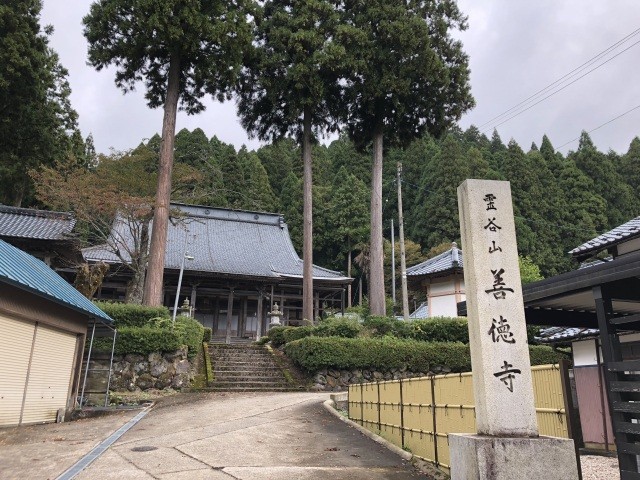
Zentokuji Temple
On November 1, 1864, the Mito Tengu Party, having raised their banner at Mount Tsukuba in Hitachi Province to realize the cause of revering the Emperor and expelling the barbarians, set out for Kyoto. In December, the Tengu Party passed through Ike…
- Tannan
Nakayama-dera Temple
Nestled halfway up Mt. Aoba, Nakayama-dera Temple is the first temple of the Hokuriku Thirty-Three Kannon Pilgrimage. Its main hall and Kongo Rikishi statues are designated as Important Cultural Properties by the national government. From the templ…
- Wakasa
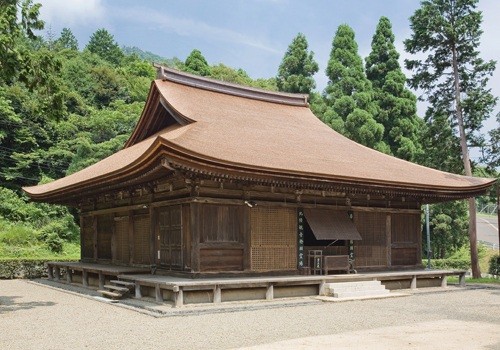
Daisho-ji Temple
It is one of the few Nakamoto-san temples of the Rinzai School’s Kennin-ji branch in Wakasa and serves as the 31st pilgrimage site on the Wakasa Thirty-Three Kannon Pilgrimage. The temple also offers zazen meditation experiences to refresh th…
- Wakasa
Magoji Temple
Magoji Temple, the second temple in the Hokuriku 33 Kannon Pilgrimage, is said to have been founded by Prince Shōtoku, and its principal image—a wooden seated statue of Bato Kannon—is designated as an Important Cultural Property of Japa…
- Wakasa
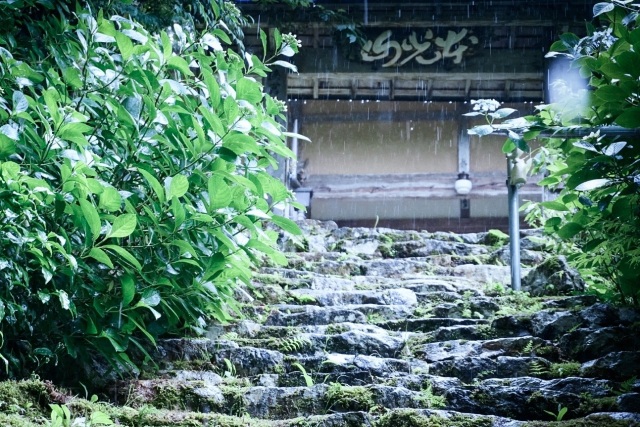
Kamo Shrine
Kamo Shrine is located in Nata-sho, Ooi Town. It is said to have been established in 1348 (the 4th year of the Jōwa era), and records indicate it underwent renovations around the middle of the Edo period. Unique folk customs not seen elsewhere are …
- Wakasa
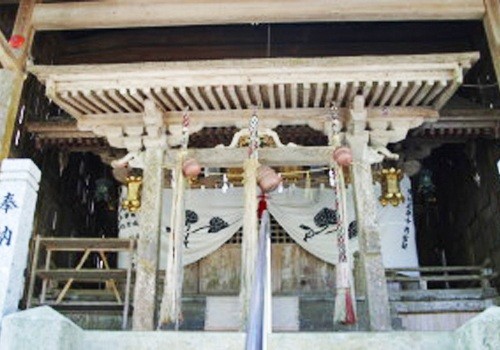
Reisenji Temple
Walking along the approach lined with tall, straight cedar trees, a tall, slender building comes into view on the left. Inside stands a large, black-lacquered wooden Buddha statue, approximately 8 meters tall.It is one of the Three Great Buddhas of…
- Tannan
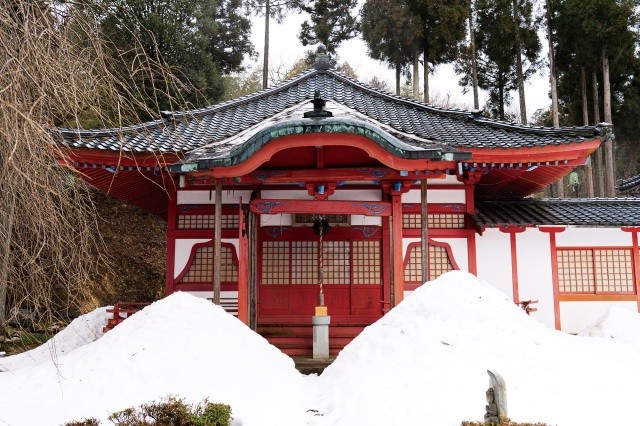
Mido Yoganji Temple
Established in 1484 (Bunmei 16) by Zenchin Shonin, a senior disciple of Rennyo Shonin of Honganji (and head priest of Goshakuji, the head temple of the Shinnyo-shu Izumoji sect), the temple name "Yoganji" was bestowed by Rennyo Shonin him…
- Tannan
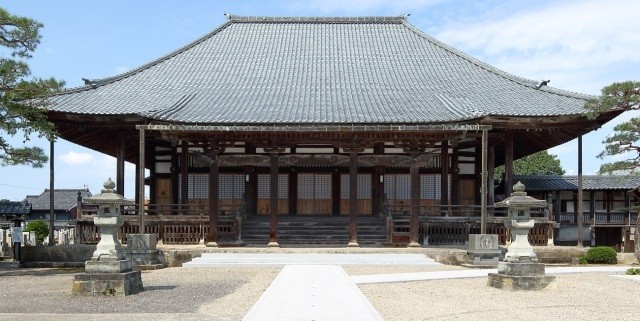
Oshio Hachimangu Shrine
In 887, Chūnagon Nariyuki, exiled to Echizen (present-day northern Fukui Prefecture), prayed here continuously to clear his name of false charges. Soon after, he was pardoned and returned to the capital. Grateful, he built the shrine hall, which is…
- Tannan
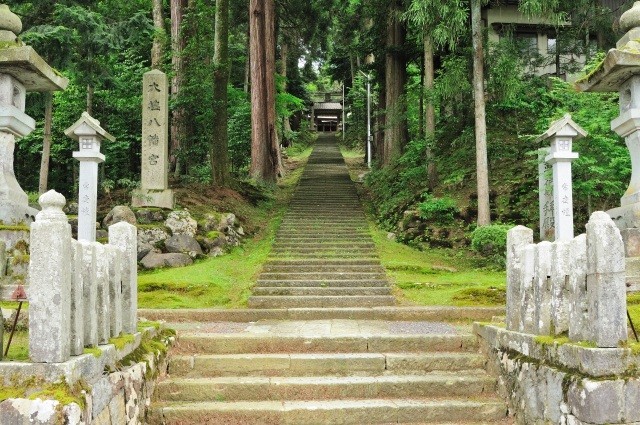
Tentokuji Temple
This temple of the Koyasan Shingon sect is said to have been founded by the great master Taichō. In the early Heian period (794-1185), it became an imperial temple commissioned by Emperor Murakami, and its name is said to derive from the era name T…
- Wakasa
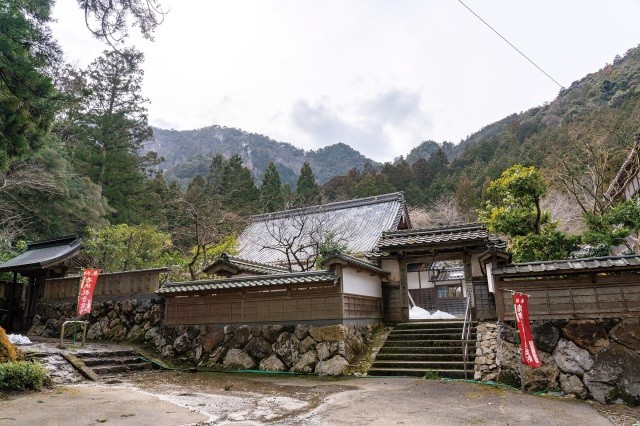
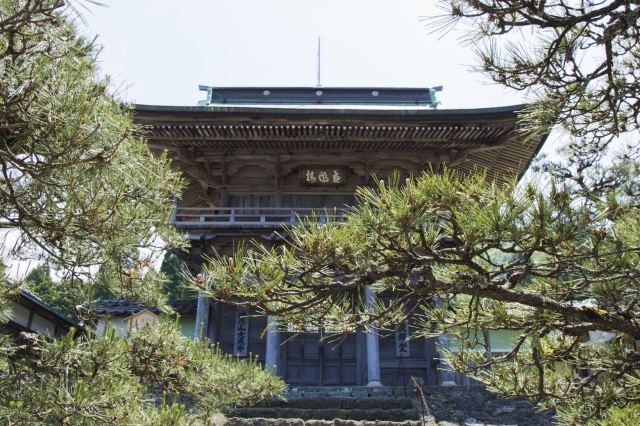
Gokō Shrine
Gokō Shrine, with its magnificent sacred gate, enshrines the divine spirits of five generations: from Emperor Keitai and Emperor Ōjin down to Emperor Keitai's father, Prince Hikonozumi. The "Broom Festival" held on April 18th involves parishioners …
- Tannan
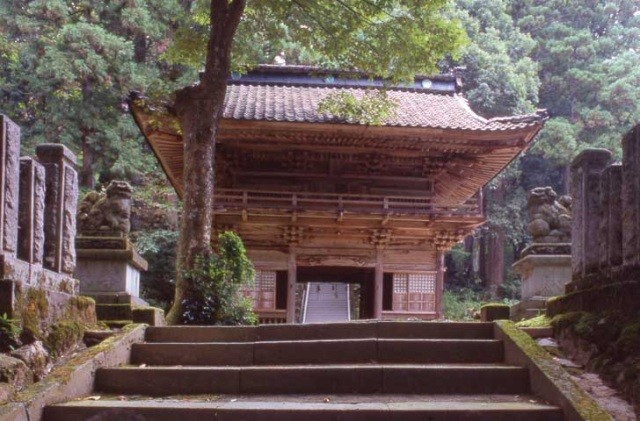
Suiseiji Temple
The principal image enshrined within the altar cabinet at Suisei-ji Temple is a standing statue of the Eleven-Faced Kannon Bodhisattva. Standing 99 cm tall, it is a yosegi-zukuri (joined wood) sculpture. Its elongated face, large, prominent feature…
- Wakasa
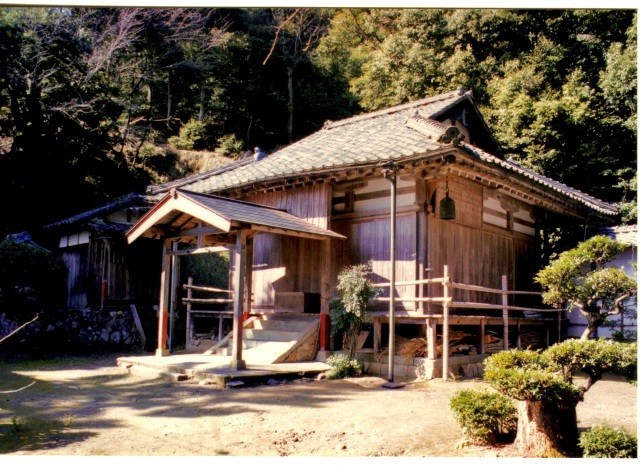
The Mountain Maple Trees of Mandokuji Temple
The crimson of the mountain maple leaves beautifully complements the dry landscape garden, soothing the eyes of visitors. The principal image, a wooden seated statue of Amida Nyorai, and the ink-on-silk painting of Miroku Bosatsu are truly worth se…
- Wakasa
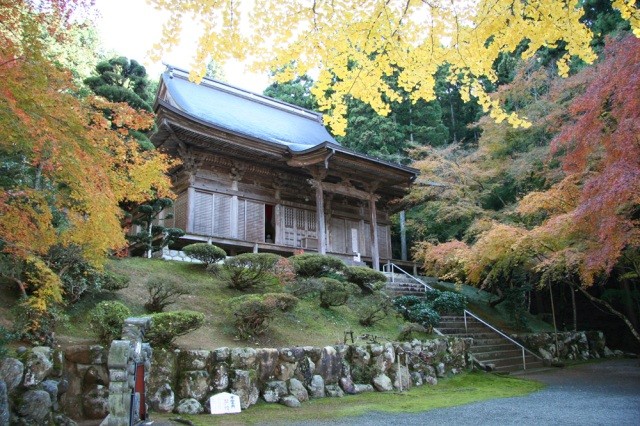
Kūinji Temple
This Soto Zen temple serves as the family temple of the Sakai clan, lords of Obama Domain, and houses the graves of successive generations. It stands on the site of the 1552 residence of Wakasa guardian Takeda Motomitsu, surrounded by moats dug int…
- Wakasa
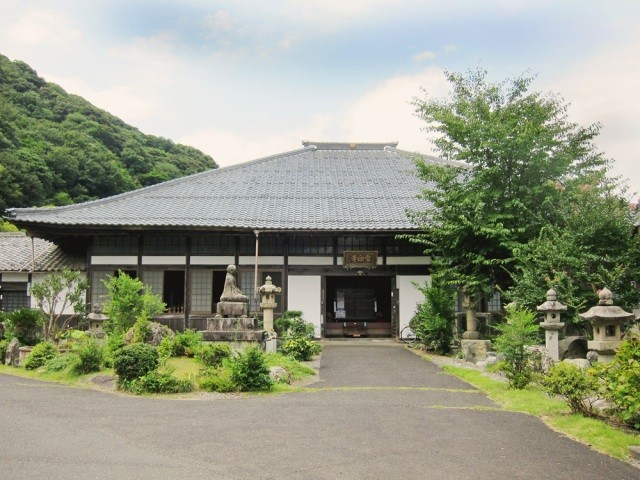
Ishaku-ji Temple
Soto Zen sect. The principal image is a standing statue of the Eleven-Faced Thousand-Armed Kannon Bodhisattva. This temple originally stood on the site of Chōei-ji Temple (in Tara-shō, Obama City), but it is said to have been relocated to its prese…
- Wakasa
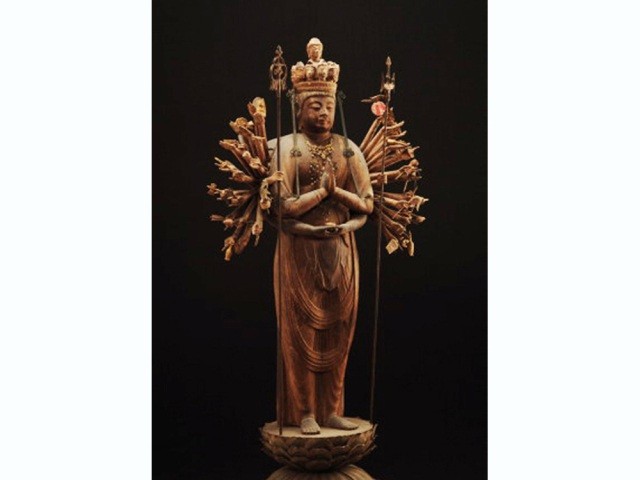
Legendary Battlefield of Yoshisada Nitta at Tomyoji-nada (…
According to the Taiheiki (Volume 20), in the first year of the Kōei era (1338), Nitta Yoshisada was heading to relieve Fujishima Castle when he encountered the forces of Spada Takatsune from the Ashikaga-aligned Kuromaru Castle near Tomyoji-nawa. …
- Awara,Sakai,Fukui
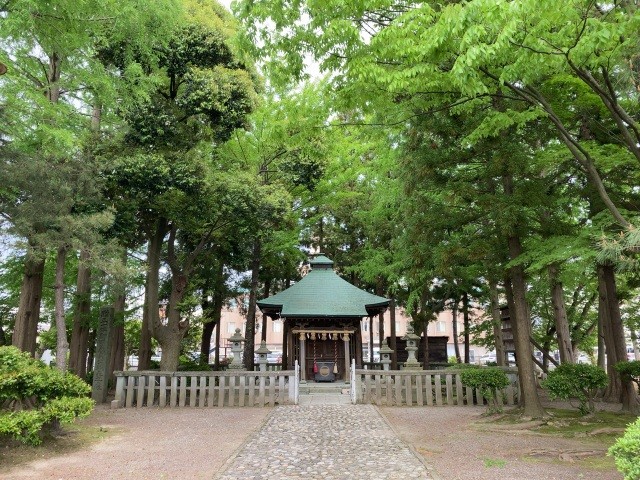
Ounenji Temple
This temple, originally the residence of Hidemi—a disciple of Kusunoki Masashige's younger brother—was converted to the Jōdo Shinshū sect. Its proper name is Kongōzan Okunenji. From the Tenpō era through the early Shōwa period, it produced many lea…
- Tannan
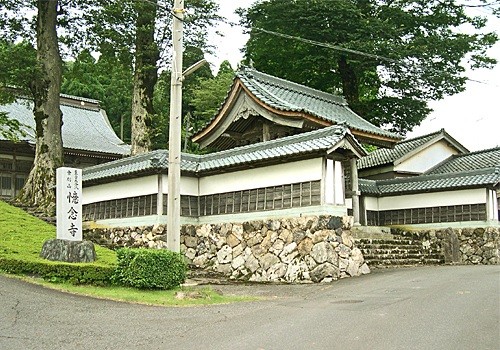
Kadashiwa Shrine
The wooden demon masks (Tsuina masks) of parents and child at Kadashiwa Shrine, believed to date from the late Kamakura period, are designated as Important Cultural Properties of Japan. They are publicly displayed every February 11th, when the ritu…
- Tannan
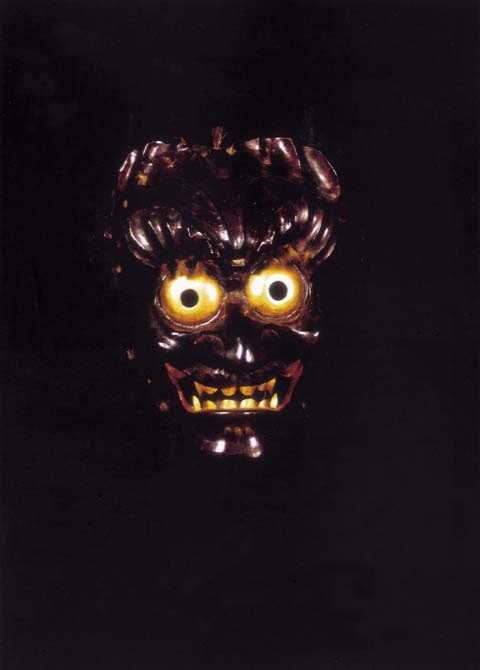
Zengonzan Koboji Temple
Murasaki Shikibu ーthe author of the Tale of Genji, believed to be one of the oldest novels in the worldー spent about a year and a half in Echizen City. Our temple is located adjacent to the east side of Murasaki Shikibu Park. It is a Shingon Budd…
- Tannan
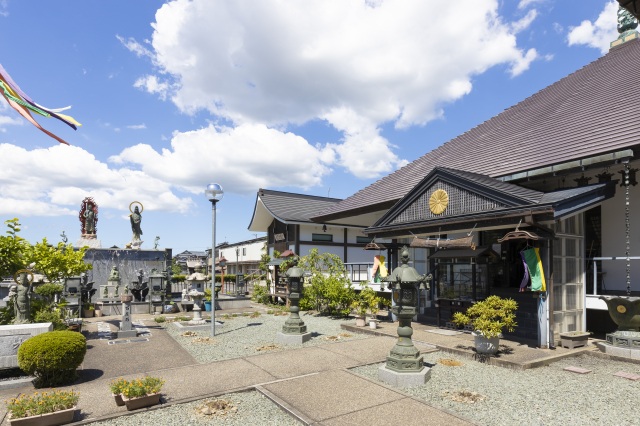
Hoenji Temple
A temple protected by Maeda Toshiie, the first lord of the Kaga domain. The cemetery contains memorial towers for Toshiie's parents.Toshie's connection to Takefu (present-day Echizen City) began when Oda Nobunaga, having suppressed the Ikko…
- Tannan
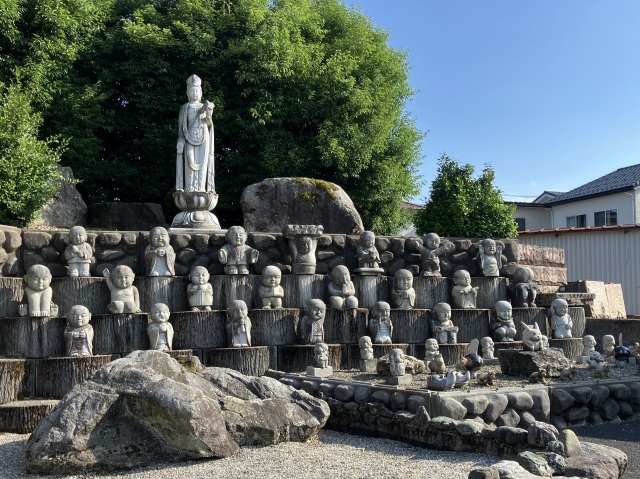
Ukan Shrine (Ikeda Town)
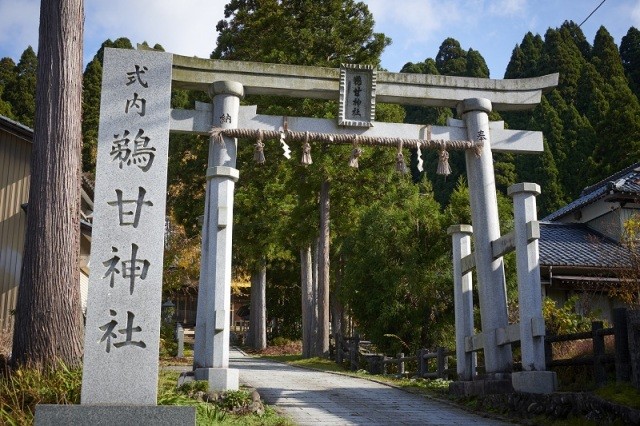
Ukan Shrine, where the Dengaku and Noh Dances of Mizuumi are performed. Its history is ancient, said to have been founded in 463 AD.Since ancient times, the Dengaku dance, born in this land, took root as a ritual offering.Later, due to exchanges wi…
- Tannan